In this article, we’ll explore: A perfect storm for bone loss in women: Menopause and GLP-1 weight-loss drugs and why it matters today.
Related:
👉 Beyond the Gym: Research Shows This Supplement Can Help Build Lean Muscle And Improve Brain Health
👉 Why is it Harder to Get Pregnant with PCOS? The Science of Endometrial Receptivity and Histone Lactylation
👉 Beyond the Gym: Why This One Supplement Is a Game-Changer for Your Muscles and Your Mind
Learn more: A perfect storm for bone loss in women: Menopause and GLP-1 weight-loss drugs on Google Search
If you’ve been scrolling through social media or catching up on the news lately, you’ve likely heard about the “miracle” weight-loss drugs known as GLP-1 agonists. Medications like Ozempic, Wegovy, and Mounjaro have completely shifted the conversation around obesity and metabolic health. For many women, especially those navigating the frustrating weight gain that often comes with midlife, these drugs feel like a long-awaited answer to a prayer.
But as the saying goes, there is no such thing as a free lunch. While the scale might be moving in the right direction for the first time in years, there is a quiet, underlying conversation happening in the medical community. It’s a conversation about what happens to our skeletons when we combine the hormonal shifts of midlife with rapid weight loss.
In fact, many experts are now warning of a perfect storm for bone loss in women: Menopause and GLP-1 weight-loss drugs. If we aren’t careful, the quest for a smaller waistline could lead to a much higher risk of fractures and osteoporosis down the road. Let’s dive into why this is happening and, more importantly, what you can do to protect yourself.
Understanding the First Half of the Storm: The Menopause Factor
To understand why this “perfect storm” is so concerning, we first have to look at what menopause does to a woman’s body. For most of our lives, the hormone estrogen acts like a protective shield for our bones. It keeps the cells that build bone (osteoblasts) and the cells that break down bone (osteoclasts) in a healthy balance.
When we hit perimenopause and eventually menopause, estrogen levels plummet. Suddenly, that protective shield is gone. In the first five to seven years after menopause, a woman can lose up to 20% of her bone density. This is why osteoporosis is so much more common in women than in men; we simply hit a biological “cliff” that men don’t experience in the same way.
By the time many women consider weight-loss medications, they are already in a state where their bone “bank account” is being withdrawn from faster than it’s being deposited into. This is the baseline of our storm.
The Second Half: How GLP-1 Drugs Impact the Skeleton
Now, let’s add the modern weight-loss revolution into the mix. GLP-1 drugs work by slowing down digestion and signaling to your brain that you are full. The result is often a significant and rapid reduction in caloric intake. People aren’t just eating less; they are often eating significantly less.
When the body loses weight rapidly, it doesn’t just burn fat. It also loses lean muscle mass and bone density. There are a few reasons for this:
- The Unloading Effect: Bones are living tissue that responds to stress. When you carry more weight, your bones have to stay strong to support that weight. When you lose 30 or 50 pounds quickly, your bones “sense” that they don’t need to be as strong to hold you up, and they begin to thin out.
- Nutritional Gaps: When you are eating very small amounts of food, it is incredibly difficult to get the required amounts of calcium, Vitamin D, and protein needed to maintain bone matrix.
- Hormonal Signaling: Some early research suggests that GLP-1 receptors might have a direct influence on bone metabolism, though scientists are still working to understand the exact mechanism.
A Perfect Storm for Bone Loss in Women: Menopause and GLP-1 Weight-Loss Drugs
When you combine these two factors—the estrogen drop of menopause and the rapid “unloading” of weight from GLP-1 drugs—you create a “perfect storm.”
Imagine a house. Menopause is like a slow leak in the foundation that’s been there for a few years. It’s a problem, but the house is still standing. Then, the rapid weight loss of a GLP-1 drug comes in like a sudden earthquake. If the foundation was already weakened by menopause, the earthquake is far more likely to cause structural failure.
For a woman in her 50s or 60s, this “structural failure” manifests as a hip fracture, a broken wrist, or spinal compression fractures. These aren’t just minor injuries; for older adults, a hip fracture can be life-altering, leading to a loss of independence and a decline in overall health.
The “Skinny Fat” Trap
There is also the issue of muscle loss, often called “sarcopenia.” GLP-1 drugs can cause a significant loss of muscle if the user isn’t consuming enough protein or doing resistance training. Muscle and bone are a team; muscles pull on bones, which makes the bones stronger. If you lose the muscle, the bone loses its primary stimulus for growth. This leaves women “thin” on the outside but “fragile” on the inside.
Real-World Example: Sarah’s Story
Let’s look at Sarah, a 55-year-old high school teacher. Sarah had struggled with her weight since her late 30s. When she hit menopause, the “menopause middle” became a reality, and she gained an extra 25 pounds despite no change in her diet. Her doctor prescribed a GLP-1 medication, and within six months, Sarah lost 40 pounds. She was thrilled; she was back into her “goal jeans” from a decade ago.
However, Sarah noticed she felt weaker. Climbing stairs felt harder, and she felt “unsteady.” During a routine check-up, her doctor ordered a DEXA scan (a bone density test). The results were shocking: Sarah had moved from “normal” bone density to “osteopenia” (the precursor to osteoporosis) in a very short window. The combination of her menopausal status and the rapid weight loss had accelerated her bone thinning.
Sarah’s story is becoming increasingly common. The good news is that Sarah was able to pivot. By adding specific strength training and focusing on her protein intake, she began to stabilize her bone health. But her story serves as a reminder that we cannot focus on the scale alone.
How to Protect Your Bones While Losing Weight
If you are currently on a GLP-1 medication or considering one, and you are in the menopausal transition, you don’t have to choose between a healthy weight and strong bones. You just need a proactive strategy.
1. Prioritize Resistance Training
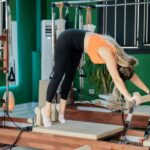
This is non-negotiable. If you want to tell your body to keep its bone and muscle, you have to give it a reason. Lifting weights, using resistance bands, or doing bodyweight exercises like squats and lunges creates the “mechanical load” your bones need to stay dense. Aim for at least three days a week of strength training.
2. Become Obsessed with Protein
When you are eating less, every bite counts. Protein is the building block of the bone matrix. Most experts suggest that women on weight-loss medications should aim for 1.2 to 1.5 grams of protein per kilogram of body weight. This helps preserve muscle mass, which in turn protects the bone.
3. Supplement Wisely
Consult your doctor about Calcium and Vitamin D3. Vitamin D is essential for calcium absorption. Without it, it doesn’t matter how much kale or yogurt you eat; your body won’t be able to use the calcium to reinforce your skeleton.
4. Get a Baseline DEXA Scan
Don’t wait until you break a bone to find out you have a problem. If you are starting a GLP-1 drug and you are over 50, ask your doctor for a baseline bone density scan. This allows you to track your progress and see if the weight loss is negatively impacting your skeleton.
5. Slow and Steady Wins
While the rapid weight loss of GLP-1s is exciting, losing weight too fast increases the risk of bone loss. Working with your doctor to find a dosage that allows for steady, sustainable weight loss (rather than 5-10 pounds a month) may be safer for your long-term skeletal health.
Key Takeaways
- The Combined Risk: Menopause naturally weakens bones, and GLP-1 drugs can accelerate this through rapid weight loss and nutritional gaps.
- Muscle Matters: Losing muscle mass (sarcopenia) directly contributes to weaker bones and a higher risk of falls.
- Resistance is Key: Lifting weights is the best “medicine” for bone health during weight loss.
- Nutrition First: High protein intake and adequate Vitamin D/Calcium are essential to prevent the “perfect storm.”
- Monitor Early: Use DEXA scans to keep an eye on your bone density throughout your weight-loss journey.
Frequently Asked Questions (FAQ)
Can I take Ozempic if I already have osteoporosis?
It is possible, but it must be done under strict medical supervision. Your doctor may want to put you on a bone-strengthening medication (like a bisphosphonate) simultaneously or ensure your exercise and nutrition plans are extremely rigorous to prevent further loss.
Does everyone lose bone on GLP-1 drugs?
Not necessarily, but most studies on significant weight loss show some degree of bone density reduction. The risk is significantly higher for post-menopausal women compared to younger men or women.
Is the bone loss permanent?
Bone is a living tissue and can be rebuilt, but it is much harder to “regain” bone than it is to “maintain” it. This is why prevention is so much more effective than trying to treat osteoporosis after it has already developed.
How much protein should I be eating?
While it varies by individual, a general goal for many women on these medications is 25-30 grams of protein per meal. This helps stimulate muscle protein synthesis and supports bone health.
Are there certain exercises better than others?
Weight-bearing exercises are best. Walking is good, but lifting weights or using resistance machines is better for stimulating bone growth. High-impact movement (like jumping or tennis) is also great for bone density if your joints can handle it.
Final Thoughts
We are living in an era of incredible medical advancement. The ability to manage metabolic health and obesity through GLP-1 drugs is a game-changer for millions of women. However, we must view our health holistically. A lower number on the scale is a great goal, but it shouldn’t come at the expense of the frame that carries you through the world.
By understanding the perfect storm for bone loss in women: Menopause and GLP-1 weight-loss drugs, you can take the necessary steps to protect your skeleton. Eat your protein, lift something heavy, and keep a close eye on your bone density. You deserve to be both lean and strong.
Written with love and assistance and refined for quality.
🔗 Related: Perineal muscle strength as a predictor…