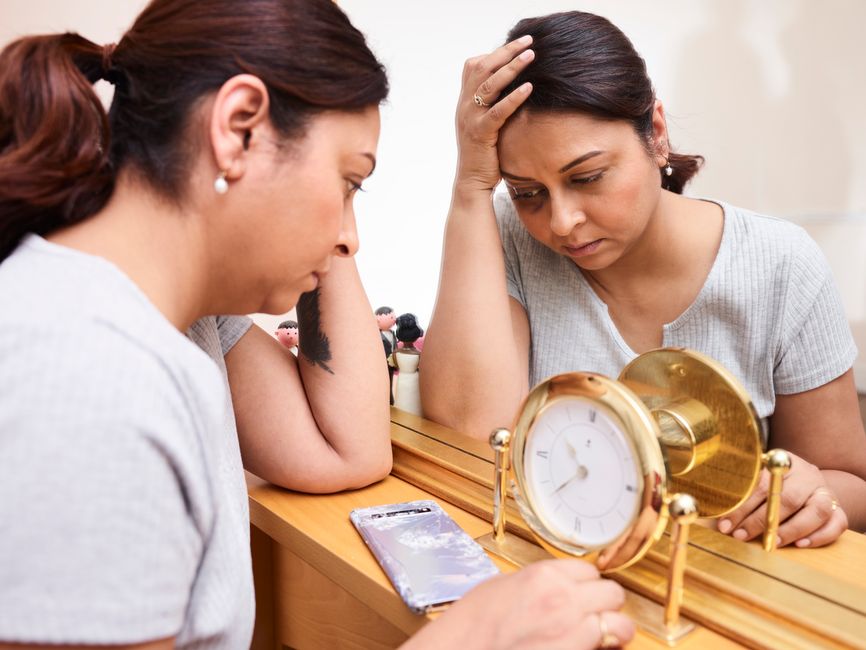
In this article, we’ll explore: Hormonal mechanisms of womens risk in the face of traumatic stress and why it matters today.
Related:
👉 From PCOS to PMOS: Is a Name Change Enough to Make a Difference?
👉 Why Women Process Trauma Differently: Understanding the Role of Hormones in Stress
👉 Why Am I Losing Inches But Not Weight? Here Are 4 Possible Reasons The Scale Isn't Changing
Learn more: Hormonal mechanisms of womens risk in the face of traumatic stress on Investopedia
Have you ever wondered why two people can go through the exact same scary event, but walk away with completely different emotional scars? Imagine two people, Sarah and Mark, both involved in a minor but frightening car accident. A month later, Mark has mostly forgotten the details. Sarah, however, finds her heart racing every time she hears tires screech, and she struggles with intrusive memories of the crash.
For a long time, society chalked these differences up to “personality” or “emotional sensitivity.” But science tells a much deeper, more complex story. It turns out that the way we process fear and recovery is hardwired into our biology. Specifically, the hormonal mechanisms of womens risk in the face of traumatic stress play a massive role in how the female brain navigates the aftermath of a crisis.
In this post, we’re going to pull back the curtain on the invisible chemical messengers—hormones—that influence why women are statistically more likely to develop conditions like PTSD and how their bodies react to high-pressure environments.
The Biological Blueprint: It’s Not Just “In Your Head”
When we talk about trauma, we often focus on the mind. But the mind is a product of the brain, and the brain is constantly bathed in a cocktail of hormones. For women, this cocktail is uniquely dynamic. Unlike the relatively steady hormonal profile of men, women experience regular fluctuations in estrogen and progesterone, which significantly alter how the brain’s “alarm system” functions.
Statistics show that women are roughly twice as likely as men to develop Post-Traumatic Stress Disorder (PTSD) following a traumatic event. While social factors and the types of trauma experienced play a role, researchers are increasingly looking at the biological “why.” The answer lies in the intricate dance between the brain’s fear centers and the endocrine system.
The Role of Estrogen: The Fear Extinguisher
One of the most fascinating hormonal mechanisms of womens risk in the face of traumatic stress involves estrogen. We often think of estrogen solely as a reproductive hormone, but it is actually a powerful neuroprotective agent.
How Estrogen Manages Fear
In the brain, there is a process called “fear extinction.” This is your brain’s ability to learn that a previously dangerous situation is now safe. For example, if you were bitten by a dog, fear extinction is the process that allows you to eventually feel calm around a friendly golden retriever.
Studies suggest that high levels of estrogen help the brain “extinguish” fear more effectively. When estrogen is high, the prefrontal cortex (the logical part of the brain) has a tighter grip on the amygdala (the emotional, fear-sensing part). However, when estrogen levels drop—such as during specific points in the menstrual cycle—this “fear brake” weakens. If a woman experiences trauma during a low-estrogen phase, her brain may struggle to file that memory away as “past news,” keeping the trauma alive and vivid in the present.
The HPA Axis: The Body’s Stress Thermostat
To understand the hormonal mechanisms of womens risk in the face of traumatic stress, we have to look at the Hypothalamic-Pituitary-Adrenal (HPA) axis. Think of this as your body’s internal thermostat for stress.
When you perceive a threat, the HPA axis kicks into gear, signaling your adrenal glands to release cortisol, the “stress hormone.” In a healthy response, cortisol helps you fight or flee, and then levels drop back to normal. However, in many women, this system can become “sensitized.”
- Hyper-responsiveness: Some women’s HPA axes react more aggressively to stress, pumping out higher levels of cortisol or staying “on” for longer than necessary.
- Negative Feedback Loop: Sometimes, the “off switch” for the stress response doesn’t work correctly. This leaves the body in a state of chronic high alert, which is a major risk factor for developing long-term anxiety.
Real-World Example: The “Double Shift” Stress
Consider a female healthcare worker during a global crisis. Not only is she facing traumatic sights at work, but she may also be navigating the “mental load” of home life. This chronic, layered stress keeps her HPA axis constantly engaged. Over time, this hormonal exhaustion makes her more vulnerable to a single traumatic event “breaking” her resilience, simply because her hormonal reserves are spent.
Progesterone and the “Safety” Signal
Progesterone is another key player. It breaks down into a neurosteroid called allopregnanolone, which has a calming effect on the brain, similar to how anti-anxiety medications work. It binds to GABA receptors, which are the brain’s primary “inhibitory” or “calming” receptors.
When progesterone levels are low, or if the body has trouble converting it into allopregnanolone, the brain loses its natural sedative. This can lead to increased irritability, hypervigilance, and an inability to relax—all hallmarks of the trauma response. The fluctuation of these hormones means that a woman’s “risk window” for trauma might change depending on her biological calendar.
The “Tend-and-Befriend” Response
For decades, “Fight or Flight” was the only stress model taught in schools. However, researcher Shelley Taylor identified a different pattern often seen in women: “Tend-and-Befriend.” This is driven by the hormone oxytocin.
When women face stress, they often release oxytocin, which encourages them to nurture (tend) and seek social support (befriend). While this is generally a protective and beautiful mechanism, it can create a unique type of risk. If a woman is in a traumatic situation where she cannot reach out for support—or if her “tending” instincts are used against her (as in domestic abuse)—the hormonal drive for connection can lead to deep psychological distress and “betrayal trauma.”
Why Timing Matters: The Menstrual Cycle and Trauma
One of the most groundbreaking areas of research involves the timing of traumatic events. Because of the hormonal mechanisms of womens risk in the face of traumatic stress, the phase of the menstrual cycle a woman is in during a trauma can predict her likelihood of developing intrusive memories.
- The Mid-Luteal Phase: Some studies suggest that women who experience trauma during the mid-luteal phase (when progesterone is high but starting to drop) report more “flashbacks.”
- The Follicular Phase: Conversely, the early follicular phase (low estrogen) may also be a period of higher vulnerability because the “fear extinction” mechanisms are at their weakest.
This doesn’t mean women are “victims” of their cycles, but rather that their biology provides different levels of protection at different times. Understanding this can help clinicians provide better, more targeted care in emergency rooms and crisis centers.
Key Takeaways
- Hormones are Modulators: Estrogen and progesterone aren’t just for reproduction; they regulate how the brain processes fear and safety.
- Risk is Not Weakness: The higher prevalence of PTSD in women is linked to measurable hormonal mechanisms of womens risk in the face of traumatic stress, not a lack of resilience.
- Estrogen as a Shield: Higher estrogen levels generally help the brain “turn off” the fear response after a threat has passed.
- The HPA Axis: Women often have a more sensitive stress-response system, which can lead to hypervigilance if not managed.
- Social Connection: Oxytocin drives a unique “tend-and-befriend” response that makes social support a biological necessity for female recovery.
Moving Toward a Solution: Hope and Healing
Understanding these biological drivers is incredibly empowering. It moves the conversation away from “What is wrong with me?” to “How is my body trying to protect me?”
For women who have experienced trauma, knowing that their hormones might be influencing their recovery can lead to more effective treatments. For example, some therapists are now looking at “hormone-informed” therapy, where the timing of certain treatments might be aligned with a woman’s natural cycle to maximize the brain’s ability to heal.
Additionally, lifestyle factors that stabilize hormones—like proper sleep, nutrition, and stress-reduction techniques—are not just “self-care” fluff. They are essential tools for maintaining the biological infrastructure that protects the mind from the long-term effects of trauma.
Frequently Asked Questions
Does this mean women are naturally more “stressed” than men?
Not necessarily. It means women’s bodies have a different system for processing stress. While this system can lead to a higher risk of PTSD under certain conditions, it also provides unique strengths, such as the “tend-and-befriend” response, which fosters strong community resilience and survival through cooperation.
Can hormonal birth control affect how a woman reacts to trauma?
This is a major area of ongoing research. Since hormonal contraceptives stabilize estrogen and progesterone levels, they do change the internal hormonal environment. Some studies suggest they might alter the way the brain encodes emotional memories, but more research is needed to provide a definitive answer.
Is there a way to “boost” estrogen to help with trauma recovery?
You should never attempt to manipulate your hormones without a doctor’s supervision. However, supporting overall hormonal health through a balanced diet, regular exercise, and minimizing endocrine disruptors (like certain plastics and chemicals) can help your body maintain its natural protective mechanisms.
How can I use this information if I’ve experienced trauma?
First, give yourself grace. Understanding the hormonal mechanisms of womens risk in the face of traumatic stress helps you realize that your reactions are biological. If you find your symptoms flare up at certain times of the month, track them. This data can be incredibly helpful for your therapist or doctor in tailoring a treatment plan that works for your specific body.
Trauma is a heavy burden, but we are not powerless against it. By understanding the science of our bodies, we can move closer to a world where every woman has the tools and the knowledge to heal deeply and fully.
Written with love and assistance and refined for quality.
🔗 Related: Why womens health needs a system…