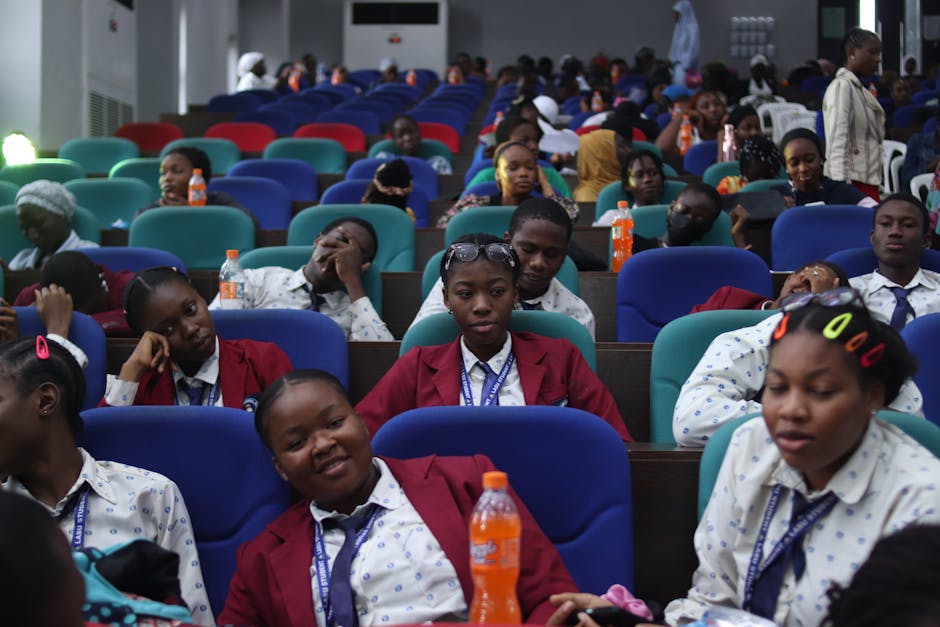
In this article, we’ll explore: BcozSheMatters: WHO Health Ministry roll out campaign on women and girls health and well-being and why it matters today.
Related:
👉 More Than Just a Bad Day: A Real-Talk Guide to Understanding Mental Health
👉 Why Women Process Trauma Differently: Understanding the Hormonal Mechanisms of Women’s Risk in the Face of Traumatic Stress
👉 8 Foods To Avoid With an Upset Stomach and What To Eat Instead
Learn more: BcozSheMatters: WHO Health Ministry roll out campaign on women and girls health and well-being on Wikipedia
We’ve all seen her. She’s the woman who wakes up before the sun to get the kids ready for school. She’s the professional who nails every presentation while secretly worrying about her aging parents. She’s the heart of the home, the backbone of the workforce, and the person who usually puts her own needs at the very bottom of a never-ending to-do list.
For too long, women’s health has been treated as a footnote—something to be addressed only during pregnancy or in the face of a crisis. But the tide is finally turning. With the launch of the BcozSheMatters: WHO Health Ministry roll out campaign on women and girls health and well-being, we are seeing a global shift toward a more holistic, compassionate, and proactive approach to healthcare for half the world’s population.
This isn’t just another government initiative with a catchy hashtag. It’s a movement designed to dismantle the barriers that keep women from thriving. Let’s dive into what this campaign means for you, your sisters, your mothers, and your daughters.
What is the #BcozSheMatters Campaign All About?
The core philosophy behind the BcozSheMatters: WHO Health Ministry roll out campaign on women and girls health and well-being is simple yet profound: A woman’s health is the foundation of a healthy society. When a woman is healthy, her children are more likely to attend school, her family is more financially stable, and her community prospers.
The World Health Organization (WHO), in collaboration with national Health Ministries, has designed this campaign to address the “silent” gaps in healthcare. This includes everything from menstrual hygiene and maternal care to mental health support and the prevention of non-communicable diseases like breast and cervical cancer.
Instead of just building more clinics, this campaign focuses on education, accessibility, and breaking the cultural taboos that often prevent girls from seeking help. It’s about making sure that a young girl in a rural village has the same access to health information as a woman in a bustling metropolis.
The Story of Meera: Why This Matters in the Real World
To understand the impact of this campaign, let’s look at Meera. Meera is a 34-year-old mother of two living in a small town. For months, she felt a persistent fatigue and a dull ache in her lower back. But like many women, she brushed it off. “It’s just stress,” she told herself. “I’m just tired from the kids.”
In her community, talking about “women’s issues” was often met with awkward silence. There was no one to tell her that her symptoms could be something more serious. By the time the BcozSheMatters mobile health unit visited her town, Meera was finally able to get a screening. She learned she had an early-stage iron deficiency and a thyroid imbalance—both treatable, but both of which were draining her life force.
Meera’s story is not unique. Millions of women suffer in silence because they lack the language to describe their pain or the permission to prioritize themselves. The “BcozSheMatters” campaign aims to give every woman that permission.
Key Pillars of the Campaign
The WHO and Health Ministries aren’t just throwing darts at a board; they have a structured plan. Here are the primary areas where the campaign is making a difference:
1. Maternal and Reproductive Health
While maternal mortality rates have dropped globally, they are still unacceptably high in many regions. The campaign focuses on providing high-quality prenatal and postnatal care. It’s not just about surviving childbirth; it’s about thriving after it. This includes access to contraception, safe delivery spaces, and support for postpartum depression.
2. Menstrual Hygiene and Dignity
In many parts of the world, girls still miss school because they don’t have access to sanitary products or clean toilets. The campaign works to provide affordable hygiene products and, more importantly, to educate communities to end the “shame” associated with periods. Period health is health, period.
3. Mental Health and Emotional Well-being
Women are statistically more likely to experience anxiety and depression, often due to the “double burden” of domestic and professional work. BcozSheMatters: WHO Health Ministry roll out campaign on women and girls health and well-being places a heavy emphasis on destigmatizing mental health care. It encourages women to speak up about their struggles and provides local support groups and counseling services.
4. Prevention of Non-Communicable Diseases (NCDs)
Cervical cancer is one of the most preventable and treatable forms of cancer, yet it claims thousands of lives every year. The campaign is rolling out mass screening programs and HPV vaccinations for young girls, ensuring that “prevention” isn’t just a buzzword but a reality.
Breaking the Taboos: It Starts with a Conversation
One of the biggest hurdles in women’s healthcare isn’t a lack of medicine—it’s a lack of conversation. In many cultures, discussing reproductive health or even basic anatomy is considered “improper.”
The “BcozSheMatters” campaign uses local “Health Ambassadors”—trusted women within the community—to lead workshops. When a woman hears about breast self-exams from a neighbor she trusts, she is much more likely to take action than if she sees it on a distant billboard. This grassroots approach is what makes this rollout different from previous efforts.
- Education: Teaching girls about their bodies from a young age.
- Empowerment: Giving women the tools to advocate for themselves in a doctor’s office.
- Engagement: Involving men and boys in the conversation to create a supportive environment.
The Economic Impact of Healthy Women
If you aren’t moved by the human element, consider the economic one. When women are healthy, the global economy grows. According to various studies, closing the gender health gap could add trillions of dollars to the global GDP by 2040.
Healthy women are more productive, they stay in the workforce longer, and they invest more of their income back into their families. The BcozSheMatters: WHO Health Ministry roll out campaign on women and girls health and well-being is, in many ways, an investment in the future of the global economy. By spending money on preventative screenings and nutrition today, governments save billions in emergency care and lost productivity tomorrow.
How You Can Get Involved
You don’t have to be a doctor or a government official to support this cause. Change starts at home and in our immediate circles. Here is how you can contribute to the spirit of #BcozSheMatters:
- Check on your tribe: Ask the women in your life how they are *really* doing. Not just “how is work?” but “how is your health?”
- Share reliable information: Use your social media platforms to share facts about screenings, mental health, and nutrition.
- Support local initiatives: Donate to or volunteer with organizations that provide menstrual products or maternal support in your area.
- Advocate for yourself: If you’ve been putting off that check-up, book it today. You cannot pour from an empty cup.
Key Takeaways
- Holistic Approach: The campaign covers physical, mental, and social well-being, not just reproductive health.
- Global Collaboration: It’s a joint effort between the WHO and national Health Ministries to ensure local relevance.
- Focus on Prevention: Early screening for NCDs and HPV vaccinations are top priorities.
- Breaking Stigma: A major goal is to end the silence surrounding menstruation and mental health.
- Economic Benefit: Improving women’s health leads to stronger families and a more robust global economy.
Frequently Asked Questions (FAQ)
What is the main goal of the BcozSheMatters campaign?
The main goal is to ensure that women and girls have access to comprehensive healthcare services and to empower them to take charge of their own health and well-being through education and community support.
Is this campaign only for developing countries?
No. While the challenges may differ, the BcozSheMatters: WHO Health Ministry roll out campaign on women and girls health and well-being is a global initiative. Even in developed nations, women face disparities in healthcare, particularly in areas like mental health and maternal mortality for minority groups.
How does the campaign address mental health?
The campaign integrates mental health screenings into routine check-ups and funds community-based support programs to help women manage stress, anxiety, and depression without fear of judgment.
How can I find out if there are campaign activities in my city?
You can check the official website of your national Ministry of Health or the WHO’s regional office website. Many activities are also coordinated through local community centers and public hospitals.
Why is there a focus on girls specifically?
Health habits and outcomes are often determined in adolescence. By focusing on girls—through nutrition, education, and vaccinations—the campaign ensures a healthier generation of future women.
Final Thoughts
The launch of the BcozSheMatters: WHO Health Ministry roll out campaign on women and girls health and well-being is a beautiful reminder that we are moving toward a world where “womanhood” is no longer a barrier to quality care. It’s a reminder that every woman’s life has intrinsic value, and her health is a priority, not an afterthought.
Let’s embrace this change. Let’s talk about the hard things, support one another, and ensure that every girl grows up knowing that her health matters—simply because *she* matters.
Written with love and assistance and refined for quality.
{“@context”:”https://schema.org”,”@type”:”Article”,”headline”:”BcozSheMatters: Why the New WHO and Health Ministry Campaign is a Game-Changer for Women Everywhere”,”description”:”In this article, weu2019ll explore: BcozSheMatters: WHO Health Ministry roll out campaign on women and girls health and well-being and…”,”author”:{“@type”:”Person”,”name”:”Dr. Cuterus”},”datePublished”:”2026-05-21T05:29:21+00:00″,”dateModified”:”2026-05-21T05:29:21+00:00″,”mainEntityOfPage”:”https://healthyworldz.com/bcozshematters-why-the-new-who-and-health-ministry-campaign-is-a-game-changer-for-women-everywhere/”,”image”:[“https://healthyworldz.com/wp-content/uploads/2026/05/bcozshematters-who-health-ministry-roll-out-campaign-on-women-and-girls-health-and-well-being-3.jpg”]}
🔗 Related: I'm a Gynaecologist will changing PCOS…
🔗 Related: Understanding Mental Health
🔗 Related: Hormonal mechanisms of womens risk in…