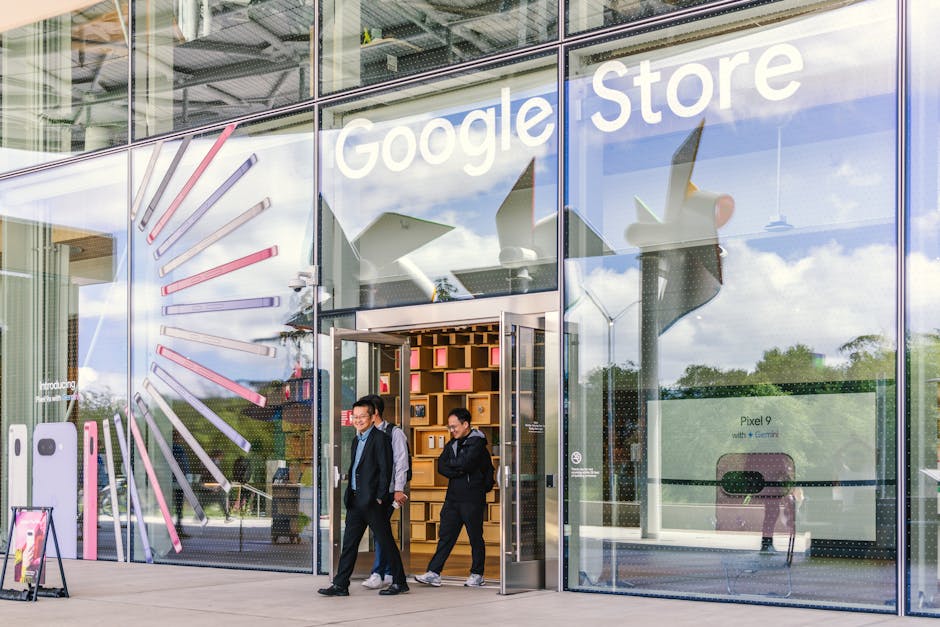
In this article, we’ll explore: Google UK employees in letter to the company: You have 10 working days to voluntarily recognise … and why it matters today.
The Ultimatum: Why Google UK Employees are Drawing a Line in the Sand
For a long time, working at Google was seen as the ultimate “golden ticket” in the professional world. We’ve all heard the stories: free gourmet food, nap pods, high salaries, and the prestige of having one of the world’s most powerful companies on your CV. But lately, the atmosphere in the colorful offices of King’s Cross and beyond has shifted. The bean bags are still there, but the sense of security isn’t.
In a move that has sent ripples through the tech industry, a significant group of workers has decided that perks are no longer enough. They want power. Specifically, they want a collective voice. This tension recently reached a boiling point when a formal notice was served. The message was clear: Google UK employees in letter to the company: You have 10 working days to voluntarily recognise their union, or things are going to get legal.
This isn’t just a minor HR dispute. It is a landmark moment for the UK tech sector, signaling a massive shift in how “Big Tech” workers view their relationship with their employers. Let’s dive into what’s happening, why it’s happening now, and what those ten days actually mean for the future of Google.
The 10-Day Countdown: What’s Actually Happening?
The letter in question comes from employees represented by the United Tech and Allied Workers (UTAW), which is a branch of the Communication Workers Union (CWU). These aren’t just people working in the warehouses or delivery drivers; these are software engineers, program managers, and data analysts—the core “white-collar” workforce that keeps the engine running.
The demand is straightforward but heavy with legal implications. By stating that Google UK employees in letter to the company: You have 10 working days to voluntarily recognise the union, the workers are initiating a formal process under UK labor law.
What is “Voluntary Recognition”?
In the UK, if a company “voluntarily recognises” a union, it means they agree to sit down at the table and negotiate on things like pay, hours, and holiday time. It’s a peaceful way of saying, “We acknowledge you have a collective voice.”
If Google says “no” or simply ignores the letter, the union doesn’t just go away. Instead, they can take the case to the Central Arbitration Committee (CAC). If the union can prove they have enough support among the staff, the government can actually force Google to recognise them. The 10-day window is the final “polite” chance for Google to do this on their own terms before the lawyers get involved.
Why Now? The End of the “Tech Utopia”
You might be wondering: why are people making six-figure salaries suddenly joining unions? Traditionally, unions were for coal miners, factory workers, and rail staff. But the tech world has changed. The “Don’t Be Evil” era of Google feels like a distant memory to many staff members today.
1. The Shadow of Mass Layoffs
The biggest catalyst was undoubtedly the massive wave of layoffs that hit the tech industry in 2023 and early 2024. When Google announced it was cutting 12,000 jobs globally, it sent a shockwave through the workforce. Employees who thought they were “family” realized they were lines on a spreadsheet that could be deleted in an instant to satisfy shareholders.
2. The Return-to-Office Tensions
Like many tech giants, Google has been pushing for staff to return to physical offices. For many employees who built their lives around remote work during the pandemic, this felt like a step backward. Without a union, employees have to negotiate these changes individually—and usually, the individual loses. With a union, they can negotiate as a block.
3. Transparency and Fairness
There have been ongoing concerns regarding pay equity and the use of temporary or “vendor” contractors who do the same work as full-time Googlers but for less pay and fewer benefits. Employees want a seat at the table to ensure that the company’s massive profits are shared more equitably across the board.
Real-World Example: The Story of “Sarah”
To understand why this is happening, let’s look at a hypothetical (but very realistic) example. Imagine “Sarah,” a Senior Software Engineer at Google’s London office. Sarah has been with the company for six years. She loves the work, but over the last two years, her team has been halved, her workload has doubled, and her “manager” is now an algorithm that tracks her output.
When the layoffs happened, Sarah saw her mentor—a 10-year veteran—get locked out of his email at 3:00 AM without a word of warning. That was the turning point. Sarah realized that no matter how good her code was, she had no protection. When the UTAW organizers approached her, she didn’t see it as an “anti-Google” move. She saw it as an “anti-uncertainty” move. She is one of the many who signed that letter, giving Google those 10 working days to respond.
How Google is Likely to Respond
History tells us that Big Tech companies aren’t exactly fans of unions. We’ve seen Amazon and Apple use various tactics to discourage unionization in the US. However, the UK has different legal protections, and “union busting” is a bit harder to pull off here without looking very bad in the eyes of the public and the law.
- The “Wait and See” Approach: Google might simply let the 10 days expire to see if the union actually has the numbers to go to the CAC.
- Internal Messaging: Expect to see emails from leadership emphasizing their “direct relationship” with employees, suggesting that a “third party” (the union) will only complicate things.
- The Legal Challenge: Google might argue about the “bargaining unit”—basically arguing about which specific groups of employees are allowed to be in the union, trying to break the group into smaller, less powerful pieces.
The Bigger Picture: A New Era for UK Tech
This move by Google UK employees is part of a much larger trend. We are seeing similar movements at video game studios, startups, and other major tech hubs in Manchester and London. The myth that tech workers are “too well-off to need a union” is dying.
As AI begins to threaten even high-level coding jobs, the desire for collective bargaining is only going to grow. Workers want to ensure that as the industry evolves, they aren’t left behind. The 10-day deadline given to Google is a microcosm of the struggle happening across the entire global economy: the fight for human agency in a world driven by data and bottom lines.
Key Takeaways
- The Deadline: Google UK employees have given the company 10 working days to voluntarily recognise their union (UTAW/CWU).
- The Escalation: If Google refuses, the union will likely apply to the Central Arbitration Committee (CAC) for statutory recognition.
- The Motivation: Job insecurity following mass layoffs, return-to-office mandates, and a desire for transparent pay structures are the main drivers.
- The Impact: This marks a significant shift in tech culture, moving away from “perks” and toward formal labor rights.
- The Legal Context: UK labor laws provide a structured path for recognition that is different from the US, making this a high-stakes legal chess match.
Frequently Asked Questions
What happens if Google ignores the letter?
If Google does not respond or refuses to recognise the union within the 10-day window, the union can file a formal application with the Central Arbitration Committee (CAC). The CAC will then investigate whether a majority of the employees in the “bargaining unit” want a union. If they do, recognition can be legally enforced.
Does this mean Google employees will go on strike?
Not necessarily. Recognition is just the first step. It means the company must talk to the union. While strikes are a tool unions use, they are usually a last resort after negotiations fail. Right now, the focus is simply on getting a seat at the table.
Is this happening in Google offices outside the UK?
Yes, there is a growing movement. The Alphabet Workers Union (AWU) in the United States has been active for several years, though it operates differently due to US labor laws. We are also seeing similar pushes in Zurich and other European tech hubs.
Why is it called “UTAW”?
UTAW stands for United Tech and Allied Workers. It is a national branch of the CWU (Communication Workers Union) specifically designed for people working in the tech industry, from developers to office staff.
Will this affect Google’s services?
In the short term, no. This is an internal labor matter. However, in the long term, a unionized workforce could lead to different company policies regarding how products are built, how data is handled, and how the company interacts with the public, as employees gain more of a say in “ethical” decision-making.
Final Thoughts
The phrase “Google UK employees in letter to the company: You have 10 working days to voluntarily recognise…” might sound like dry legal jargon, but it represents a human story of people wanting more control over their lives. Whether Google chooses to embrace this change or fight it will set a massive precedent for the rest of the UK’s thriving tech scene.
One thing is for sure: the days of tech companies operating as “untouchable kingdoms” are coming to an end. The workers who built the code are now looking to build a more secure future for themselves, one signature at a time.
Written with AI assistance and refined for quality.