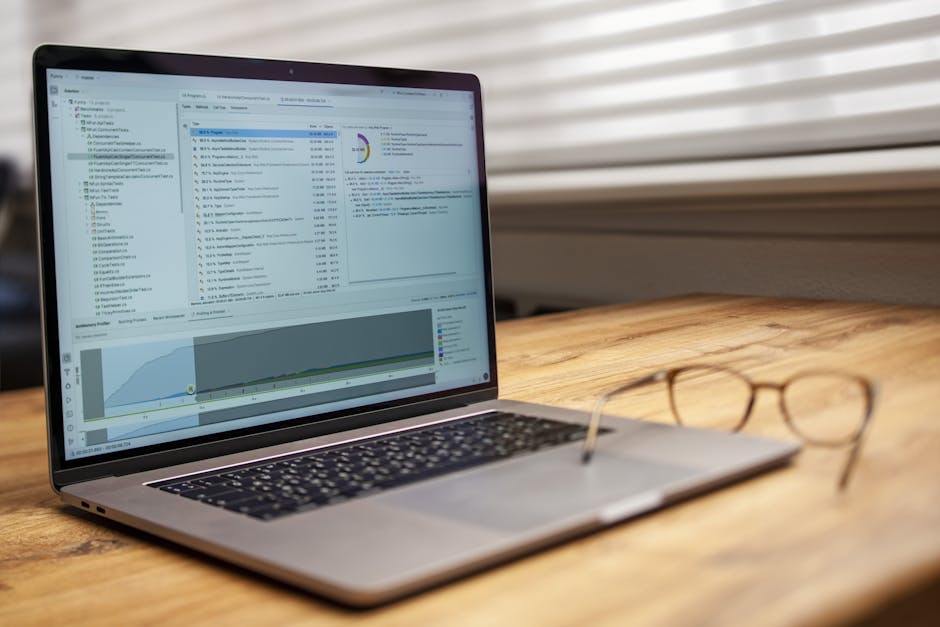
In this article, we’ll explore: querystatsExplore and why it matters today.
Related:
👉 Unlocking Your Digital Secrets: How to Truly querystatsExplore for Deeper Insights
👉 Unlocking Performance Secrets: How to Truly querystatsExplore Your Database and Delight Users
👉 Unlocking Your Database's Secrets: How to `querystatsExplore` Your Way to Peak Performance
Learn more: querystatsExplore on Google Search
Ever felt like your website is dragging its feet? Your mobile app users are complaining about slow load times, or your internal reports take an eternity to generate? It’s a frustrating experience, not just for your users but for you and your team. You know something’s wrong, but pinpointing the exact cause can feel like searching for a needle in a digital haystack.
What if you had a special pair of X-ray glasses that could see exactly what your database is doing at every single moment? What if you could easily identify the bottlenecks, the hidden slowdowns, and the resource hogs that are silently sabotaging your application’s performance?
Enter `querystatsExplore` – a powerful concept, often implemented through various tools and features, that essentially gives you those X-ray glasses. It’s your secret weapon for understanding, optimizing, and ultimately supercharging your database performance. And trust me, whether you’re running a small e-commerce shop or a large enterprise, understanding your database’s “pulse” is non-negotiable for success in today’s fast-paced digital world.
In this deep dive, we’re going to pull back the curtain on `querystatsExplore`. We’ll explore what it is, why it’s absolutely crucial for any data-driven business, how it works its magic, and how real-world companies are using it to gain a competitive edge. Get ready to transform how you think about database management!
What Exactly is `querystatsExplore` (in Simple Terms)?
Imagine your database as a bustling restaurant kitchen. Every “question” or “request” your application sends to the database is like a customer ordering a meal. Some orders are simple salads, others are complex, multi-course banquets.
`querystatsExplore` is like having a super-efficient kitchen manager who meticulously tracks everything:
* **Which dishes are ordered most often?** (Most frequent queries)
* **Which dishes take the longest to prepare?** (Slowest executing queries)
* **Which chefs are spending too much time on one particular dish?** (Queries consuming excessive CPU or memory)
* **When are the busiest times in the kitchen?** (Peak query times)
* **Are there any dishes that are consistently taking too long, even if they’re simple?** (Inefficient queries)
In technical terms, `querystatsExplore` refers to the process and tools that allow you to collect, analyze, and visualize statistics about the queries executed against your database. It’s not usually a single product name, but rather a capability found in database management systems (like MySQL’s Performance Schema, PostgreSQL’s `pg_stat_statements`, SQL Server’s Query Store, or various cloud provider monitoring tools). The goal is always the same: to give you unparalleled insight into your database’s workload and performance characteristics.
It’s about moving beyond guesswork and relying on hard data to make informed decisions about your database’s health.
Why Should You Care About Query Stats? The “So What?”
You might be thinking, “This sounds a bit technical. Do I really need to get into the weeds of database queries?” The answer, unequivocally, is YES. Ignoring your query statistics is like driving a car without a dashboard. You might get where you’re going, but you won’t know if you’re low on fuel, overheating, or about to run out of oil until it’s too late.
Here’s why `querystatsExplore` should be at the top of your priority list:
* **Boost Application Performance & User Experience:** This is the most direct benefit. Slow queries mean slow applications. By identifying and optimizing these bottlenecks, you directly improve load times, responsiveness, and overall user satisfaction. Happy users stick around!
* **Slash Infrastructure Costs:** Inefficient queries can force you to overprovision server resources (more CPU, RAM, disk I/O) just to keep things afloat. By optimizing your queries, you can often achieve better performance with *fewer* resources, leading to significant cost savings on your cloud or on-premise infrastructure.
* **Proactive Problem Solving (Before Disaster Strikes):** Don’t wait for your users to complain or your application to crash. `querystatsExplore` allows you to spot trends, identify potential issues as they emerge, and address them *before* they escalate into major outages or performance degradation. It’s like preventative medicine for your database.
* **Make Smarter Development Decisions:** Understanding which queries are most impactful helps your development team write more efficient code from the start. They learn from past performance, avoiding common pitfalls and building more robust features.
* **Enhanced Data Security & Compliance:** While not its primary function, understanding query patterns can sometimes help detect unusual activity, such as queries accessing sensitive data in an unexpected manner, which could be an indicator of a security concern.
* **Improved Business Intelligence:** By knowing how your data is being queried and accessed, you gain a deeper understanding of your own business processes and information flow. This can inform strategic decisions beyond just technical optimization.
In essence, `querystatsExplore` empowers you to move from reactive firefighting to proactive optimization, giving you peace of mind and a competitive edge.
How `querystatsExplore` Works Its Magic (Simplified Process)
You don’t need to be a database guru to grasp the core mechanics. Think of it in three main steps:
1. **Observation & Collection:** Your database system (or a specialized monitoring tool) constantly watches every query that runs. It’s like a silent observer, taking notes on key metrics for each query. This includes:
* **Execution Time:** How long did the query take to complete?
* **CPU Usage:** How much processing power did it consume?
* **Memory Usage:** How much RAM did it need?
* **Disk I/O:** How much data did it read from or write to disk?
* **Row Count:** How many rows did it affect or return?
* **Frequency:** How often is this exact query being run?
* **Locking:** Did it hold any locks that prevented other queries from running?
2. **Aggregation & Analysis:** The collected data isn’t just raw numbers. It’s grouped and summarized. For instance, instead of seeing every single instance of a “fetch user profile” query, `querystatsExplore` will aggregate all similar “fetch user profile” queries and show you their average execution time, total execution count, and peak resource usage. This aggregation makes the data manageable and meaningful.
3. **Visualization & Identification:** The aggregated data is then presented in an understandable format – often through dashboards, graphs, and tables. This is where the magic truly happens:
* You can instantly see a “top N” list of the slowest queries.
* You can identify queries that run frequently but are surprisingly slow.
* You can spot queries that consume disproportionate resources.
* You can track performance trends over time.
Once these problematic queries are identified, your database administrators or developers can then dive deeper, analyze the query’s structure, check for missing indexes, rewrite inefficient parts, or even reconsider the underlying data model.
Real-World Benefits: Stories from the Trenches
Let’s bring this to life with a few hypothetical, but very common, scenarios:
Story 1: The E-commerce Headache and the Checkout Cart
**The Problem:** “Sarah’s Stylish Shoes,” an online boutique, was booming. But during peak sales, customers complained of slow checkout processes, sometimes leading to abandoned carts. Their conversion rate was dipping, and Sarah was losing sleep. They had already upgraded their web servers, but the problem persisted.
**How `querystatsExplore` Helped:** Sarah’s team implemented a `querystatsExplore` solution. Immediately, a particular query stood out: one that fetched “recommended products” for the checkout page. While seemingly innocuous, this query was running *multiple times* for each item in the cart, and it involved a complex join across several large tables *without proper indexing*. It was taking 5-7 seconds to complete, single-handedly slowing down the entire checkout flow.
**The Solution & Result:** With this clear insight, the developers optimized the query by adding a crucial index and rewriting a portion of the logic. The query time dropped to milliseconds. Within days, checkout times plummeted, abandoned carts decreased by 15%, and sales conversions jumped back up. Sarah could finally sleep soundly.
Story 2: The SaaS Startup’s Scaling Challenge
**The Problem:** “TaskFlow,” a popular project management SaaS, was growing rapidly. As their user base expanded, their application started experiencing intermittent slowdowns, especially during the morning rush. Their developers were constantly putting out fires, and scaling up their cloud database instance was becoming prohibitively expensive.
**How `querystatsExplore` Helped:** Using `querystatsExplore` features, the TaskFlow team noticed a massive spike in a specific “daily summary report” query every morning between 8 AM and 9 AM. This query, designed for internal analytics, was so resource-intensive that it was causing temporary table locks and consuming almost all available database CPU, impacting all other user-facing operations.
**The Solution & Result:** They realized this report didn’t need to run during peak user hours. They re-scheduled the report generation to run overnight, when user activity was minimal. They also optimized the report query itself, reducing its execution time significantly. The morning slowdowns vanished, user experience improved dramatically, and they were able to continue scaling their user base without immediately needing to upgrade their database instance, saving tens of thousands of dollars.
Story 3: The Data Analyst’s Frustration
**The Problem:** Mark, a data analyst at a marketing agency, spent hours every week generating client performance reports. His reports often tied up the database, preventing other analysts from running their queries and causing general frustration.
**How `querystatsExplore` Helped:** The database team used `querystatsExplore` to look at the long-running queries. They found Mark’s report queries were performing full table scans and inefficient joins across massive datasets, taking upwards of 30 minutes to complete.
**The Solution & Result:** The team worked with Mark to refine his queries, adding appropriate indexes to the tables involved and suggesting a different approach for some of the aggregations. What once took 30 minutes now completed in under two minutes. Mark became more productive, and the database bottleneck for analytics was completely removed.
These stories highlight a crucial point: `querystatsExplore` isn’t just a technical tool; it’s a business enabler. It translates complex database activity into actionable insights that directly impact your bottom line, user satisfaction, and team productivity.
Getting Started with `querystatsExplore`
Feeling inspired? Here’s how you can begin your journey into understanding your database’s queries:
1. **Identify Your Database System:** The first step is to know what database you’re using (e.g., MySQL, PostgreSQL, SQL Server, MongoDB, Oracle, Cassandra). Each system has its own native tools and methods for query performance monitoring.
2. **Explore Native Features:** Most modern database systems have built-in capabilities for `querystatsExplore`.
* **MySQL:** Look into the Performance Schema and Slow Query Log.
* **PostgreSQL:** `pg_stat_statements` is your friend.
* **SQL Server:** Query Store and Extended Events are powerful.
* **Cloud Databases (AWS RDS, Azure SQL Database, Google Cloud SQL):** These usually offer enhanced monitoring dashboards and query insights as part of their services.
3. **Consider Third-Party Monitoring Tools:** For more advanced visualizations, cross-database support, and deeper insights, many excellent third-party tools (like Datadog, New Relic, Percona Monitoring and Management, or SolarWinds Database Performance Analyzer) offer robust `querystatsExplore` capabilities.
4. **Start Small, Focus on Impact:** Don’t try to optimize everything at once. Begin by identifying the top 5-10 slowest or most resource-intensive queries. Even small improvements to these high-impact queries can yield significant results.
5. **Educate Your Team:** Encourage your developers, operations team, and even product managers to understand the basics of query performance. The more people who are aware, the better the overall health of your application will be.
6. **Make it a Continuous Process:** Database performance isn’t a “set it and forget it” task. Applications evolve, data grows, and usage patterns change. Regularly review your query statistics to stay ahead of potential problems.
Key Takeaways
* `querystatsExplore` is the practice of collecting, analyzing, and visualizing statistics about your database queries. It’s your database’s “dashboard.”
* It provides invaluable insights into which queries are running, how often, and how efficiently.
* The benefits are massive: faster applications, happier users, lower infrastructure costs, proactive problem-solving, and smarter development.
* It’s a foundational element of effective database performance tuning and management.
* Every database system has some form of `querystatsExplore` capability, often built-in or available through third-party tools.
* Embrace it as a continuous process, not a one-time fix.
Don’t let your database be a black box. Arm yourself with the power of `querystatsExplore` and unlock a new level of performance, efficiency, and confidence for your business. Your users, your developers, and your bottom line will thank you for it!
FAQ Section
Q: Is `querystatsExplore` a specific software tool or product?
A: Not usually. `querystatsExplore` is a conceptual term that refers to the capability or process of exploring query statistics. Many database systems (like MySQL, PostgreSQL, SQL Server) have built-in features that enable this, and there are also many third-party monitoring tools that provide advanced `querystatsExplore` functionalities.
Q: Do I need to be a database expert to understand the reports from `querystatsExplore`?
A: Not to understand the basic insights! Most tools present data in user-friendly dashboards, highlighting the slowest or most frequent queries. While optimizing a query might require some technical database knowledge, identifying *which* queries need attention is often quite straightforward for anyone managing an application.
Q: Can `querystatsExplore` prevent all database problems?
A: It’s an incredibly powerful tool for *identifying* and *preventing* a vast majority of performance-related database problems. However, it’s part of a broader database management strategy. Other factors like hardware failures, network issues, or fundamental architectural flaws might require different diagnostic approaches, though `querystatsExplore` can often point you in the right direction.
Q: Is `querystatsExplore` only useful for very large companies or high-traffic websites?
A: Absolutely not! While large companies certainly benefit, even small businesses, startups, and individual developers can gain immense value. A slow query on a small site can still frustrate users, lead to missed opportunities, and consume unnecessary resources. Understanding your queries is beneficial at any scale.
Q: Will enabling `querystatsExplore` impact my database’s performance?
A: Most modern database systems are designed to collect query statistics with minimal overhead. While there’s always a slight performance cost for any monitoring, it’s typically negligible compared to the significant performance gains you can achieve by optimizing identified slow queries. The benefits almost always far outweigh the minimal overhead.
Written with love and assistance and refined for quality.
{“@context”:”https://schema.org”,”@type”:”Article”,”headline”:”Unlocking Database Secrets: How `querystatsExplore` Can Transform Your Business Performance”,”description”:”In this article, weu2019ll explore: querystatsExplore and why it matters today.Related:ud83dudc49 Unlocking Your Digital Secrets: How to Truly querystatsExplore for…”,”author”:{“@type”:”Person”,”name”:”rahuljait”},”datePublished”:”2026-05-07T19:32:32+00:00″,”dateModified”:”2026-05-07T19:32:32+00:00″,”mainEntityOfPage”:”https://healthyworldz.com/unlocking-database-secrets-how-querystatsexplore-can-transform-your-business-performance/”,”image”:[“https://healthyworldz.com/wp-content/uploads/2026/05/querystatsexplore-3.jpg”]}
🔗 Related: wellness
🔗 Related: stomach pain