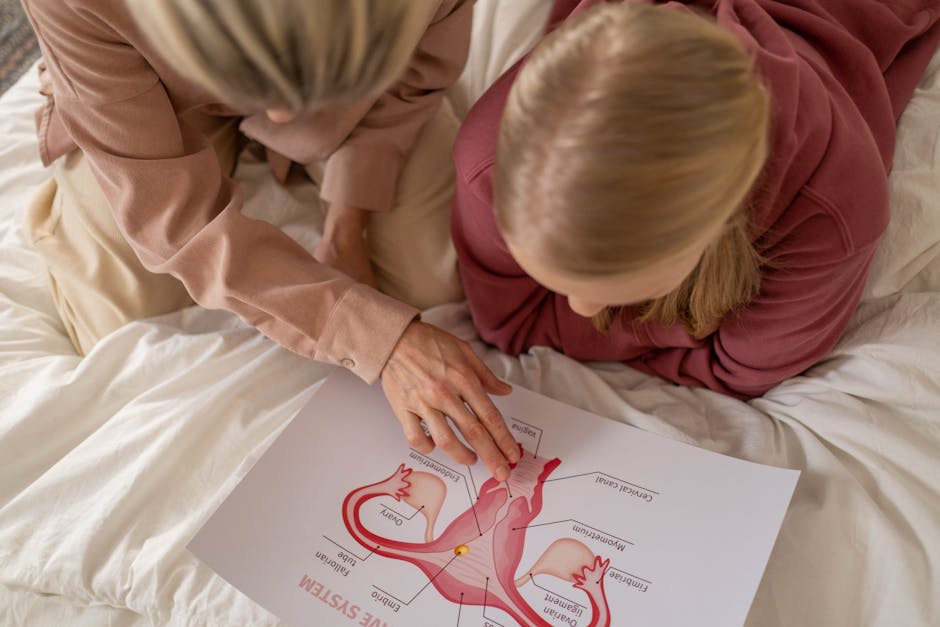
In this article, we’ll explore: Women with polycystic ovary syndrome exhibit impaired endometrial receptivity with excessive ER and histone lactylation and why it matters today.
Related:
👉 Why Getting Pregnant with PCOS is So Hard: The New Science of Uterine Receptivity and Histone Lactylation
👉 Tummy Trouble? 8 Foods To Avoid With an Upset Stomach and What To Eat Instead
👉 Beyond Just a Campaign: Why #BcozSheMatters is Changing the Future of Women’s Health
For many women, the journey to motherhood feels like a straight, well-paved road. But for those living with Polycystic Ovary Syndrome (PCOS), that road often feels like a winding mountain path filled with unexpected roadblocks. If you’ve been struggling to conceive despite “doing everything right”—tracking your cycles, eating the leafy greens, and managing your stress—you know the frustration all too well.
We’ve known for a long time that PCOS affects ovulation. If you don’t release an egg, you can’t get pregnant. But what happens when you do ovulate, or when you use IVF to create a perfect embryo, and it still doesn’t “stick”? This is the mystery of endometrial receptivity.
Recent scientific breakthroughs have finally given us a clearer picture of why this happens. It turns out that women with polycystic ovary syndrome exhibit impaired endometrial receptivity with excessive ER and histone lactylation. That sounds like a mouthful of medical jargon, doesn’t it? Let’s break it down into plain English and explore what this means for your fertility and your future.
The “Sticky” Problem: What is Endometrial Receptivity?
Think of your uterus like a high-end hotel. For a guest (the embryo) to check in and stay for nine months, the room has to be perfectly prepared. The bed needs to be made, the temperature needs to be just right, and the “Welcome” sign needs to be hanging on the door. This state of readiness is what doctors call “endometrial receptivity.”
In a typical cycle, there is a very brief window—usually around days 19 to 23—where the uterine lining becomes “sticky” enough for an embryo to implant. In women with PCOS, this window is often faulty. The “hotel room” isn’t ready, the staff is disorganized, and the embryo simply can’t find a place to settle down. This is why even high-quality embryos created through IVF sometimes fail to result in a pregnancy.
The Hidden Culprits: ER Stress and Histone Lactylation
So, why is the room not ready? Researchers have pointed to two main biological “hiccups” happening at the cellular level: ER stress and histone lactylation. To understand these, let’s look at them through a simpler lens.
1. Excessive ER Stress (The Overwhelmed Factory)
ER stands for Endoplasmic Reticulum. Every cell in your body has one. Think of it as a factory that folds and packages proteins. When everything is going well, the factory runs smoothly. But when the cell is under pressure—due to inflammation, high insulin, or hormonal imbalances—the factory gets overwhelmed. It starts churning out “misfolded” or broken proteins.
This is “ER stress.” When the lining of your uterus is under constant ER stress, it’s too busy trying to fix its internal factory problems to focus on welcoming an embryo. It’s like trying to host a dinner party while your kitchen is literally on fire. You’re just not in the right headspace to be a good host.
2. Histone Lactylation (The Genetic “Volume Knob”)
This is the newest piece of the puzzle. Your DNA is wrapped around proteins called histones. Think of histones as the spools that hold the thread of your genetic code. “Lactylation” is a process where lactic acid (the same stuff that builds up in your muscles after a workout) attaches to these histones.
When this happens, it changes which genes are turned “on” or “off.” In the context of PCOS, scientists have found that excessive histone lactylation acts like a volume knob that’s been turned way too high or too low on the genes responsible for pregnancy. It essentially “mutes” the signals that tell the embryo it’s safe to land.
The Breakthrough: Connecting the Dots
A landmark study recently highlighted that women with polycystic ovary syndrome exhibit impaired endometrial receptivity with excessive ER and histone lactylation. This is a game-changer because it moves the conversation beyond just “hormone levels.”
It tells us that the metabolic environment of the uterus itself is altered. In women with PCOS, the body often struggles with high levels of lactate and insulin resistance. This excess lactate doesn’t just sit there; it enters the nucleus of the uterine cells, attaches to the histones, and creates a “molecular clutter” that prevents the uterus from becoming receptive.
Imagine trying to read a very important instruction manual, but someone has spilled dark ink all over the pages. The instructions for “How to Accept an Embryo” are there, but the cell can’t read them because the lactylation (the ink) is covering the words.
Real-World Example: Sarah’s Story
Let’s look at Sarah, a 31-year-old woman diagnosed with PCOS. Sarah had been trying to conceive for three years. Her doctors put her on Letrozole to help her ovulate, and it worked! She was ovulating every month, but she still wasn’t getting pregnant. Her blood tests showed her progesterone was fine, and her husband’s tests were perfect.
Sarah was experiencing exactly what this research describes. While she was producing an egg, her uterine lining was in a state of “metabolic chaos.” Because of her underlying insulin resistance and chronic low-grade inflammation, her uterine cells were experiencing high ER stress and excessive histone lactylation. Her “hotel room” was never ready, no matter how many eggs she produced.
Understanding this changed Sarah’s approach. Instead of just focusing on ovulation, she and her doctor started focusing on reducing inflammation and improving metabolic health to “clean up” the uterine environment. This is the power of knowing the why behind the struggle.
How Does This Change Treatment?
If you have PCOS, this information might feel a bit heavy, but it’s actually very hopeful. It gives us new targets for treatment. We are moving toward a future where we don’t just “force” ovulation, but we also “repair” the uterine lining.
- Metabolic Support: Since lactate is a byproduct of glucose metabolism, managing blood sugar through diet and medications like Metformin or supplements like Inositol becomes even more critical. It’s not just about weight; it’s about the chemical signals reaching your uterus.
- Reducing Inflammation: Anti-inflammatory diets (rich in Omega-3s, antioxidants, and fiber) can help lower ER stress. When the “factory” isn’t under fire, it can focus on its job.
- Future Therapies: Scientists are now looking for specific “inhibitors” that can block excessive histone lactylation. Imagine a medicine that acts like an eraser, cleaning the “ink” off your genetic instructions so your uterus can function normally again.
Key Takeaways for Women with PCOS
- It’s Not Just About the Eggs: Successful pregnancy requires both a healthy egg and a receptive uterus. PCOS can affect both.
- The Role of Stress: Cellular stress (ER stress) in the uterine lining prevents the “window of implantation” from opening properly.
- Lactate Matters: High levels of lactate in the body, often linked to PCOS metabolism, can interfere with gene expression in the uterus through a process called histone lactylation.
- Holistic Management is Key: Managing insulin and inflammation is vital for creating a “sticky” uterine environment.
Frequently Asked Questions
Does every woman with PCOS have this problem?
Not necessarily. PCOS is a spectrum. However, many women who experience “unexplained” infertility or recurrent implantation failure within their PCOS diagnosis may be dealing with these specific uterine receptivity issues.
Can I test for endometrial receptivity?
Yes, there are tests like the ERA (Endometrial Receptivity Analysis) that look at the timing of your window. However, the specific research into histone lactylation is still primarily in the clinical study phase and isn’t a standard lab test quite yet. The best approach is to focus on the metabolic factors we know contribute to it.
Will losing weight fix histone lactylation?
Weight loss can help because it often improves insulin sensitivity and reduces inflammation, which in turn reduces lactate levels and ER stress. However, “thin PCOS” patients can also experience these issues, so the focus should be on metabolic health rather than just the number on the scale.
Are there supplements that help with ER stress?
Supplements like N-acetyl cysteine (NAC), CoQ10, and Omega-3 fatty acids are often recommended to support cellular health and reduce oxidative stress, which can indirectly help manage ER stress in the uterine lining.
Final Thoughts
The discovery that women with polycystic ovary syndrome exhibit impaired endometrial receptivity with excessive ER and histone lactylation is a massive step forward. It validates the struggle that so many women feel when they are told “everything looks fine” but still can’t conceive.
By understanding that the uterine environment is a dynamic, metabolic space, we can stop blaming ourselves and start looking at smarter ways to support our bodies. Whether through lifestyle changes, metabolic management, or upcoming medical advancements, the goal remains the same: making that “hotel room” as welcoming as possible for the guest you’ve been waiting for.
If you’re struggling with PCOS, don’t lose heart. Science is catching up to your experience, and with every new discovery, we get one step closer to the answers you need.
Written with love and assistance and refined for quality.
{“@context”:”https://schema.org”,”@type”:”Article”,”headline”:”Why PCOS Makes Conception Tough: The New Science of Histone Lactylation and Your Uterine Health”,”description”:”In this article, weu2019ll explore: Women with polycystic ovary syndrome exhibit impaired endometrial receptivity with excessive ER and histone lactylation…”,”author”:{“@type”:”Person”,”name”:”Dr. Cuterus”},”datePublished”:”2026-05-27T08:26:33+00:00″,”dateModified”:”2026-05-27T08:26:33+00:00″,”mainEntityOfPage”:”https://healthyworldz.com/why-pcos-makes-conception-tough-the-new-science-of-histone-lactylation-and-your-uterine-health/”,”image”:[“https://healthyworldz.com/wp-content/uploads/2026/05/women-with-polycystic-ovary-syndrome-exhibit-impaired-endometrial-receptivity-with-excessive-er-and-histone-lactylation-115.jpg”]}
🔗 Related: BcozSheMatters: WHO Health Ministry roll out…
🔗 Related: Muscle Plays a Role in Weight…
🔗 Related: Hormonal mechanisms of womens risk in…