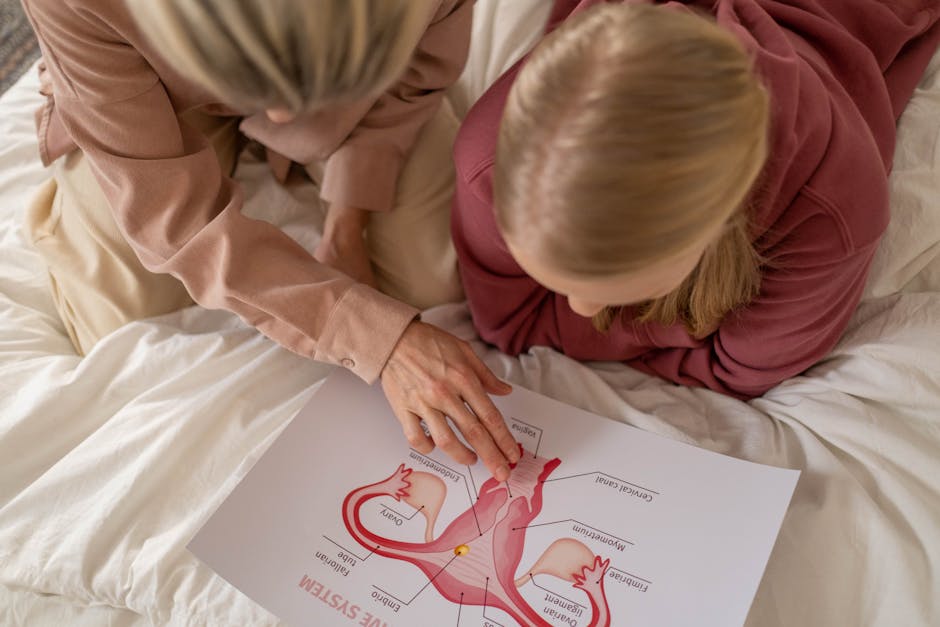
In this article, we’ll explore: Hormonal mechanisms of womens risk in the face of traumatic stress and why it matters today.
Related:
👉 BcozSheMatters: How the WHO and Health Ministry are Redefining Wellness for Every Woman and Girl
👉 The Ultimate Guide: 8 Foods To Avoid With an Upset Stomach and What To Eat Instead
👉 Why Trauma Hits Differently: Understanding the Hormonal Mechanisms of Women’s Risk
Learn more: Hormonal mechanisms of womens risk in the face of traumatic stress on Investopedia
Imagine two people are involved in the same minor car accident. Let’s call them Sarah and Mark. Both walk away without a scratch, but their internal experiences over the next month couldn’t be more different. Mark feels a bit jumpy for a day or two, then goes back to normal. Sarah, however, finds herself panicking every time she hears tires screech. She can’t sleep, and her mind keeps replaying the moment of impact like a broken record.
For a long time, society—and even some corners of medicine—chalked this up to “emotional sensitivity.” But science is finally catching up to what many women have felt for a long time: it isn’t about being “sensitive.” It’s about biology. Specifically, it’s about the intricate hormonal mechanisms of womens risk in the face of traumatic stress.
As a woman, your body isn’t just a smaller version of a man’s. Your brain and your endocrine system (the system that manages hormones) have a unique “operating system.” When trauma hits, that system processes the shock in a way that is biologically distinct. Understanding this isn’t just fascinating—it’s empowering. It moves the conversation from “What’s wrong with me?” to “How is my body trying to protect me?”
The Gender Gap in Trauma
Statistically, women are about twice as likely as men to develop Post-Traumatic Stress Disorder (PTSD) following a traumatic event. Even when you account for the types of trauma women are more likely to face, the gap remains. Why?
The answer lies in the cocktail of chemicals that flood our system when things go wrong. While the “fight or flight” response is universal, the way hormones like estrogen, progesterone, and cortisol interact with the brain’s fear center (the amygdala) creates a different roadmap for women.
The “Fear Extinction” Problem
In the world of psychology, there is a concept called “fear extinction.” This is your brain’s ability to learn that a previously dangerous situation is now safe. For example, if you were bitten by a dog, fear extinction is the process that allows you to eventually walk past a dog without your heart racing.
Research suggests that women’s hormonal fluctuations can actually interfere with this “unlearning” process. If a traumatic event happens during a specific window of a woman’s hormonal cycle, her brain might find it much harder to “turn off” the alarm bells. This is one of the primary hormonal mechanisms of womens risk in the face of traumatic stress.
The Main Players: Estrogen and Progesterone
We often think of estrogen and progesterone as “reproductive hormones,” but they are actually powerful “neurosteroids.” This means they have a direct line to your brain cells.
1. The Protective Power of Estrogen
Estrogen is a bit of a double-edged sword. On one hand, healthy levels of estrogen help the brain regulate fear. It helps the “logical” part of your brain (the prefrontal cortex) keep the “emotional” part (the amygdala) in check. When estrogen is high, women often show better resilience to stress.
However, when estrogen levels drop—such as right before a period, after childbirth, or during menopause—that protective shield weakens. If trauma occurs during a low-estrogen phase, the brain is more likely to “encode” that trauma deeply, making it harder to recover later.
2. Progesterone and the “Calming” Effect
Progesterone is often called the “chilled out” hormone. It breaks down into a substance called allopregnanolone, which acts like a natural Valium for the brain. It binds to the same receptors that anti-anxiety medications do. When progesterone levels are low, the brain loses this natural buffer against stress, making the nervous system more “brittle” and reactive.
The HPA Axis: The Body’s Alarm System
The Hypothalamic-Pituitary-Adrenal (HPA) axis is the communication line between your brain and your adrenal glands. When you see a threat, the HPA axis triggers the release of cortisol, the “stress hormone.”
In men, the cortisol response tends to be a sharp spike followed by a relatively quick return to baseline. In women, the HPA axis is often more sensitive. This means women might produce more cortisol or stay in a “high-alert” state for longer. Over time, this chronic activation can wear down the body’s ability to regulate mood and memory, significantly increasing the risk of long-term trauma symptoms.
Real-World Example: The Timing of the Cycle
Let’s look at a real-world scenario to see these hormonal mechanisms of womens risk in the face of traumatic stress in action.
Recent studies have followed women who visited the emergency room after a traumatic event (like a physical assault or a car crash). Researchers found that women who were in the “mid-luteal phase” of their cycle—the time when progesterone is high and estrogen is fluctuating—reported fewer intrusive memories weeks later compared to women who were in the “early follicular phase” (during their period) when both hormones are at their lowest.
This suggests that the biological “state” you are in at the moment of trauma isn’t just a footnote; it might be the very thing that determines whether you develop PTSD or whether you are able to process the event and move on.
How Chronic Stress Changes the Game
It’s not just about one-time events. Many women live in a state of “micro-trauma” or chronic stress—balancing careers, caregiving, and societal pressures. This constant low-level hum of stress keeps hormones in a state of imbalance.
- Cortisol Resistance: Just like you can become resistant to insulin, you can become resistant to cortisol. Your body stops responding to the “stop” signal, leading to permanent inflammation.
- Oxytocin Interference: Women often rely on oxytocin (the “cuddle hormone”) to buffer stress through social connection. High stress can actually interfere with how oxytocin works, making women feel isolated even when they have support.
- Sleep Disruption: Hormonal shifts affect REM sleep, which is when our brains process emotional memories. If you aren’t sleeping, you aren’t “digesting” your trauma.
Key Takeaways
- It’s Biological: Higher rates of PTSD in women aren’t a sign of weakness; they are linked to specific hormonal interactions with the brain’s fear centers.
- Hormones are Neuro-Active: Estrogen and progesterone act as filters for how we perceive and store scary memories.
- Timing Matters: The phase of the menstrual cycle at the time of a traumatic event can influence the long-term psychological impact.
- The HPA Axis is Key: Women’s “alarm systems” are often more sensitive and take longer to reset than men’s.
- Knowledge is Power: Understanding these mechanisms can help doctors and therapists create better, more targeted treatments for women.
Moving Toward Healing
If you are a woman who has struggled with the aftermath of stress, please hear this: Your brain is doing exactly what it was wired to do under the conditions it was given. When we understand the hormonal mechanisms of womens risk in the face of traumatic stress, we can stop blaming ourselves for our symptoms.
The future of mental health for women lies in “hormonally-informed” care. This might mean timing therapy sessions with your cycle, using specific supplements to support progesterone levels, or simply practicing radical self-compassion during those times of the month when you know your “biological shield” is a little thinner.
You aren’t broken. You are a complex biological system that has survived something hard, and your body is simply trying to find its way back to balance.
Frequently Asked Questions
Does birth control affect how women respond to trauma?
This is a major area of current research. Because hormonal birth control “flattens” the natural spikes and dips of estrogen and progesterone, it may change how the brain processes fear. Some studies suggest it might actually be protective, while others suggest it could interfere with natural fear extinction. It’s a very individual experience.
Can I change my hormones to reduce my risk?
You can’t—and shouldn’t—try to “turn off” your hormones. However, you can support your endocrine system through lifestyle. Stable blood sugar, adequate magnesium, and stress-reduction techniques like yoga or meditation can help “smooth out” the hormonal highs and lows, making your nervous system more resilient.
Why don’t doctors talk about this more?
For decades, medical research was performed primarily on men to avoid the “complication” of menstrual cycles. It is only in the last 10–15 years that scientists have begun to prioritize female-specific biology in trauma research. The good news is that this is changing rapidly.
Is it just about the menstrual cycle?
No. These mechanisms are also at play during other major hormonal shifts, such as puberty, pregnancy, postpartum, and perimenopause. Any time hormones are in flux, the “risk window” for traumatic stress can shift.
What should I do if I feel stuck in a trauma response?
Reach out to a trauma-informed therapist, especially one who understands the mind-body connection. Mentioning your hormonal health can be a great starting point for a deeper conversation about your recovery plan.
Written with love and assistance and refined for quality.
{“@context”:”https://schema.org”,”@type”:”Article”,”headline”:”Why Trauma Hits Differently: Understanding the Hormonal Mechanisms of Womenu2019s Risk”,”description”:”In this article, weu2019ll explore: Hormonal mechanisms of womens risk in the face of traumatic stress and why it matters…”,”author”:{“@type”:”Person”,”name”:”Dr. Cuterus”},”datePublished”:”2026-05-28T04:04:24+00:00″,”dateModified”:”2026-05-28T04:04:24+00:00″,”mainEntityOfPage”:”https://healthyworldz.com/why-trauma-hits-differently-understanding-the-hormonal-mechanisms-of-womens-risk-13/”,”image”:[“https://healthyworldz.com/wp-content/uploads/2026/05/hormonal-mechanisms-of-womens-risk-in-the-face-of-traumatic-stress-299.jpg”]}
🔗 Related: Hormonal mechanisms of womens risk in…
🔗 Related: Hormonal mechanisms of womens risk in…
🔗 Related: 8 Foods To Avoid With an…