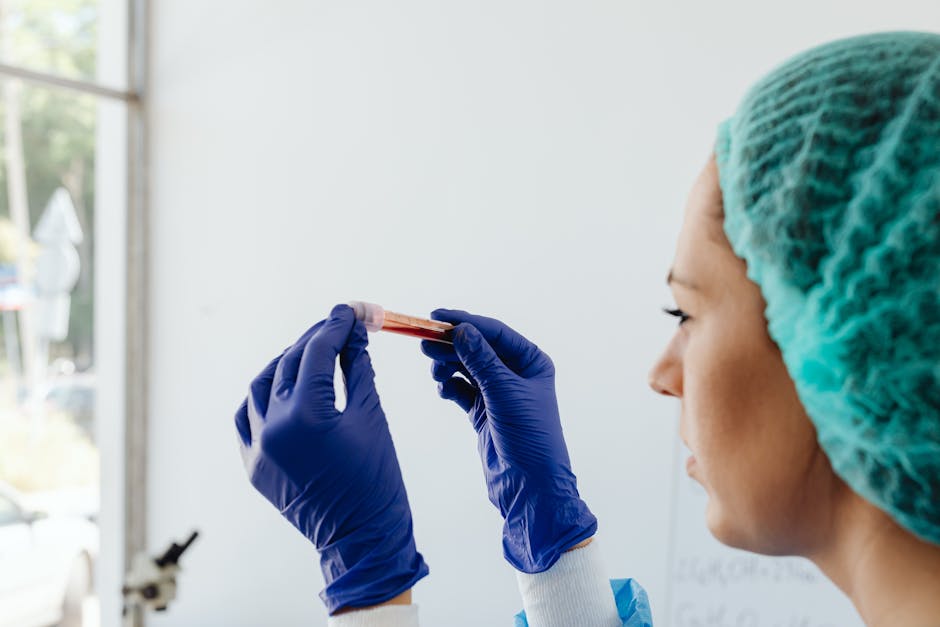
In this article, we’ll explore: Closing the diagnostics gap key to improving women’s health and why it matters today.
Related:
👉 Why Closing the Diagnostics Gap is the Key to Improving Women's Health
👉 Why Trauma Hits Differently: Understanding the Hormonal Mechanisms of Women’s Stress Response
👉 Why Does Trauma Hit Differently? Understanding the Hormonal Mechanisms of Women’s Risk
Learn more: Closing the diagnostics gap key to improving women’s health on Google Search
Imagine walking into a doctor’s office with a sharp, stabbing pain in your abdomen. You’ve felt it for months. It’s affecting your work, your relationships, and your sleep. But when you explain it, the response is a sympathetic pat on the arm and a suggestion to “stress less” or “try some ibuprofen.”
For millions of women around the world, this isn’t a hypothetical scenario—it’s a Tuesday. Whether it’s endometriosis, autoimmune disorders, or even heart disease, women are consistently diagnosed later than men, often after years of being told their symptoms are “all in their head.” This delay isn’t just frustrating; it’s dangerous. That is why closing the diagnostics gap key to improving women’s health and ensuring a future where everyone gets the care they deserve.
In this post, we’re going to dive deep into why this gap exists, the real-world impact it has on lives, and how we can finally fix a system that has overlooked half the population for far too long.
What Exactly Is the Diagnostics Gap?
At its simplest, the diagnostics gap is the difference in the time, accuracy, and quality of medical diagnoses between men and women. Historically, medical research was built on a “male-as-default” model. For decades, clinical trials primarily used male subjects (even male mice!) to avoid the “complications” of fluctuating female hormones.
The result? A medical system that understands the male body as the standard and the female body as a variation of that standard. This has led to what many experts call “Bikini Medicine”—the idea that women’s health only differs from men’s in the areas covered by a bikini. We now know that every cell in the body has a sex, and diseases manifest differently depending on those X and Y chromosomes.
The “Yentl Syndrome”
There’s a term for this in the medical community called the “Yentl Syndrome.” It describes the phenomenon where women are misdiagnosed or undertreated unless their symptoms look exactly like a man’s. If a woman doesn’t present with the “classic” (read: male) symptoms of a heart attack, she might be sent home with antacids while her life is at risk.
The Real-World Consequences of Waiting
When we talk about closing the diagnostics gap key to improving women’s health, we are talking about saving lives and improving the quality of those lives. Let’s look at a few areas where the gap is most prominent.
1. Heart Disease: The Silent Killer
Heart disease is the leading cause of death for women globally. Yet, women are less likely to receive preventative care and more likely to die after their first heart attack than men. Why? Because women’s symptoms—like nausea, jaw pain, or extreme fatigue—don’t always match the “clutching the chest” Hollywood version of a heart attack. Because of this diagnostic lag, women often arrive at the hospital with more advanced damage.
2. Endometriosis: The Decade-Long Wait
On average, it takes seven to ten years for a woman to receive an endometriosis diagnosis. Think about that for a second. That is a decade of debilitating pain, potential infertility, and missed opportunities. Because “period pain” is often normalized or dismissed, women suffer in silence while the disease progresses. Closing this gap would mean early intervention, better pain management, and preserved fertility.
3. Autoimmune Diseases
Roughly 80% of people with autoimmune diseases are women. Conditions like Lupus, Rheumatoid Arthritis, and Multiple Sclerosis are notoriously difficult to diagnose because their symptoms can be vague and overlapping. Women often bounce from specialist to specialist for years before getting an answer, all while their bodies are attacking themselves.
Why Is Closing the Diagnostics Gap Key to Improving Women’s Health?
It’s not just about the “right thing to do”—it’s about the “smart thing to do.” When we close the gap, we see a ripple effect across society.
- Reduced Healthcare Costs: Early diagnosis is almost always cheaper than treating a chronic, advanced illness. By catching conditions early, we save billions in emergency room visits and long-term care.
- Economic Productivity: When women are healthy, they can participate fully in the workforce. The diagnostics gap costs the global economy trillions in lost productivity.
- Mental Well-being: Being told your physical pain isn’t real is a form of medical gaslighting. It leads to anxiety, depression, and a loss of trust in the healthcare system.
- Better Outcomes for Everyone: When we study how diseases affect women, we often learn things that help men, too. Precision medicine benefits everyone.
The Roadblocks: Why Is This Still Happening?
If the benefits are so clear, why haven’t we fixed it yet? The reasons are a mix of history, biology, and social bias.
Implicit Bias in the Exam Room
Even the most well-intentioned doctors carry unconscious biases. Studies have shown that women’s pain is often taken less seriously than men’s. Women are more likely to be prescribed sedatives for pain, while men are given painkillers. This isn’t necessarily because doctors are “bad,” but because the medical training they received was skewed.
Lack of Data
You can’t fix what you don’t measure. For years, there has been a massive data gap in women’s health. We lack the biomarkers and specific diagnostic tools tailored to the female biology. We are essentially trying to solve a puzzle while missing half the pieces.
How We Can Bridge the Divide
The good news? The tide is turning. We are seeing a revolution in “FemTech” and a renewed focus on health equity. Here is how we move the needle:
1. Investing in FemTech
From wearable devices that track hormonal cycles to at-home testing kits for vaginal health, technology is putting power back into the hands of women. These tools provide the objective data that doctors need to make faster, more accurate diagnoses.
2. Reforming Medical Education
We need to retrain the next generation of healthcare providers to recognize that sex and gender are critical variables in health. This means updating textbooks and clinical guidelines to include female-specific symptom profiles.
3. Leveraging AI and Big Data
Artificial Intelligence can help identify patterns that human eyes might miss. By analyzing massive datasets of women’s health records, AI can help predict who is at risk for certain conditions years before symptoms become severe.
4. Patient Advocacy
We need to empower women to be their own best advocates. This means teaching patients how to track their symptoms, ask the right questions, and seek second opinions when they feel unheard.
Real-Life Example: The Power of a Correct Diagnosis
Take the story of Maria. Maria suffered from extreme fatigue and “brain fog” for five years. Her doctor told her she was just a “busy mom” and needed more sleep. She eventually saw a specialist who used a new diagnostic screening tool specifically designed for thyroid dysfunction in women. Within a week, she had a diagnosis and a treatment plan. Today, Maria is back to her energetic self. This is the power of closing that gap—it’s not just a statistic; it’s a life reclaimed.
Key Takeaways
- The diagnostics gap refers to the delay and inaccuracy in diagnosing women compared to men.
- Historical exclusion of women from medical research has created a “male-as-default” standard in healthcare.
- Closing the diagnostics gap key to improving women’s health leads to better economic, social, and physical outcomes.
- Conditions like endometriosis, heart disease, and autoimmune disorders are the most affected by this gap.
- Solutions include better data collection, AI integration, and a shift in medical education.
Frequently Asked Questions
Why does it take longer for women to get diagnosed?
It’s a combination of lack of research into female-specific symptoms, implicit bias where women’s pain is dismissed, and a medical system that was historically designed around the male body.
What can I do if I feel my doctor isn’t listening?
Don’t be afraid to seek a second or even third opinion. Keep a detailed log of your symptoms, including when they happen and how they affect your daily life. Bring this data to your appointment to provide objective evidence.
Is the diagnostics gap improving?
Yes, but slowly. There is more funding going into FemTech and more awareness about gender bias in medicine than ever before, but there is still a long way to go to achieve true equity.
Does this gap affect all women equally?
No. Women of color, LGBTQ+ individuals, and those in lower-income brackets often face even wider diagnostics gaps due to intersecting layers of bias and systemic barriers to care.
Final Thoughts
Closing the diagnostics gap isn’t just a “women’s issue.” It’s a human rights issue. It’s a global health priority. When we ensure that women are diagnosed accurately and quickly, families are stronger, economies are more robust, and the entire healthcare system becomes more efficient.
It’s time to stop telling women that their pain is a “normal part of life.” It’s time to start listening, researching, and finally closing the gap for good.
Written with love and assistance and refined for quality.
{“@context”:”https://schema.org”,”@type”:”Article”,”headline”:”Why Bridging the Gap in Diagnostics Is the Secret to Revolutionizing Womenu2019s Health”,”description”:”In this article, weu2019ll explore: Closing the diagnostics gap key to improving women’s health and why it matters today.Related:ud83dudc49 Why…”,”author”:{“@type”:”Person”,”name”:”Dr. Cuterus”},”datePublished”:”2026-05-30T02:04:28+00:00″,”dateModified”:”2026-05-30T02:04:28+00:00″,”mainEntityOfPage”:”https://healthyworldz.com/why-bridging-the-gap-in-diagnostics-is-the-secret-to-revolutionizing-womens-health/”,”image”:[“https://healthyworldz.com/wp-content/uploads/2026/05/closing-the-diagnostics-gap-key-to-improving-womens-health-1.jpg”]}
🔗 Related: Hormonal mechanisms of womens risk in…
🔗 Related: Hormonal mechanisms of womens risk in…