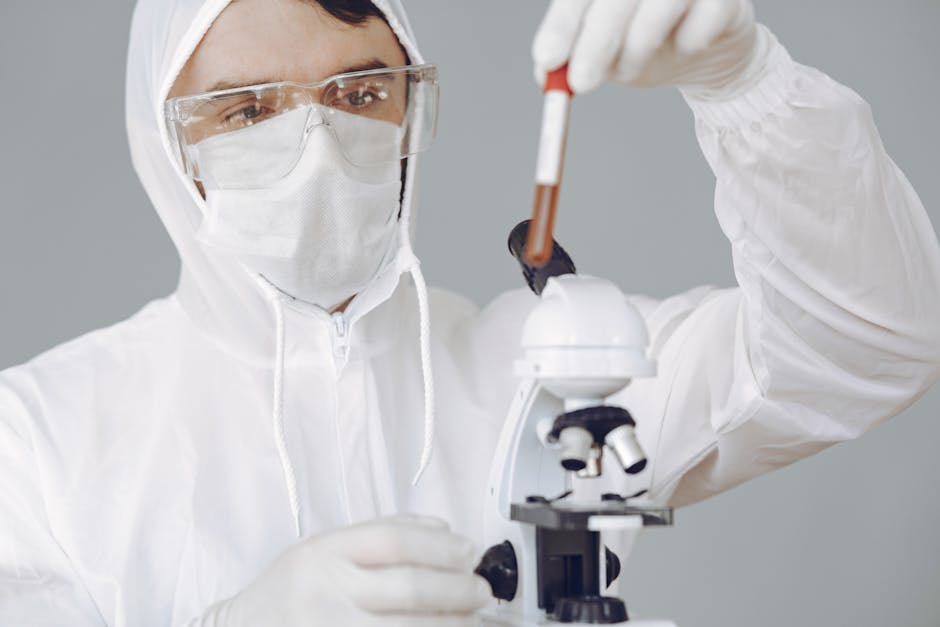
In this article, we’ll explore: Closing the diagnostics gap key to improving women’s health and why it matters today.
Related:
👉 Understanding Why Women with Polycystic Ovary Syndrome Exhibit Impaired Endometrial Receptivity with Excessive ER and Histone Lactylation
👉 Why Closing the Diagnostics Gap is the Real Key to Improving Women’s Health
👉 Why Women Experience Trauma Differently: Understanding the Hormonal Mechanisms of Womens Risk in the Face of Traumatic Stress
Learn more: Closing the diagnostics gap key to improving women’s health on Investopedia
Imagine walking into a doctor’s office with a sharp, stabbing pain in your abdomen. You’ve felt it for months. It’s affecting your work, your sleep, and your ability to enjoy time with your family. You explain the symptoms clearly, only to be told, “It’s probably just stress,” or “Some women just have painful periods. Have you tried taking some ibuprofen and practicing yoga?”
For millions of women around the world, this isn’t a hypothetical scenario—it is a frustrating, daily reality. This phenomenon is part of a much larger, systemic issue known as the diagnostics gap. When we talk about the future of medicine, we often focus on “miracle cures” and high-tech surgeries. But the truth is, we can’t treat what we don’t identify. That is why closing the diagnostics gap key to improving women’s health and ensuring that half the population isn’t left behind by modern medicine.
What Exactly Is the Diagnostics Gap?
At its simplest, the diagnostics gap is the delay or failure to accurately identify a health condition in women compared to men. It’s the space between a woman feeling “off” and receiving a definitive, actionable diagnosis. This gap isn’t just a minor inconvenience; it’s a chasm that leads to years of unnecessary suffering, permanent physical damage, and even death.
For decades, the “male body” has been treated as the default setting in medical research. From the way drugs are tested to the way symptoms are described in textbooks, the male experience has been the gold standard. Women, however, are not just “smaller men.” Our hormones, our immune systems, and even our cellular structures react differently to diseases. When diagnostic tools fail to account for these differences, women pay the price.
The Story of Sarah: A Typical Journey
To understand the human cost, let’s look at Sarah. Sarah started experiencing extreme fatigue and joint pain in her mid-20s. She went to three different specialists over four years. One told her she was depressed. Another suggested she lose weight. A third told her she was likely “working too hard” as a new manager.
By the time Sarah was finally diagnosed with Lupus—an autoimmune disease that affects women at significantly higher rates than men—she had already suffered irreversible kidney damage. If she had been diagnosed in year one instead of year four, her quality of life would be drastically different today. Sarah’s story isn’t an outlier; it’s the standard experience for many women navigating a healthcare system that wasn’t built for them.
The “Male as Default” Problem in Research
Why is this happening? Historically, women were excluded from clinical trials. Researchers argued that fluctuating hormones made women “too complex” to study. While this might have made the data “cleaner” for the scientists, it made the real-world applications dangerous for women.
Because of this, many diagnostic criteria are based on how diseases manifest in men. When a woman shows up with “atypical” symptoms, she isn’t seen as having a different version of the disease—she’s often seen as not having the disease at all. Closing the diagnostics gap key to improving women’s health starts with acknowledging that “atypical” is actually just “typical for women.”
Heart Disease: The Silent Killer
Heart disease is a prime example. Most of us are taught that a heart attack feels like a “crushing weight on the chest” or pain radiating down the left arm. These are classic male symptoms. Women, however, are more likely to experience nausea, shortness of breath, or back pain. Because these don’t fit the “classic” profile, women are significantly more likely to be sent home from the ER while having a cardiac event.
Endometriosis: The Decade-Long Wait
Endometriosis affects 1 in 10 women globally, yet the average time to get a diagnosis is a staggering seven to ten years. Why? Because painful periods are normalized and dismissed. Without a proper diagnostic path—which currently often requires invasive surgery—women spend their most productive years in agony, often being told the pain is “all in their head.”
The Economic and Emotional Toll
The diagnostics gap isn’t just a health issue; it’s an economic one. When women can’t get a diagnosis, they can’t get treatment. This leads to:
- Lost Productivity: Women missing work or leaving the workforce entirely due to unmanaged symptoms.
- Increased Healthcare Costs: Multiple visits to different specialists, unnecessary tests, and emergency room visits because a condition was allowed to worsen.
- Mental Health Strain: Being “gaslit” by the medical community leads to anxiety, depression, and a loss of trust in healthcare providers.
How Technology and AI are Narrowing the Gap
The good news is that the tide is starting to turn. We are entering an era where “FemTech” (Female Technology) is moving from the fringes to the mainstream. Innovators are developing tools specifically designed to catch conditions that primarily affect women.
Artificial Intelligence (AI) is playing a massive role here. AI algorithms can be trained on datasets that specifically include women’s symptoms and biological markers. For instance, new AI-powered imaging is becoming better at detecting breast cancer in dense breast tissue—a common issue that traditional mammograms often miss. Similarly, blood tests are being developed to identify biomarkers for endometriosis, which could replace the need for surgery in the diagnostic process.
Steps Toward a More Equitable Future
Closing the gap requires a multi-pronged approach. It’s not just about better machines; it’s about a better culture. Here is how we move forward:
1. Education and Awareness
Medical schools must update their curricula to include sex-specific symptoms. Doctors need to be trained to recognize that a woman presenting with fatigue and nausea might be having a heart attack, not just a panic attack.
2. Funding for Women’s Health Research
For too long, conditions like PCOS, menopause, and endometriosis have been underfunded. We need more investment in research that focuses specifically on the female body and its unique physiological responses.
3. Listening to the Patient
One of the simplest yet most effective ways to close the gap is for providers to believe women when they describe their pain. The “subjective” experience of the patient is a vital diagnostic tool that is too often ignored.
Key Takeaways for Improving Women’s Health
- Closing the diagnostics gap key to improving women’s health: Accurate and early diagnosis is the foundation of effective treatment.
- The Gender Bias is Real: Medical research has historically used the male body as the default, leading to “atypical” symptoms in women being ignored.
- Conditions are Often Missed: Heart disease, autoimmune disorders, and reproductive health issues like endometriosis suffer the longest diagnostic delays.
- Technology is a Catalyst: AI and FemTech are providing new ways to identify diseases early and accurately.
- Advocacy Matters: Women should feel empowered to seek second opinions and demand that their symptoms be taken seriously.
Conclusion: The Path Forward
We cannot claim to have a world-class healthcare system if it only works effectively for half the population. Closing the diagnostics gap key to improving women’s health isn’t just a “women’s issue”—it’s a human rights issue and a global health priority. When women are healthy, families thrive, economies grow, and societies become more resilient.
It’s time to move past the era of “it’s just stress” and move into an era of precision medicine that sees women for who they are. By investing in better diagnostic tools, diversifying our research, and simply listening to women, we can close the gap for good.
Frequently Asked Questions
Why does it take longer for women to get diagnosed?
Several factors contribute to this, including historical bias in medical research, a lack of awareness regarding female-specific symptoms, and systemic “medical gaslighting” where women’s symptoms are often attributed to emotional or psychological factors rather than physical ones.
What are some common conditions that are misdiagnosed in women?
Heart disease, stroke, Lupus, Fibromyalgia, Endometriosis, and Polycystic Ovary Syndrome (PCOS) are among the most commonly misdiagnosed or late-diagnosed conditions in women.
How can I advocate for myself at the doctor’s office?
Bring a log of your symptoms, including when they happen and how long they last. Don’t be afraid to ask, “What else could this be?” if you feel a diagnosis is incorrect. If you feel unheard, it is perfectly okay—and often necessary—to seek a second or even third opinion.
What role does AI play in closing the diagnostics gap?
AI can analyze vast amounts of data to find patterns that humans might miss. By using datasets that include diverse populations of women, AI can help identify diseases earlier and more accurately by recognizing female-specific biological markers.
Is the diagnostics gap improving?
Yes, there is growing awareness and a surge in FemTech innovation. However, there is still a long way to go in terms of medical school education and equalizing research funding to fully close the gap.
Written with love and assistance and refined for quality.
{“@context”:”https://schema.org”,”@type”:”Article”,”headline”:”Why Closing the Diagnostics Gap is the Secret to Transforming Womenu2019s Health”,”description”:”In this article, weu2019ll explore: Closing the diagnostics gap key to improving women’s health and why it matters today.Related:ud83dudc49 Understanding…”,”author”:{“@type”:”Person”,”name”:”Dr. Cuterus”},”datePublished”:”2026-05-30T09:05:10+00:00″,”dateModified”:”2026-05-30T09:05:10+00:00″,”mainEntityOfPage”:”https://healthyworldz.com/why-closing-the-diagnostics-gap-is-the-secret-to-transforming-womens-health-2/”,”image”:[“https://healthyworldz.com/wp-content/uploads/2026/05/closing-the-diagnostics-gap-key-to-improving-womens-health-4.jpg”]}
🔗 Related: BcozSheMatters: WHO Health Ministry roll out…
🔗 Related: Hormonal mechanisms of womens risk in…