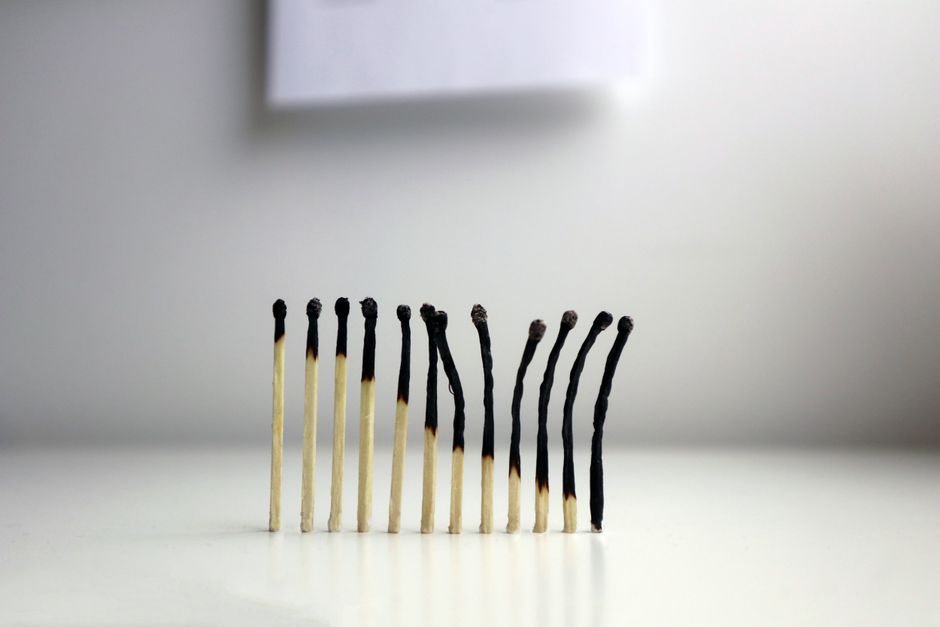
In this article, we’ll explore: Making sense of the widening gender mental health gap: what teenage girls told us and why it matters today.
Related:
👉 Why Are Our Girls Struggling? Making sense of the widening gender mental health gap: what teenage girls told us
👉 Why Is Conceiving Harder with PCOS? Understanding Uterine Receptivity and the Role of Histone Lactylation
👉 Why the 4-Day Work Week is a Game-Changer for Women: More Than Just a Long Weekend
Learn more: Making sense of the widening gender mental health gap: what teenage girls told us on Wikipedia
If you’ve spent any time around teenagers lately, you might have noticed something shifting. It isn’t just the usual “growing pains” or the typical mood swings we associate with puberty. There is a deeper, more quiet storm brewing, particularly among young women. For the last decade, data has shown a startling trend: while mental health challenges are rising for all young people, the numbers for girls are skyrocketing at a much faster rate.
As researchers and writers, we often look at spreadsheets and bar graphs to understand the world. But numbers only tell half the story. To truly understand why this is happening, we have to go straight to the source. By making sense of the widening gender mental health gap: what teenage girls told us reveals a complex world of digital pressure, internal expectations, and a society that asks them to be everything to everyone, all at once.
Let’s dive into what is actually happening behind the bedroom doors and smartphone screens of today’s teenage girls.
The “Gender Gap” Explained
Before we get into the “why,” let’s look at the “what.” In the early 2010s, something changed. Rates of depression, anxiety, and self-harm began to climb significantly for adolescent girls in many parts of the world. While boys are certainly struggling—often with different issues like loneliness or behavioral outbursts—girls are reporting much higher levels of internalizing disorders. This means they are more likely to turn their pain inward.
When we talk about “making sense of the widening gender mental health gap: what teenage girls told us,” we aren’t just talking about a minor difference. We are talking about a scenario where, in some studies, nearly 3 in 5 teenage girls report feeling persistently sad or hopeless. This is double the rate of their male peers. So, what is driving this wedge between the experiences of boys and girls?
1. The Digital Fishbowl: Life Under a Microscope
When we spoke to teenage girls, the first thing that almost always came up was the phone. But it’s not just about “screen time.” It’s about the nature of how girls use technology compared to boys.
Think about it this way: many teenage boys use the internet for gaming. They are “doing” something—playing a match, shouting into a headset, or competing. It’s active. Teenage girls, however, are more likely to use the internet for social media. This is often “passive” and highly visual. It’s a world of curation and comparison.
The Comparison Trap
One 16-year-old, let’s call her Maya, explained it perfectly: “It’s not that I want to be a supermodel. It’s that I see girls from my own school posting photos that look perfect. I know they’ve used filters, but when I look in the mirror, I don’t see a filter. I just see my real face, and it feels like a failure.”
For girls, social media isn’t just a tool; it’s a scoreboard. Every “like” is a vote of confidence, and every lack of engagement feels like a public rejection. The “widening gap” exists partly because girls’ social lives are more tied to these visual, reputation-based platforms than boys’ lives tend to be.
2. The Perfectionism Paradox
Society has spent decades telling girls they can be anything—which is wonderful. But somewhere along the way, that message got twisted into: “You must be everything.”
Teenage girls today feel an immense pressure to be “The Triple Threat”:
- Academically Elite: They need the best grades to get into the best colleges.
- Socially Active: They need a large, loyal friend group and a busy social calendar.
- Physically Flawless: They need to fit the current “aesthetic,” whether that’s the “clean girl” look or whatever the algorithm is pushing this week.
When we asked girls about their daily schedules, many described a level of “productivity” that would burn out a corporate CEO. They are staying up until 2:00 AM finishing essays, waking up early to do their hair and makeup, and spending their “free time” managing their digital presence. There is no “off” switch.
3. The Loss of Physical Freedom
Interestingly, one of the factors contributing to the gender mental health gap is how we protect our children. Historically, girls have been more restricted in their physical movements than boys. Parents, out of a valid fear for their daughters’ safety, often keep them closer to home.
While boys might be out in the neighborhood or playing sports, girls are often in their rooms. But being in your room doesn’t mean you’re safe anymore. In fact, for many girls, their bedroom is where the most “danger” is. It’s where they encounter cyberbullying, predatory algorithms, and the relentless stream of bad news about the world. They are physically safe but psychologically exposed.
The “Always-On” Social Life
In the past, if you had a falling out with a friend at school, you could go home and have a break. Home was a sanctuary. Today, the conflict follows you into your pocket. Teenage girls told us that group chats are a source of constant low-level anxiety. If they don’t reply immediately, they’re “rude.” If they’re left out of a chat, they’re “canceled.” The social labor required to maintain these digital friendships is exhausting, and it falls disproportionately on girls.
4. A Higher Sensitivity to Global Issues
When making sense of the widening gender mental health gap: what teenage girls told us, we also found that girls tend to carry the weight of the world on their shoulders. Teenage girls are often more attuned to social justice issues, climate change, and political instability.
While being socially conscious is a strength, it can also lead to “compassion fatigue” or “eco-anxiety.” Girls reported feeling a deep sense of responsibility to fix the world’s problems, coupled with a feeling of total powerlessness to do so. This combination is a recipe for chronic stress.
Real-World Example: Sarah’s Story
Sarah is 15. She is a straight-A student and plays varsity soccer. To her parents, she looks like she’s thriving. But Sarah describes her life as a “tightrope walk.”
“If I get a B on a test, I feel like I’m falling behind everyone,” she says. “Then I go on TikTok and see girls who are my age making thousands of dollars as influencers, and I feel like I’m wasting my life. Then I see the news about a war or a climate disaster, and I feel guilty for even caring about my grades. It’s like there’s a constant noise in my head telling me I’m not doing enough.”
Sarah’s story isn’t unique. It represents the “internalizing” nature of the mental health gap. Boys might act out their frustrations through aggression or withdrawal; girls like Sarah often “act in,” pushing themselves harder until they eventually break.
How Can We Close the Gap?
Understanding the problem is the first step, but what can we actually do? Making sense of the widening gender mental health gap: what teenage girls told us suggests that we need to change our approach to support.
- Prioritize “Jomo” over “Fomo”: We need to help girls rediscover the “Joy Of Missing Out.” Encouraging them to put the phone away and engage in hobbies that have nothing to do with their “image” or “productivity.”
- Redefine Success: We need to stop praising girls only for their achievements and start praising them for their boundaries. “I’m proud of you for taking a nap” should be just as common as “I’m proud of you for getting an A.”
- Digital Literacy, Not Just Restriction: Simply taking the phone away often causes more anxiety because it cuts off their social lifeline. Instead, we need to teach them how algorithms work and how to recognize when a digital space is becoming toxic.
- Open the Conversation: Girls need spaces to talk about these pressures without being told they are “dramatic” or “over-sensitive.” Their feelings are a logical response to an illogical amount of pressure.
Key Takeaways
- The Gap is Real: Statistics show that girls are experiencing anxiety and depression at much higher rates than boys, a trend that accelerated around 2012.
- Social Media is Central: The visual and reputation-based nature of social media impacts girls more heavily due to the culture of comparison.
- Perfectionism Kills Joy: The pressure to be academically, socially, and physically perfect is a primary driver of the mental health crisis.
- Safety Paradox: Physical safety has increased, but psychological vulnerability has risen as girls spend more time in unregulated digital spaces.
- Listening is Key: The best way to help is to listen to their lived experiences without judgment.
FAQ Section
Why did the gender mental health gap start widening around 2012?
Most experts point to the rise of the smartphone and the shift of social media from “connecting with friends” to “algorithm-driven feeds.” This period coincides with the mass adoption of platforms like Instagram, which are highly visual and comparison-heavy.
Are boys not struggling too?
Boys are absolutely struggling, but often in different ways. Boys’ mental health issues often manifest as “externalizing” behaviors (conduct issues, substance use) or extreme social isolation. The “gap” refers specifically to the much higher rates of reported anxiety and depression in girls.
Is social media the only cause?
No. While it is a major factor, other contributors include increased academic pressure, a more precarious economic future, and the early onset of puberty in girls, which can make them more vulnerable to social stress at a younger age.
How can I help my daughter if she’s struggling?
Start by validating her feelings. Avoid the urge to “fix” everything immediately. Ask questions like, “What does it feel like when you’re on that app?” or “Do you feel like you have enough time to just be yourself?” Professional help from a therapist who specializes in adolescent girls can also be invaluable.
Can the gap be closed?
Yes, but it requires a cultural shift. We need to reduce the “perfectionism” pressure on young women and create digital environments that are safer and less focused on social validation. It starts with one conversation at a time.
By making sense of the widening gender mental health gap: what teenage girls told us, we move away from seeing this as a “girl problem” and start seeing it as a “society problem.” Our girls are the canaries in the coal mine, showing us that the current way of living—always on, always compared, always striving—is simply not sustainable for the human spirit.
Written with love and assistance and refined for quality.
🔗 Related: The Best Late-Night Drink for Gut…
🔗 Related: How the 4-Day Week Benefits Women…