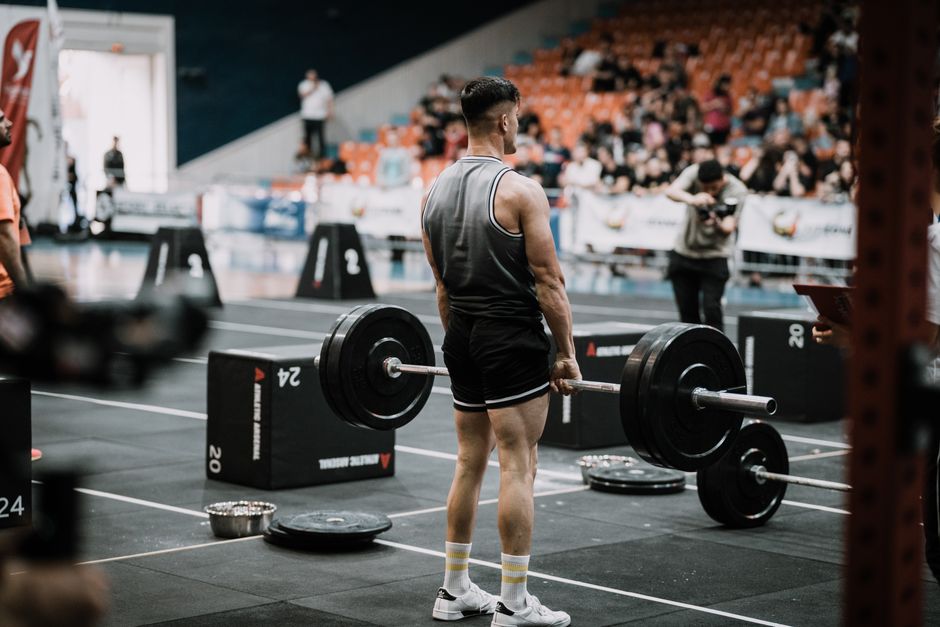
In this article, we’ll explore: Yes Creatine Can Help With StrengthBut Its Wellness Benefits Go Way Beyond The Gym and why it matters today.
Related:
👉 The Silent Struggle: Understanding Pelvic Health for Young Moms in Mangaluru
👉 Yes Creatine Can Help With Strength But Its Wellness Benefits Go Way Beyond The Gym
👉 The Silent Struggle: Why Perineal Muscle Strength is the Key to Beating Stress Urinary Incontinence for Young Moms in Mangaluru
Learn more: Yes Creatine Can Help With StrengthBut Its Wellness Benefits Go Way Beyond The Gym on Wikipedia
If you close your eyes and think of the word “creatine,” what do you see? For most people, the image is pretty specific: a 250-pound bodybuilder in a tank top, shaking a plastic bottle of neon-colored liquid while grunting through a set of heavy squats. For decades, creatine has been tucked away in the “meathead” corner of the supplement world, right next to the smelling salts and the gallon jugs of water.
But here’s the thing: that stereotype is doing a massive disservice to one of the most researched, safest, and most effective supplements on the planet. While it’s true that Yes Creatine Can Help With Strength But Its Wellness Benefits Go Way Beyond The Gym, we are finally starting to realize that it might be just as important for your brain and longevity as it is for your biceps.
Whether you’re a busy parent trying to survive a sleep-deprived Tuesday, a professional looking for a mental edge, or someone who just wants to age gracefully, creatine might be the missing piece of your wellness puzzle. Let’s break down why this simple powder is moving from the weight room to the wellness cabinet.
What Exactly Is Creatine, Anyway?
Before we get into the “why,” let’s talk about the “what.” Creatine isn’t some lab-created steroid or a magic potion. It’s a naturally occurring compound found in your muscle cells. Your body actually makes it naturally (mostly in your liver and kidneys), and you get it from eating things like red meat and fish.
Think of creatine like a backup battery for your cells. Every time you move, think, or even breathe, your body uses a molecule called ATP (Adenosine Triphosphate) for energy. When you use that energy, the ATP loses a phosphate and becomes ADP. Creatine steps in like a hero, hands over a phosphate, and turns that ADP back into ATP. It’s essentially a rapid-recharge system for your body’s energy currency.
Yes Creatine Can Help With Strength But Its Wellness Benefits Go Way Beyond The Gym
We have to give credit where it’s due. The reason creatine became famous is that it works incredibly well for physical performance. When you have more “backup battery” power in your muscles, you can do one more rep, run a few seconds longer, or recover faster between sets.
But the real story—the one that scientists are getting incredibly excited about—is what happens when we look at the rest of the body. We are learning that the same “recharging” mechanism that helps a powerlifter also helps a grandmother maintain her balance or a student focus on a final exam.
1. Your Brain Is an Energy Hog
Did you know that your brain, despite being only about 2% of your body weight, consumes about 20% of your body’s total energy? It is an absolute energy glutton. Just like your muscles, your brain relies on ATP to function. When you’re doing complex math, trying to remember where you parked your car, or focusing on a high-stakes work presentation, your brain is burning through fuel.
Research has shown that supplementing with creatine can increase the levels of creatine in the brain. This can lead to:
- Improved Memory: Studies have shown that people taking creatine perform better on short-term memory tests.
- Reduced Mental Fatigue: Ever feel “brain fog” at 3:00 PM? Creatine helps your brain maintain its energy levels longer, keeping you sharp through the afternoon slump.
- Better Processing Speed: It helps your brain “fire” more efficiently, which is a game-changer for anyone in a fast-paced environment.
2. The Ultimate Weapon Against Aging
As we get older, we naturally start to lose muscle mass and bone density. This is a process called sarcopenia, and it’s one of the biggest reasons people lose their independence as they age. While lifting weights is the best way to fight this, creatine acts as a powerful multiplier.
Imagine a 70-year-old man named Arthur. Arthur isn’t trying to win a bodybuilding show; he just wants to be able to pick up his grandkids and get up out of a chair without help. By taking creatine, Arthur’s muscles stay more hydrated and functional. It helps him maintain the strength he has, making him less likely to suffer from a fall. For seniors, creatine isn’t about vanity; it’s about freedom.
3. Mental Health and Mood Support
This is one of the most promising areas of new research. There is a growing body of evidence suggesting that creatine may play a role in managing depression and anxiety. Because these conditions are often linked to how the brain processes energy, providing the brain with more “fuel” (via creatine) seems to have a stabilizing effect on mood.
While it’s not a replacement for therapy or prescribed medication, many people find that it provides a subtle “floor” for their mood, making the lows a little less low.
4. Recovery from Sleep Deprivation
We’ve all been there. Maybe you have a newborn who thinks 3:00 AM is party time, or maybe you stayed up too late finishing a project. Sleep deprivation wreaks havoc on your cognitive performance. You feel slow, irritable, and “thick-headed.”
Interestingly, studies on sleep-deprived individuals have shown that those who supplement with creatine perform significantly better on cognitive tasks than those who don’t. It doesn’t replace sleep (nothing can!), but it helps your brain “buffer” the lack of energy that comes from a bad night’s rest.
Real-World Example: Sarah’s Story
Let’s look at Sarah. Sarah is a 38-year-old marketing manager and a mother of two. She doesn’t have time for two-hour gym sessions, but she does a 20-minute HIIT workout in her living room three times a week. She started taking creatine because she heard it might help her feel less tired.
Three weeks later, Sarah noticed something strange. Yes, her workouts felt a little easier, but the biggest change was at her desk. Usually, by Wednesday, she felt like she was “dragging.” After starting creatine, she felt more “on.” She was remembering names more easily in meetings and didn’t feel the desperate need for a third cup of coffee at 2:00 PM. For Sarah, the gym benefits were a nice bonus, but the wellness benefits were what kept her taking it.
Common Myths Debunked
Because creatine has been stuck in the “gym bro” world for so long, there are a lot of myths floating around. Let’s clear the air:
- “It will make me look bulky.” No. Creatine helps your muscles hold a little more water, which might make them look slightly “fuller,” but it won’t turn you into the Hulk overnight. You need years of heavy lifting and a massive calorie surplus for that.
- “It’s bad for your kidneys.” This is an old myth based on a misunderstanding of how the body filters waste. For healthy individuals, hundreds of studies have shown that creatine is perfectly safe for long-term use.
- “It’s only for men.” Actually, women may benefit from creatine even more than men, especially during different parts of their menstrual cycle or during menopause, when natural creatine levels can fluctuate.
How to Use Creatine for General Wellness
If you’re ready to try it, you don’t need anything fancy. You don’t need the “Ultra-Turbo-Max” version with a picture of a lightning bolt on the label. Here is the simple, science-backed way to do it:
The “What”
Buy Creatine Monohydrate. It is the most studied, cheapest, and most effective form. It’s usually a tasteless white powder that dissolves easily in water or coffee.
The “How Much”
Most experts recommend 3 to 5 grams per day. That’s about one teaspoon. You don’t need to “load” it (taking huge doses for a week); just take your 5 grams every day, and within 3-4 weeks, your body’s levels will be optimized.
The “When”
Consistency is more important than timing. Take it in the morning with your tea, or put it in your post-workout smoothie. Just make sure you take it every day, even on days you don’t exercise.
Key Takeaways
- Creatine is a natural compound that helps your cells “recharge” their energy.
- Yes Creatine Can Help With Strength But Its Wellness Benefits Go Way Beyond The Gym.
- It provides significant cognitive benefits, including better memory and focus.
- It is a vital tool for healthy aging, helping to preserve muscle and bone density.
- It can help mitigate the negative effects of sleep deprivation on the brain.
- Creatine monohydrate is safe, cheap, and effective for almost everyone.
Frequently Asked Questions (FAQ)
1. Will creatine make me gain weight?
You might see the scale go up by 1-3 pounds in the first week. This is not fat! It is simply water being drawn into your muscle cells. This is actually a good thing, as hydrated muscles function better and look healthier.
2. Can I take creatine if I don’t work out?
Absolutely. While you’ll get the most benefit if you are active, the cognitive and longevity benefits apply to everyone, regardless of their exercise routine.
3. Does creatine cause hair loss?
There is no strong scientific evidence linking creatine to hair loss. This myth started from one small study on rugby players years ago that has never been replicated. Most experts agree it is not a concern.
4. Is it better to take it in pill or powder form?
Both work the same way! The powder is usually much cheaper, but if you find pills more convenient for your lifestyle, go for it. The most important thing is that you take it consistently.
5. Can I get enough creatine from my diet?
It’s difficult. You would have to eat about 2-3 pounds of raw steak a day to get the same amount of creatine found in one teaspoon of supplement. For most people, a supplement is much more practical (and cheaper!).
Final Thoughts
It’s time we stop looking at creatine as just a “fitness” supplement and start seeing it for what it truly is: a foundational wellness tool. In a world where we are all a little too tired, a little too stressed, and a little too worried about aging, creatine offers a simple, safe, and science-backed way to give our bodies and brains the energy they need to thrive.
So, the next time you see that tub of white powder, don’t think of the bodybuilder. Think of your brain, your longevity, and your daily energy. Because while Yes Creatine Can Help With Strength But Its Wellness Benefits Go Way Beyond The Gym, the real strength it gives you might be the mental clarity to tackle your busiest days.
Written with love and assistance and refined for quality.
🔗 Related: Women with polycystic ovary syndrome exhibit…
🔗 Related: BcozSheMatters: WHO Health Ministry roll out…
🔗 Related: A perfect storm for bone loss…