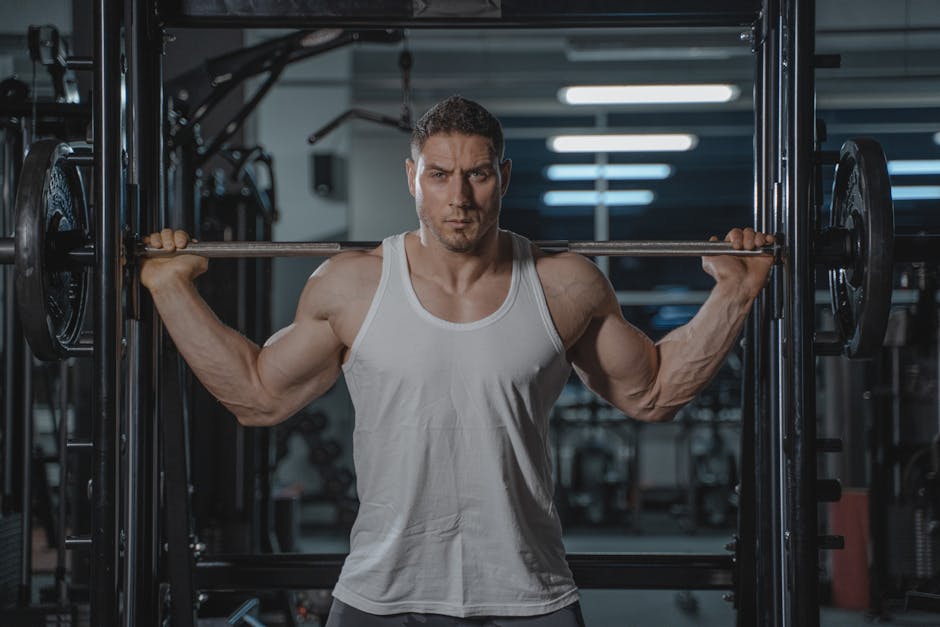
In this article, we’ll explore: Muscle Plays a Role in Weight LossBut Not How You Think and why it matters today.
Related:
👉 Tummy Troubles? 8 Foods To Avoid With an Upset Stomach and What To Eat Instead
👉 Why Muscle Plays a Role in Weight Loss But Not How You Think
👉 Why Her Health Changes Everything: A Deep Dive into the #BcozSheMatters Campaign
Learn more: Muscle Plays a Role in Weight LossBut Not How You Think on Google Search
We’ve all heard the classic fitness advice: “Build more muscle so you can turn your body into a 24/7 fat-burning furnace.” It sounds amazing, right? The idea that you could just sit on your couch, watching your favorite show, while your bulging biceps incinerate calories like a steam engine is a dream we’ve all been sold.
But here is the reality check: muscle doesn’t actually burn that many calories at rest. If you’re expecting a few extra pounds of muscle to let you eat an entire extra pizza every night without gaining weight, I have some bad news for you. However, that doesn’t mean muscle isn’t important. In fact, it is the most critical player in your weight loss journey—just not for the reasons you’ve been told.
If you want to stop fighting the scale and finally see the body you’ve been working for, you need to understand the real science. Muscle Plays a Role in Weight LossBut Not How You Think, and today, we’re going to pull back the curtain on what’s actually happening under your skin.
The Myth of the “Metabolic Furnace”
Let’s start by debunking the biggest lie in the fitness industry. For years, personal trainers and magazines claimed that one pound of muscle burns 50 calories per day at rest. If that were true, adding five pounds of muscle would burn an extra 250 calories a day—the equivalent of a small meal! It sounds like a magic pill.
Unfortunately, actual metabolic research shows that a pound of muscle only burns about 6 calories per day at rest. For comparison, a pound of fat burns about 2 calories. Yes, muscle is three times more metabolically active than fat, but the absolute numbers are tiny. If you gain five pounds of solid muscle, you’re only burning an extra 30 calories a day. That’s about the amount of energy in a single celery stick or half a cookie.
So, if the “furnace” effect is a myth, why does everyone keep saying muscle is the key to weight loss? Because muscle does something much more important than just burning calories while you sleep. It changes how your body handles food, how you move, and how you look.
1. The Secret of Nutrient Partitioning
Imagine your body has two different storage units: one is a high-tech warehouse (your muscles) and the other is a dusty basement (your fat cells). When you eat a carbohydrate-heavy meal—say, a bowl of pasta—your body breaks it down into glucose (sugar).
If you have a high amount of muscle mass and you’ve been training those muscles, your body is much more likely to send that glucose into the “high-tech warehouse” to be stored as glycogen for your next workout. If you have very little muscle, your body has nowhere to put that energy, so it sends it straight to the “dusty basement” fat cells.
This is called nutrient partitioning. Muscle makes you “insulin sensitive.” This means your body becomes incredibly efficient at using food for fuel rather than storing it as baggage. This is the real reason why people with more muscle can eat more food; it’s not because they are burning it all off while sitting still, but because their bodies are primed to use those calories for repair and performance.
A Real-World Example: Sarah vs. Emily
Think about two women, Sarah and Emily. Both weigh 150 pounds. Sarah does only cardio and eats a very low-calorie diet. She has low muscle mass. Emily lifts weights three times a week and has significantly more muscle.
When they both go out for a celebratory dinner, Sarah’s body doesn’t know what to do with the extra calories, so it stores them as fat. Emily’s muscles, which are constantly recovering from her lifting sessions, soak up those calories like a sponge. Over time, Emily stays lean while eating more, while Sarah feels like she gains weight just by looking at a piece of bread.
2. Muscle Protects Your Metabolism During a Diet
When you lose weight, your body doesn’t just want to lose fat. It’s a survival machine, and it sees a “diet” as a famine. To save energy, your body will often try to burn muscle tissue because muscle is “expensive” to keep alive.
This is where most people go wrong. They focus on “weight loss” instead of “fat loss.” If you lose 10 pounds and 5 of those pounds are muscle, your metabolism actually slows down. You become a smaller version of your “soft” self, and your daily calorie needs drop significantly. This is why many people hit a plateau and eventually gain all the weight back (plus some).
By focusing on muscle—through protein intake and resistance training—you send a signal to your body: “Hey! I’m using these muscles! Don’t burn them for fuel!” By preserving your muscle, you keep your metabolic rate high even as you get smaller. This makes the weight loss sustainable.
3. The “Cost of Movement” Factor
While muscle doesn’t burn much at rest, it burns a lot when it’s moving. Think of a small 4-cylinder car versus a heavy-duty V8 truck. When they are both idling at a red light, the difference in gas usage isn’t massive. But the moment you hit the gas pedal, that V8 truck chugs fuel much faster.
When you have more muscle mass, every movement you make—walking the dog, carrying groceries, climbing stairs—requires more energy. You are literally a more expensive machine to operate. This “active” calorie burn is where muscle really pays off in the weight loss journey.
The Psychology of Strength
There is also a psychological component. When you feel strong, you move more. You’re less likely to feel exhausted after a long day, and you’re more likely to take the stairs or go for that evening walk. Muscle gives you the “engine” to be an active person, which creates a positive feedback loop for weight loss.
4. The Aesthetics: Weight Loss vs. Body Composition
We need to talk about what people actually mean when they say they want to “lose weight.” Most people don’t actually want to be a lower number on the scale; they want to look “toned,” “firm,” or “athletic.”
If you lose weight without muscle, you often end up with what people call “skinny fat.” You might fit into a smaller size, but you don’t have that defined look you were hoping for. Muscle is what gives your body its shape. It’s the framework that holds everything together.
Muscle is much denser than fat. One pound of muscle takes up about 20% less space than one pound of fat. This is why you can sometimes stay the exact same weight on the scale but drop two pant sizes. This is the “magic” of muscle that the scale will never show you.
How to Make Muscle Work for You
Now that we know Muscle Plays a Role in Weight LossBut Not How You Think, how do you actually apply this? You don’t need to become a bodybuilder, but you do need to change your approach.
- Prioritize Resistance Training: You don’t need to spend hours in the gym. Two or three full-body sessions a week is enough to tell your body to keep its muscle.
- Eat Enough Protein: Protein is the building block of muscle. Aim for a palm-sized portion at every meal. It also keeps you full, which helps with the “eating less” part of weight loss.
- Stop Obsessing Over the Scale: Start using a measuring tape or how your clothes fit. If your weight is staying the same but your waist is getting smaller, you are gaining muscle and losing fat—the ultimate win.
- Don’t Do Excessive Cardio: Too much cardio without strength training can actually lead to muscle loss. Use cardio for heart health, but use weights for fat loss.
Key Takeaways
- Muscle doesn’t burn hundreds of extra calories at rest, but it makes your body more efficient.
- Muscle improves insulin sensitivity, helping you store food in muscles rather than fat cells.
- Preserving muscle while dieting prevents your metabolism from crashing.
- Muscle makes you burn more calories during activity (the “V8 engine” effect).
- Muscle provides the “toned” look that fat loss alone cannot achieve.
Frequently Asked Questions
Will lifting weights make me look “bulky”?
This is the most common fear, especially among women. The answer is a firm no. Building significant muscle mass requires years of dedicated heavy lifting and a massive surplus of calories. For most people, lifting weights will simply make you look firmer and leaner.
Can I build muscle while losing fat at the same time?
Yes, especially if you are a beginner or have a significant amount of body fat to lose. This is often called “body recomposition.” By eating high protein and lifting weights while in a small calorie deficit, your body can use stored fat to fuel the muscle-building process.
How much protein do I really need?
While “gym bros” might tell you to eat massive amounts, a good rule of thumb for weight loss is about 0.7 to 1 gram of protein per pound of your target body weight. This is enough to protect your muscle while you lose fat.
What is the best exercise for muscle preservation?
Compound movements—like squats, deadlifts, presses, and rows—are the most effective. They use multiple muscle groups at once, giving you the biggest metabolic “bang for your buck.”
Final Thoughts
Weight loss is a complex journey, and the scale is often a lying narrator. If you only focus on the number going down, you might be accidentally destroying the very thing that will help you keep the weight off for good: your muscle.
Remember, Muscle Plays a Role in Weight LossBut Not How You Think. It’s not a magic furnace, but it is your body’s best defense against weight regain. Treat your muscles well, feed them protein, and challenge them with weights. Your future self—the one who is lean, strong, and can actually enjoy a slice of cake without panic—will thank you.
Written with love and assistance and refined for quality.
{“@context”:”https://schema.org”,”@type”:”Article”,”headline”:”Muscle Plays a Role in Weight Loss… But Not How You Think”,”description”:”In this article, weu2019ll explore: Muscle Plays a Role in Weight LossBut Not How You Think and why it matters…”,”author”:{“@type”:”Person”,”name”:”Dr. Cuterus”},”datePublished”:”2026-05-21T13:27:18+00:00″,”dateModified”:”2026-05-21T13:27:18+00:00″,”mainEntityOfPage”:”https://healthyworldz.com/muscle-plays-a-role-in-weight-loss-but-not-how-you-think-2/”,”image”:[“https://healthyworldz.com/wp-content/uploads/2026/05/muscle-plays-a-role-in-weight-lossbut-not-how-you-think-3.jpg”]}
🔗 Related: Hormonal mechanisms of womens risk in…
🔗 Related: Hormonal mechanisms of womens risk in…
🔗 Related: Hormonal mechanisms of womens risk in…