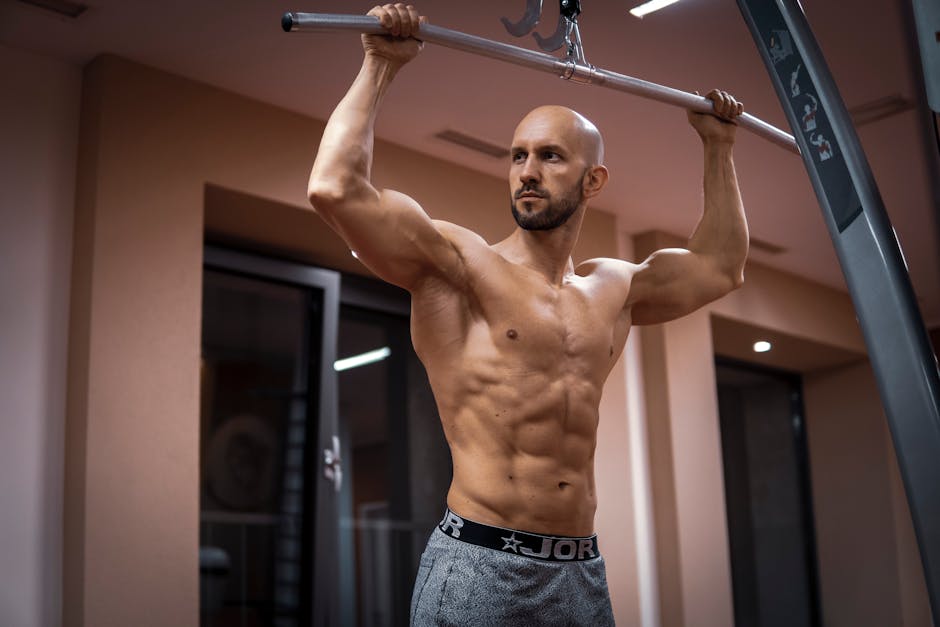
In this article, we’ll explore: Muscle Plays a Role in Weight LossBut Not How You Think and why it matters today.
Related:
👉 Why Trauma Hits Differently: Understanding the Hormonal Mechanisms of Women’s Risk
👉 Why Do Women Process Trauma Differently? Understanding the Hormonal Mechanisms of Stress
👉 Why Building Muscle is Your Secret Weight Loss Weapon (But It’s Not About the Calories)
Learn more: Muscle Plays a Role in Weight LossBut Not How You Think on Investopedia
Have you ever spent weeks killing yourself on a treadmill, eating nothing but steamed broccoli and chicken breast, only to step on the scale and see that the needle hasn’t moved an inch? It’s soul-crushing. You feel lighter, your pants fit a little better, but that number on the scale is acting like it’s glued in place.
Most people in this situation do one of two things: they either double down on more cardio, or they give up entirely and order a pizza. But there’s a third path, one that involves a secret weapon most people misunderstand. That weapon is muscle.
You’ve probably heard the old gym-rat wisdom that “muscle burns more calories than fat.” While that is technically true, it’s often exaggerated to the point of being a myth. If you want to actually transform your body, you need to understand the real science. Muscle Plays a Role in Weight Loss But Not How You Think—it’s not just about burning calories while you sleep; it’s about changing how your body handles food, hormones, and movement.
The Great Calorie Myth: Setting the Record Straight
Let’s start by busting the biggest myth in the fitness world. You might have heard that adding a pound of muscle will burn an extra 50 or 100 calories a day just by sitting there. If that were true, bodybuilders would have to eat 10,000 calories a day just to stay alive while watching Netflix.
In reality, a pound of muscle burns about 6 calories per day at rest. A pound of fat burns about 2 calories. So, if you gain five pounds of muscle, you’re only burning an extra 30 calories a day. That’s about half a cookie. Not exactly the metabolic furnace we were promised, right?
So, why do we keep hearing that muscle is the key to weight loss? Because the real magic happens when you aren’t sitting still. Muscle is “metabolically expensive” during activity. When you have more muscle, every movement you make—from walking to the mailbox to folding laundry—requires more energy. This is where the real weight loss benefits start to kick in.
The Story of Two Walkers: Sarah and Mike
To understand how this works in the real world, let’s look at two neighbors, Sarah and Mike. Both decide to go for a 30-minute walk every morning.
Sarah is a “cardio queen.” she focuses strictly on losing weight through running and light dieting. She has lost some fat, but she’s also lost a significant amount of muscle because she doesn’t do any strength training. Her body is efficient, meaning it has learned to survive on very few calories.
Mike, on the other hand, spends two days a week lifting weights. He has about 10 pounds more muscle than Sarah. When they walk together at the exact same pace, Mike’s body has to work harder to move his muscular frame. His “engine” is bigger. By the end of the walk, Mike has burned significantly more calories than Sarah, even though they did the exact same activity.
This is the first way muscle helps: it makes you a less efficient machine. In the world of weight loss, you want to be “inefficient.” You want your body to have to work hard to do basic tasks.
Muscle is a Sponge for Your Meals
This is the part where Muscle Plays a Role in Weight Loss But Not How You Think. It’s not just about the calories; it’s about nutrient partitioning. This is a fancy way of saying “where your food goes after you eat it.”
When you eat carbohydrates, they break down into glucose (sugar) in your blood. Your body has two main places to put that sugar: your fat cells or your muscle cells. If you have very little muscle and you’re sedentary, your body is more likely to shove that energy into fat storage.
However, muscle acts like a giant sponge for glucose. When you have more muscle mass—and especially when you’ve recently challenged those muscles with exercise—your body becomes much better at sending those calories to your muscles to be used as fuel or stored as glycogen for your next workout. This is called improved insulin sensitivity.
Essentially, muscle gives you a “buffer.” It allows you to eat more food without that food being stored as body fat. This is why people with more muscle can seemingly eat a “cheat meal” and wake up looking leaner, while someone with very little muscle might feel bloated and heavy for days after the same meal.
The Afterburn Effect: EPOC
Another way muscle changes the game is through something called Excess Post-exercise Oxygen Consumption (EPOC). When you do a long, slow cardio session, you burn calories while you’re doing it, but the moment you stop, the calorie burning stops too.
When you perform high-intensity resistance training to build muscle, you create microscopic tears in the muscle fibers and disrupt your body’s steady state. Your body then has to spend the next 24 to 48 hours repairing that tissue, balancing hormones, and cooling itself down. This process requires energy. You are literally burning fat while you’re sleeping on Tuesday because of the workout you did on Monday.
The “Toned” Trap and the Scale Obsession
We need to talk about the word “toned.” Most people say they want to be toned, but they’re afraid of “bulking up.” Here is the truth: “Toned” is just a code word for having muscle while having low enough body fat to see it. You cannot “tone” a muscle that isn’t there.
This brings us to the biggest psychological hurdle in weight loss: the scale. Because muscle is much denser than fat, it takes up about 20% less space. This is why you can stay the exact same weight but drop two pant sizes.
Imagine two five-pound weights. One is made of lead (muscle), and the other is made of feathers (fat). The lead is small and compact; the feathers are a giant, messy pile. If you swap five pounds of “feathers” for five pounds of “lead,” your weight hasn’t changed, but your body shape has completely transformed. If you only look at the scale, you’ll think you’ve failed. If you look in the mirror, you’ll see a victory.
How to Make Muscle Work for You
You don’t need to become a professional bodybuilder to reap these benefits. Even a modest increase in muscle mass can change your metabolic profile. Here is how to start:
- Prioritize Protein: Your body cannot build or maintain muscle if you aren’t eating enough protein. Aim for a palm-sized portion at every meal.
- Lift Heavy-ish Things: You don’t have to bench press a car, but you do need to challenge yourself. If you can do 15 reps of an exercise and it feels easy, the weight is too light.
- Stop Overdoing Cardio: Too much cardio can actually cause your body to break down muscle for fuel, especially if you’re in a steep calorie deficit. Use cardio for heart health, but use weights for body composition.
- Rest and Recover: Muscles don’t grow in the gym; they grow while you sleep. Stress and lack of sleep raise cortisol, which makes it harder to build muscle and easier to store fat.
Key Takeaways
- Muscle isn’t a magic furnace: It doesn’t burn hundreds of calories at rest, but it makes every movement you do more “expensive.”
- It manages your blood sugar: Muscle acts as a storage site for carbohydrates, preventing them from being stored as fat.
- Focus on “The Look,” not the weight: Muscle is denser than fat. You can look significantly leaner at the same weight if you have more muscle.
- The Afterburn is real: Strength training keeps your metabolism elevated for hours or even days after the workout ends.
Frequently Asked Questions
1. Will lifting weights make me look bulky?
No. Building significant muscle mass is incredibly difficult and takes years of dedicated training and specific dieting. For most people, lifting weights will simply make them look firmer and more “fit.” You won’t wake up looking like the Incredible Hulk by accident.
2. Can I turn my fat into muscle?
Technically, no. Fat and muscle are two completely different types of tissue. It’s like trying to turn a banana into an orange. However, you can lose fat and build muscle at the same time (a process called body recomposition), which gives the appearance of “turning fat into muscle.”
3. If I stop lifting, will my muscle turn into fat?
Again, no. If you stop lifting, your muscles will eventually shrink (atrophy). If you also continue to eat the same amount of food while being less active, you will likely gain fat. The muscle doesn’t “change” into fat; one just disappears while the other appears.
4. Do I need to spend hours in the gym?
Not at all. Just two or three 45-minute sessions of full-body strength training per week are enough to see significant changes in how your body handles weight loss.
Conclusion
Weight loss is a complex journey, and it’s easy to get caught up in the numbers. But remember: Muscle Plays a Role in Weight Loss But Not How You Think. It’s not just about the burn; it’s about building a healthier, more resilient, and more efficient biological machine.
Stop chasing a smaller number on the scale and start chasing a stronger version of yourself. When you focus on building muscle, the fat loss often takes care of itself as a side effect of a healthier metabolism. Put down the “diet” mindset and pick up some weights—your future self will thank you.
Written with love and assistance and refined for quality.
{“@context”:”https://schema.org”,”@type”:”Article”,”headline”:”Why Muscle Plays a Role in Weight Loss But Not How You Think”,”description”:”In this article, weu2019ll explore: Muscle Plays a Role in Weight LossBut Not How You Think and why it matters…”,”author”:{“@type”:”Person”,”name”:”Dr. Cuterus”},”datePublished”:”2026-05-29T03:08:21+00:00″,”dateModified”:”2026-05-29T03:08:21+00:00″,”mainEntityOfPage”:”https://healthyworldz.com/why-muscle-plays-a-role-in-weight-loss-but-not-how-you-think-8/”,”image”:[“https://healthyworldz.com/wp-content/uploads/2026/05/muscle-plays-a-role-in-weight-lossbut-not-how-you-think-26.jpg”]}
🔗 Related: Women with polycystic ovary syndrome exhibit…
🔗 Related: BcozSheMatters: WHO Health Ministry roll out…
🔗 Related: 8 Foods To Avoid With an…