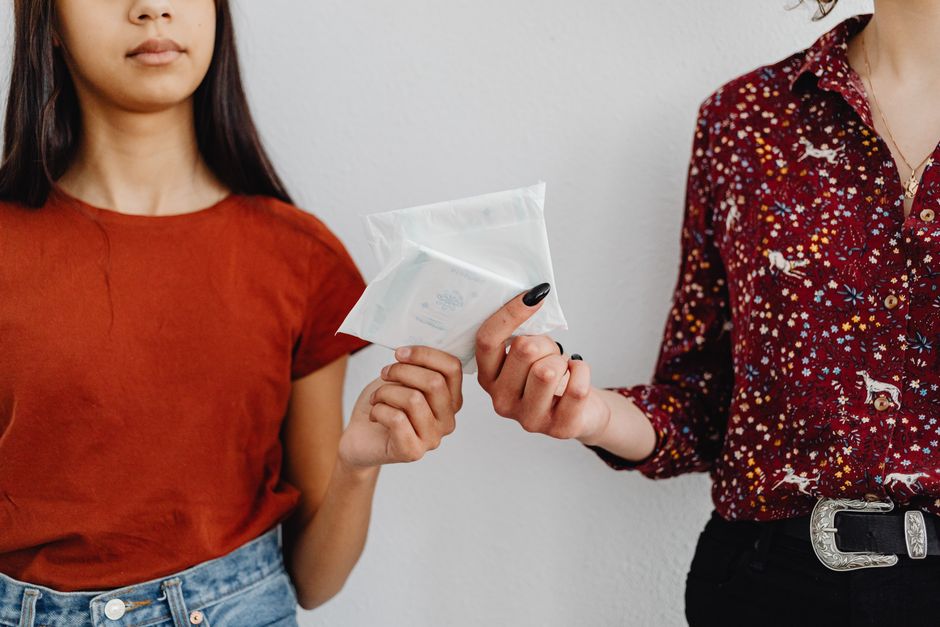
In this article, we’ll explore: Period poverty: A global menstrual health crisis and why it matters today.
Related:
👉 The Hidden Risk of the "Skinny Shot": A Perfect Storm for Bone Loss in Women During Menopause
👉 Why Her Health Can’t Wait: A Deep Dive into the BcozSheMatters Campaign by WHO and the Health Ministry
👉 The Silent Risk: Why Menopause and GLP-1 Drugs Could Be a Perfect Storm for Your Bones
Learn more: Period poverty: A global menstrual health crisis on Wikipedia
Imagine for a moment that you are a teenage girl sitting in a classroom. You feel that familiar, dull ache in your lower back. You realize your period has started. But instead of reaching into your bag for a pad or asking a friend for a spare tampon, you feel a surge of panic. You don’t have any supplies. Your family can’t afford them this month because the money had to go toward groceries. You look at the clock, realizing you have six hours of school left, and your only option is to fold up some rough toilet paper or use an old rag you found in your locker.
This isn’t a scene from a historical novel. For millions of people around the world, this is a monthly reality. This is period poverty: a global menstrual health crisis that affects dignity, education, and health every single day.
In this post, we’re going to look past the surface of this issue. We’ll explore why it happens, who it affects, and why solving it is one of the most effective ways to change the world.
What Exactly Is Period Poverty?
When we hear the term “period poverty,” most of us think about a lack of pads or tampons. While that’s a huge part of it, the crisis is actually much broader. Period poverty is the lack of access to menstrual products, hygiene facilities, waste management, and even the basic education needed to manage a period safely and with dignity.
It’s a complex mix of three main barriers:
- Affordability: The high cost of menstrual products relative to income.
- Infrastructure: Lack of clean water, private toilets, and bins to dispose of used products.
- Stigma: The cultural shame and “taboo” that prevents people from talking about menstruation or seeking help.
When these three things collide, it creates a cycle of disadvantage that is incredibly hard to break.
The Hidden Cost of Being a Girl
Period poverty isn’t just a “women’s issue.” It is a systemic economic and social barrier. Let’s look at how it ripples through a person’s life.
1. The Education Gap
In many parts of the world, a period is the reason a girl stops going to school. In sub-Saharan Africa, the World Bank estimates that one in ten girls misses school during their menstrual cycle. Over time, these missed days add up to about 20% of the school year. When a student falls that far behind, they are much more likely to drop out entirely. This limits their future job prospects and keeps them trapped in a cycle of poverty.
2. The Health Risks
When someone can’t afford safe products, they get creative—but in a dangerous way. People have reported using old rags, newspapers, dried leaves, husks, or even sand wrapped in cloth. These methods are not just uncomfortable; they are dangerous. They can lead to severe urinary tract infections (UTIs), yeast infections, and even life-threatening conditions like Toxic Shock Syndrome (TSS).
3. The Economic Burden
In the United States, a “Pink Tax” often exists where products marketed toward women are more expensive than those for men. Combine this with the fact that many states still tax menstrual products as “luxury items” rather than “essentials,” and you have a recipe for financial strain. For a low-income family, choosing between a box of tampons and a gallon of milk is a choice no one should have to make.
Real-World Examples: A Tale of Two Realities
To understand the scale of period poverty: a global menstrual health crisis, we have to look at how it manifests in different environments.
The Story of Amina in Rural Kenya
Amina is 14. Her school has one toilet for 50 girls, and it doesn’t have a lock or running water. When Amina has her period, she stays home. She feels ashamed because her community views menstruation as “unclean.” Because she doesn’t have pads, she stays in her room for four days every month. Amina is brilliant at math, but her grades are slipping because she misses so much instruction. For Amina, period poverty is a wall standing between her and her dream of becoming a doctor.
The Story of Sarah in London
You might think period poverty only happens in developing nations, but that’s a myth. Sarah is a university student in London. After paying her rent and bills, she has £10 left for the week. A box of tampons costs nearly half of that. Sarah often has to skip meals to buy pads, or she “stretches” a single pad to last an entire day, which is a major health risk. In the UK, surveys have shown that 1 in 10 girls has been unable to afford menstrual products at some point.
Why Is There Still a Stigma?
If menstruation is a natural biological process—just like breathing or digestion—why is it so hard to talk about? The stigma surrounding periods is ancient and deeply rooted.
In some cultures, menstruating people are forbidden from entering kitchens or places of worship. In others, the topic is simply never discussed, leaving young girls terrified when they see blood for the first time, thinking they are dying or have done something wrong. This “silence” is the greatest ally of period poverty. When we don’t talk about it, we don’t legislate for it, and we don’t fund solutions for it.
Signs of Progress: Breaking the Cycle
It’s not all bad news. In recent years, the world has started to wake up to the fact that menstrual equity is a human right. Here are some incredible things happening right now:
- Scotland Leading the Way: In 2020, Scotland became the first country in the world to make period products free for everyone who needs them. This landmark legislation set a gold standard for the rest of the world.
- Ending the “Tampon Tax”: Many countries, including India, Australia, and several U.S. states, have eliminated the sales tax on menstrual products, recognizing them as essential health items.
- Grassroots Movements: Organizations like Period.org and The Pad Project are working to distribute products and set up local manufacturing hubs where women can make their own biodegradable pads.
- Education in Schools: More schools are beginning to teach menstrual health to both boys and girls. Normalizing the conversation for boys is a crucial step in ending the “shame” factor.
How You Can Help
You don’t have to be a politician to make a difference. Here are a few simple ways to help tackle period poverty:
- Donate products: Food banks and homeless shelters are always in desperate need of pads and tampons, yet they are rarely donated.
- Support brands with a mission: Some companies operate on a “buy one, give one” model.
- Speak up: Simply talking about periods openly helps break the stigma. If you see a lack of products in your workplace or school, bring it up with management.
- Advocate for policy: Support local legislation that aims to provide free products in public bathrooms and schools.
Key Takeaways
- Period poverty: a global menstrual health crisis is about more than just pads; it’s about water, dignity, and education.
- It affects millions of people in both wealthy and developing nations.
- Lack of access to products leads to significant school and work absenteeism.
- Unsafe alternatives to menstrual products cause serious long-term health issues.
- Breaking the social stigma is the first step toward achieving menstrual equity.
- Legislation, like that seen in Scotland, proves that free access to products is a reachable goal.
Frequently Asked Questions
Is period poverty only a problem in poor countries?
No. While it is very prevalent in developing nations due to lack of infrastructure, it is a significant issue in the US, UK, and Europe. Low-income individuals and those experiencing homelessness in “wealthy” countries struggle every month to afford basic supplies.
What is the “Tampon Tax”?
The “Tampon Tax” refers to the value-added tax (VAT) or sales tax placed on menstrual products. In many places, items like Viagra or candy are exempt from tax as “necessities,” while pads and tampons are taxed as “luxury goods.”
How does period poverty affect mental health?
The stress of not knowing how you will manage your period can lead to intense anxiety, depression, and a sense of isolation. The shame associated with “leaking” in public can cause long-term self-esteem issues, especially in young adolescents.
Can men help end period poverty?
Absolutely. Men are often in positions of power—as lawmakers, school principals, or CEOs. By understanding the issue and supporting policies that provide free products or better facilities, men play a vital role in normalizing menstrual health.
Final Thoughts
Menstruation is a sign of health and life, yet for millions, it is a source of shame and a barrier to success. Period poverty is a solvable crisis. By investing in products, infrastructure, and education, we aren’t just helping people manage a cycle; we are opening the doors to education, health, and economic freedom.
It’s time to stop whispering about periods and start demanding that menstrual health be treated as the fundamental human right it truly is.
Written with love and assistance and refined for quality.
🔗 Related: Perineal muscle strength as a predictor…
🔗 Related: Research Shows This Supplement Can Help…
🔗 Related: Perineal muscle strength as a predictor…