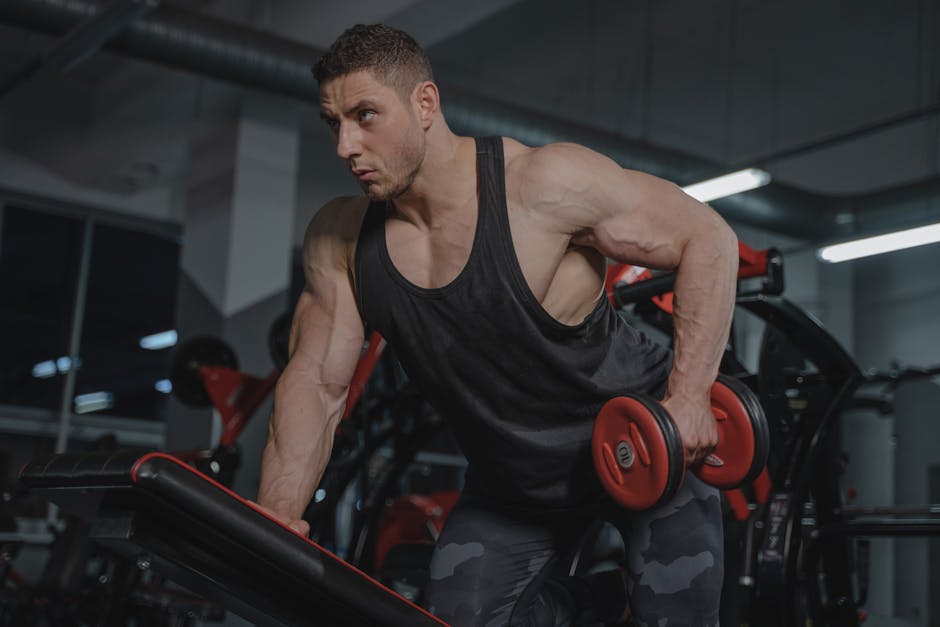
In this article, we’ll explore: Muscle Plays a Role in Weight LossBut Not How You Think and why it matters today.
Related:
👉 Why Stress Hits Differently: Understanding the Hormonal Mechanisms of Women’s Risk in the Face of Traumatic Stress
👉 Why Muscle Plays a Role in Weight Loss… But Not How You Think
👉 BcozSheMatters: Why the New WHO and Health Ministry Campaign is a Game-Changer for Women Everywhere
Learn more: Muscle Plays a Role in Weight LossBut Not How You Think on Google Search
If you’ve ever spent five minutes looking for weight loss advice online, you’ve probably heard the classic line: “Muscle burns more calories than fat.” It’s the ultimate selling point for lifting weights. People tell you that if you just build a little bit of muscle, you’ll turn into a human furnace, melting away body fat while you sleep on the couch watching Netflix.
It sounds amazing, doesn’t it? But here’s the cold, hard truth: the “metabolic furnace” idea is a bit of an exaggeration. If you build five pounds of muscle, you aren’t suddenly going to be able to eat an extra pizza every night without gaining weight.
However, that doesn’t mean muscle isn’t important. In fact, it is the single most important factor in long-term, sustainable weight loss. It’s just that Muscle Plays a Role in Weight Loss But Not How You Think. It’s not just about the calories burned at rest; it’s about how muscle changes your biology, your hormones, and your ability to keep the weight off for good.
The Great Calorie Myth: Is Muscle Really a Furnace?
Let’s start by debunking the biggest myth in the fitness industry. You might have heard that one pound of muscle burns 50 extra calories per day. If that were true, gaining 10 pounds of muscle would allow you to burn an extra 500 calories a day—the equivalent of a full meal!
Unfortunately, the real math is a bit more modest. Scientific studies show that one pound of muscle burns about 6 calories per day at rest. In comparison, one pound of fat burns about 2 calories per day. While muscle is three times more metabolically active than fat, the difference is only about 4 calories per pound.
If you work incredibly hard to put on 10 pounds of lean muscle—which is no small feat—you’ll only burn about 40 to 60 extra calories a day. That’s roughly the amount of calories in a large apple. So, if the “burn” isn’t that high, why does everyone insist that muscle is the key to weight loss?
Muscle is a “Sponge” for Blood Sugar
This is where the magic actually happens. Instead of thinking of muscle as a furnace, think of it as a giant sponge.
When you eat carbohydrates, your body breaks them down into glucose (sugar). This sugar enters your bloodstream, and your pancreas releases insulin to help move that sugar into your cells for energy. If your “sponges” (your muscles) are small or inactive, that sugar has nowhere to go. When the sponges are full, your body has to do something else with that extra energy. Usually, it stores it as fat.
When you have more muscle mass, and especially when you use those muscles through resistance training, your sponges get bigger and more “thirsty.” They become highly efficient at soaking up glucose from your blood. This is called “insulin sensitivity.”
The Real-World Example: The Tale of Two Dinners
Imagine two people, Sarah and Mike. Both weigh 150 pounds and they both eat a big pasta dinner.
- Sarah has very little muscle mass and doesn’t exercise. Her “sponges” are small. When she eats the pasta, her blood sugar spikes, her body can’t store it in her muscles, and much of that energy is sent straight to fat storage.
- Mike has a decent amount of muscle and lifted weights earlier that day. His muscles are “thirsty” for energy to recover. When he eats the pasta, his muscles soak up the glucose like a sponge. Very little is left over to be stored as fat.
This is how Muscle Plays a Role in Weight Loss But Not How You Think. It’s not about burning more calories while you sit; it’s about how your body handles the food you eat.
Muscle Prevents the “Skinny Fat” Trap
We’ve all seen someone who loses a lot of weight but doesn’t necessarily look “fit.” They might even still feel soft or unhappy with their reflection. This is often referred to as being “skinny fat.”
When you lose weight through extreme dieting and cardio alone, your body doesn’t just burn fat. It also burns muscle. Your body is smart; if you aren’t using your muscles and you aren’t eating enough, your body views muscle as “expensive” tissue to maintain. It will break down that muscle for energy.
By the time you reach your goal weight, you have a lower metabolism than when you started because you have less muscle. This is why so many people gain the weight back immediately. They’ve shrunk their “engine.” By focusing on muscle, you ensure that the weight you lose is actually fat, leaving you with a toned, firm, and healthy physique.
The Power of NEAT and Movement
Another way muscle helps with weight loss is through something called NEAT—Non-Exercise Activity Thermogenesis. This is a fancy way of describing all the movement you do that isn’t intentional exercise. It’s walking to the car, fidgeting, cleaning the house, and standing up.
When you have more muscle and better strength, movement feels easier. You have more “get up and go.” People with more muscle mass tend to be more active throughout the day without even realizing it.
Think about it: if your legs are weak, walking up a flight of stairs feels like a chore. You might take the elevator instead. If your legs are strong, you don’t even think about the stairs. Those small choices add up to thousands of calories burned over the course of a month. Muscle makes you a more active human being by default.
How to Build Muscle Without “Bulking Up”
A common fear, especially among women, is that focusing on muscle will lead to looking “bulky.” This is one of the biggest hurdles in weight loss journeys.
Building significant muscle mass is actually very difficult. Bodybuilders spend years eating massive amounts of protein and lifting heavy weights to get that look. For the average person looking to lose weight, lifting weights will simply make your muscles denser and more defined.
Simple Steps to Get Started:
- Prioritize Protein: Aim for about 0.8 to 1 gram of protein per pound of body weight. Protein is the building block of muscle.
- Lift Heavy-ish Things: You don’t need to join a CrossFit gym, but you do need to challenge your muscles. Squats, lunges, push-ups, and rows are great starting points.
- Consistency over Intensity: You don’t need to work out for two hours. 30 minutes of resistance training three times a week is enough to see a massive difference in your metabolic health.
Key Takeaways
Understanding that Muscle Plays a Role in Weight Loss But Not How You Think changes the way you approach your fitness journey. Here are the main points to remember:
- Muscle doesn’t burn hundreds of extra calories at rest, but it does burn more than fat.
- Muscle improves insulin sensitivity, acting as a “sponge” for blood sugar and preventing fat storage.
- Maintaining muscle while dieting prevents your metabolism from crashing.
- Muscle improves your “body composition,” helping you look toned rather than just “smaller.”
- Having more muscle makes daily movement easier, naturally increasing your daily calorie burn.
Frequently Asked Questions
Does muscle turn into fat if I stop working out?
No. Muscle and fat are two entirely different types of tissue. It’s like saying a piece of wood can turn into a piece of gold. If you stop working out, your muscle fibers may shrink (atrophy), and if you continue to eat the same amount, you might gain fat, but one never “turns into” the other.
Should I lose weight first and then build muscle?
Ideally, you should do both at the same time. This is called “body recomposition.” By lifting weights while in a slight calorie deficit, you can lose fat while maintaining or even slightly building muscle. This is the fastest way to change how you look in the mirror.
Will lifting weights make me weigh more on the scale?
In the short term, yes, it might. Muscle is much denser than fat. It takes up much less space. You might stay the same weight on the scale but drop two pant sizes. This is why you should use a tape measure or progress photos rather than just the scale to track your success.
How much protein do I really need?
Most experts recommend about 25-30 grams of protein per meal. This ensures your body has a steady supply of amino acids to repair and maintain your muscle tissue throughout the day.
Final Thoughts
Weight loss is often sold as a simple equation of “eat less, move more.” But your body is a complex biological system, not a calculator. If you want to lose weight and keep it off, you have to work with your biology, not against it.
By focusing on building and maintaining muscle, you aren’t just chasing a number on a scale. You are building a healthier, more resilient body that processes food better, moves more easily, and looks better in clothes. Remember, Muscle Plays a Role in Weight Loss But Not How You Think—it’s not about the “burn,” it’s about the “build.”
Written with love and assistance and refined for quality.
{“@context”:”https://schema.org”,”@type”:”Article”,”headline”:”Why Muscle Plays a Role in Weight Loss But Not How You Think”,”description”:”In this article, weu2019ll explore: Muscle Plays a Role in Weight LossBut Not How You Think and why it matters…”,”author”:{“@type”:”Person”,”name”:”Dr. Cuterus”},”datePublished”:”2026-05-21T09:28:35+00:00″,”dateModified”:”2026-05-21T09:28:35+00:00″,”mainEntityOfPage”:”https://healthyworldz.com/why-muscle-plays-a-role-in-weight-loss-but-not-how-you-think-2/”,”image”:[“https://healthyworldz.com/wp-content/uploads/2026/05/muscle-plays-a-role-in-weight-lossbut-not-how-you-think-2.jpg”]}
🔗 Related: 8 Foods To Avoid With an…
🔗 Related: 8 Foods To Avoid With an…
🔗 Related: Muscle Plays a Role in Weight…