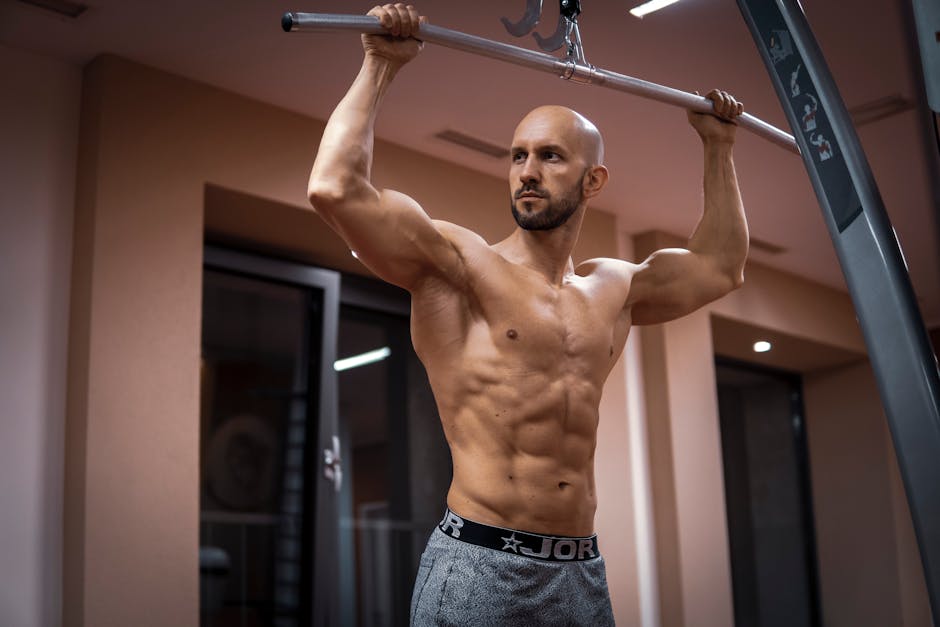
In this article, we’ll explore: Muscle Plays a Role in Weight LossBut Not How You Think and why it matters today.
Related:
👉 8 Foods To Avoid With an Upset Stomach and What To Eat Instead
👉 Why Trauma Hits Differently: Understanding the Hormonal Mechanisms of Women’s Risk
👉 Why Muscle Plays a Role in Weight LossBut Not How You Think
Learn more: Muscle Plays a Role in Weight LossBut Not How You Think on Wikipedia
We’ve all heard the classic fitness advice: “Muscle burns more calories than fat.” It’s the battle cry of every personal trainer and the headline of a thousand fitness magazine covers. The logic seems simple enough. If you build more muscle, you turn your body into a fat-burning furnace that melts away calories while you’re sleeping, watching Netflix, or scrolling through your phone.
But here’s the honest truth that might surprise you: the “metabolic furnace” effect of muscle is actually quite small. If you gain five pounds of pure muscle, your body only burns about an extra 30 to 50 calories a day at rest. That’s roughly the equivalent of a single medium-sized apple. Hardly the metabolic miracle we were promised, right?
So, does that mean muscle is useless for weight loss? Absolutely not. In fact, muscle is arguably the most important factor in long-term weight management. However, muscle plays a role in weight loss but not how you think. It’s not about the passive calorie burn; it’s about how muscle changes your biology, your hormones, and your ability to move.
Let’s dive into the real reasons why muscle is your best friend in the journey to a leaner, healthier you.
The Myth of the “Metabolic Furnace”
Before we get into the good stuff, we have to clear the air. For years, the fitness industry exaggerated the resting metabolic rate of muscle. Some claims suggested a pound of muscle burns 50 calories a day, while fat burns almost nothing. If that were true, bodybuilders would have to eat 10,000 calories a day just to stay alive while sitting on the couch.
In reality, a pound of muscle burns about 6 calories per day at rest, while a pound of fat burns about 2 calories. Yes, muscle is three times more metabolically active than fat, but the total number is still low. If you’re looking for a way to eat pizza every night without gaining weight, simply “gaining muscle” isn’t the magic pill.
So, if it’s not about the resting calories, why do people with more muscle seem to stay lean so much easier? The answer lies in what happens when you actually use that muscle.
1. Muscle is Your Body’s “Glucose Sink”
Think of your bloodstream like a highway and sugar (glucose) like the cars. If there are too many cars and nowhere for them to park, you get a traffic jam. In your body, that “traffic jam” is high blood sugar, which leads to insulin resistance and fat storage, especially around the midsection.
Muscle is your body’s largest “parking lot” for glucose. When you have more muscle mass—and specifically when you engage that muscle through resistance training—your body becomes much more efficient at pulling sugar out of the blood and storing it as glycogen in the muscles to be used for energy later.
The Real-World Example: The Two Jennifers
Imagine two women, both weighing 150 pounds. Jennifer A does only steady-state cardio (like jogging) and has lower muscle mass. Jennifer B lifts weights three times a week and has significantly more muscle.
When they both eat a bowl of pasta, Jennifer A’s body has limited “parking space” for that glucose. Her insulin levels spike, and her body is more likely to store that energy as fat. Jennifer B’s muscles, however, act like a sponge. Her body shunts that glucose straight into her muscle tissue to recover from her last workout. Jennifer B stays leaner not because she’s burning more calories while sitting, but because her body handles food differently.
2. The “Afterburn Effect” and Caloric Partitioning
While muscle doesn’t burn much at rest, the process of building and maintaining it is incredibly expensive for your body. This is often referred to as EPOC (Excess Post-exercise Oxygen Consumption).
When you do a heavy strength training session, you aren’t just burning calories during the 45 minutes you’re at the gym. You are creating microscopic tears in your muscle fibers. Your body then has to spend the next 24 to 48 hours repairing those tears, synthesizing new proteins, and restoring cellular balance. This recovery process requires a significant amount of energy.
Furthermore, muscle improves “caloric partitioning.” This is a fancy way of saying that muscle influences where your calories go. When you are muscular and active, your body is “primed” to send nutrients toward muscle repair rather than fat storage. You are essentially teaching your body to be a high-performance machine rather than a storage unit.
3. Muscle Prevents the “Skinny Fat” Trap
One of the biggest mistakes people make when trying to lose weight is focusing solely on the number on the scale. If you lose 20 pounds through extreme cardio and a massive calorie deficit, you aren’t just losing fat. You are likely losing a significant amount of muscle tissue too.
When you lose muscle, your metabolism actually slows down. This is why many people who lose weight quickly find it almost impossible to keep it off—they’ve effectively shrunk their “engine.” They end up “skinny fat,” where they weigh less but have a high body fat percentage and a soft appearance.
By prioritizing muscle, you ensure that the weight you lose is actually fat. This keeps your metabolic rate stable and gives you that “toned” look that most people are actually searching for when they say they want to “lose weight.”
4. The Psychological Edge: Capability vs. Deprivation
Weight loss is often a journey of “less.” Less food, less dessert, less fun. It’s a mindset of deprivation, which is why it’s so hard to sustain.
Building muscle shifts the focus to “more.” More strength, more capability, more energy. When you start focusing on how much you can squat or how many push-ups you can do, your relationship with your body changes. You start seeing food as fuel for your performance rather than an enemy to be avoided.
This psychological shift is a secret weapon for weight loss. People who enjoy the feeling of being strong are much more likely to stick to their fitness routine long-term compared to those who are simply “punishing” themselves on a treadmill to burn off a cookie.
How to Make Muscle Work for You
Now that we understand that muscle plays a role in weight loss but not how you think, how do we actually put this into practice? You don’t need to become a professional bodybuilder to reap these benefits. Here is a simple framework:
- Prioritize Resistance Training: Aim for at least 2-3 days a week of lifting weights, using resistance bands, or doing bodyweight exercises like lunges and push-ups.
- Eat Enough Protein: Protein is the building block of muscle. To maintain and build muscle while losing fat, aim for about 0.7 to 1 gram of protein per pound of your goal body weight.
- Don’t Overdo the Cardio: Cardio is great for heart health, but hours of “chronic cardio” can actually lead to muscle loss if not balanced with strength training.
- Focus on Compound Movements: Exercises like squats, deadlifts, rows, and presses use multiple muscle groups at once, giving you the biggest metabolic bang for your buck.
Key Takeaways
- Muscle doesn’t burn massive amounts of calories at rest, but it makes you more metabolically efficient.
- Muscle acts as a “glucose sink,” helping to manage blood sugar and insulin levels.
- Strength training creates an “afterburn effect” that increases calorie burn during the recovery phase.
- Maintaining muscle prevents your metabolism from crashing during a calorie deficit.
- Focusing on muscle building shifts your mindset from deprivation to empowerment.
Frequently Asked Questions
Will lifting weights make me look “bulky”?
This is a common fear, especially for women. The short answer is: no. Building significant muscle mass requires years of dedicated heavy lifting and a massive surplus of calories. For most people, lifting weights will simply make them look firmer and more athletic.
Can I build muscle while losing weight?
Yes, especially if you are new to lifting or have a significant amount of body fat to lose. This is known as “body recomposition.” By eating enough protein and lifting heavy, your body can use its fat stores to fuel the muscle-building process.
How long does it take to see the benefits of muscle on weight loss?
While the scale might not move immediately (because muscle is denser than fat), you will likely notice changes in how your clothes fit within 4 to 6 weeks. The metabolic benefits, like improved blood sugar handling, begin almost immediately after your first few sessions.
Do I have to go to a gym to build muscle?
Not at all. Your muscles don’t know the difference between a $50,000 cable machine and a gallon of water or your own body weight. The key is “progressive overload”—continually challenging your muscles with more weight or more repetitions over time.
Final Thoughts
Weight loss is a complex puzzle, and muscle is the piece that holds everything together. It’s time to stop looking at muscle as just a way to look good in a swimsuit and start seeing it for what it truly is: your body’s most powerful tool for metabolic health.
Remember, muscle plays a role in weight loss but not how you think. It’s not about the 50 calories it burns while you sleep; it’s about the way it empowers your body to process food, handle stress, and move through the world with vigor. So, put down the “weight loss” tea, step off the treadmill for a moment, and pick up something heavy. Your future self will thank you.
Written with love and assistance and refined for quality.
{“@context”:”https://schema.org”,”@type”:”Article”,”headline”:”Muscle Plays a Role in Weight Loss But Not How You Think”,”description”:”In this article, weu2019ll explore: Muscle Plays a Role in Weight LossBut Not How You Think and why it matters…”,”author”:{“@type”:”Person”,”name”:”Dr. Cuterus”},”datePublished”:”2026-05-23T09:25:20+00:00″,”dateModified”:”2026-05-23T09:25:20+00:00″,”mainEntityOfPage”:”https://healthyworldz.com/muscle-plays-a-role-in-weight-loss-but-not-how-you-think-6/”,”image”:[“https://healthyworldz.com/wp-content/uploads/2026/05/muscle-plays-a-role-in-weight-lossbut-not-how-you-think-9.jpg”]}
🔗 Related: HealthFab Secures Series A Funding to…
🔗 Related: Hormonal mechanisms of womens risk in…
🔗 Related: 8 Foods To Avoid With an…