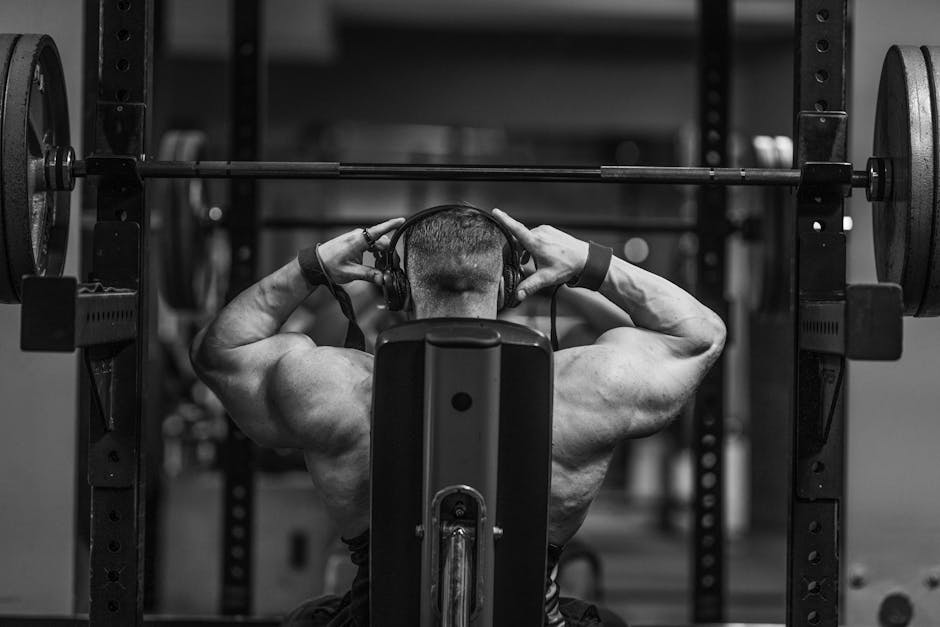
In this article, we’ll explore: Muscle Plays a Role in Weight LossBut Not How You Think and why it matters today.
Related:
👉 Why It’s Harder to Conceive with PCOS: The Science Behind Endometrial Receptivity and Histone Lactylation
👉 Why Women Process Trauma Differently: The Science of Hormones and Stress
👉 The Surprising Truth: Muscle Plays a Role in Weight Loss But Not How You Think
Learn more: Muscle Plays a Role in Weight LossBut Not How You Think on Investopedia
We’ve all heard the classic fitness advice: “Muscle burns more fat than fat does.” It sounds like a dream, right? The idea is that if you just lift a few weights, your body will turn into a 24/7 calorie-burning furnace, melting away unwanted pounds while you binge-watch your favorite Netflix show.
But if you’ve ever tried to “bulk up” to slim down, you might have noticed that the scale doesn’t always move as fast as you’d like. You might even feel a bit frustrated. If muscle is such a powerhouse for weight loss, why isn’t the weight falling off?
The truth is, Muscle Plays a Role in Weight Loss But Not How You Think. It’s not just about a simple math equation of calories in versus calories out. It’s much more sophisticated, much more interesting, and honestly, much more empowering once you understand how it actually works.
The Great Metabolism Myth
Let’s start by debunking the biggest myth in the gym. For decades, people have claimed that a pound of muscle burns 50 extra calories a day compared to a pound of fat. If that were true, adding five pounds of muscle would mean you could eat an extra slice of pizza every single day without gaining an ounce.
Unfortunately, science tells a different story. In reality, a pound of muscle at rest burns about 6 calories per day, while a pound of fat burns about 2 calories. Is it more? Yes. Is it a “magic pill” for weight loss? Not exactly. If you gain five pounds of muscle, you’re only burning an extra 20 to 30 calories a day—roughly the amount in a single celery stick.
So, if the “metabolic furnace” theory is a bit of an exaggeration, why do fitness experts still obsess over muscle? Because muscle affects your weight in ways that have nothing to do with resting calories.
Muscle as a “Glucose Sponge”
This is where things get interesting. Think of your muscles as a giant sponge for your blood sugar. Every time you eat carbohydrates, your body breaks them down into glucose (sugar). Your body then has a choice: use that sugar for energy, store it in your muscles and liver as glycogen, or—if those storage tanks are full—turn it into body fat.
When you have more muscle mass, and specifically when you use those muscles through resistance training, your “sponges” get bigger and more “thirsty.”
The Story of Sarah and the Pizza Night
Imagine two friends, Sarah and Jen. Jen does strictly long-distance running. She’s thin, but she has very little muscle mass. Sarah, on the other hand, lifts weights three times a week and has built a solid foundation of lean muscle.
They go out for pizza. Jen’s “glucose sponges” are small and already full because she hasn’t done anything to empty them. Her body has nowhere to put that extra dough and cheese, so it spikes her insulin and starts storing those calories as fat.
Sarah’s muscles, however, are metabolically active. Because she lifted weights earlier that day, her “sponges” are empty and ready to soak up that glucose to repair her muscle tissue. Her body uses the pizza for recovery rather than storage. This is a prime example of how Muscle Plays a Role in Weight Loss But Not How You Think—it changes how your body handles food, not just how many calories you burn while sitting still.
The “Afterburn” Effect: EPOC
When you go for a steady walk or a light jog, you burn calories while you’re moving. The moment you stop, your calorie burning returns to baseline almost immediately.
Lifting weights or performing high-intensity resistance training is different. It creates a physiological “debt” in your body. This is known as Excess Post-exercise Oxygen Consumption (EPOC). After a heavy lifting session, your body has to work overtime to:
- Restore oxygen levels in the blood
- Repair micro-tears in the muscle fibers
- Balance hormones
- Cool the body down
This process can keep your metabolism elevated for 24 to 48 hours after you’ve left the gym. So, while the muscle itself doesn’t burn much at rest, the act of maintaining and building it keeps your engine revving long after your shower.
Muscle Improves Your “Movement Economy”
Have you ever noticed that as you get fitter, things just feel… easier? Carrying groceries doesn’t make you huff and puff. Climbing a flight of stairs feels like a breeze.
When you have more muscle, you are physically stronger. This leads to something called “Non-Exercise Activity Thermogenesis,” or NEAT. NEAT is the energy we burn doing everything that isn’t formal exercise—walking to the car, fidgeting, cleaning the house, or playing with the kids.
When you are weak or have low muscle mass, these small tasks feel draining. You’re more likely to sit on the couch because you’re tired. But when you have a muscular “armor,” you naturally move more throughout the day because your body feels capable. This subconscious increase in movement is a massive driver of long-term weight loss.
The “Sturdy Frame” Principle
Think of your body like a car. If you put a massive V8 engine in a tiny, flimsy frame, the car will shake and eventually break down. But if you have a sturdy, reinforced frame (muscle), that engine can run efficiently at high speeds. Muscle provides the structural integrity that allows you to work out harder, move more often, and avoid the injuries that usually sideline weight loss journeys.
The Scale is a Liar (And Muscle is the Reason)
One of the hardest parts of weight loss is stepping on the scale and seeing no change—or worse, seeing the number go up. This is where most people quit. But if you are lifting weights, the scale is often lying to you.
Muscle is much denser than fat. A pound of muscle takes up significantly less space than a pound of fat. This is why you can stay the exact same weight but drop two dress sizes.
If you focus solely on the scale, you might be tempted to slash your calories even further, which causes your body to burn muscle for energy. This slows down your metabolism and makes you “skinny fat.” By focusing on muscle, you are changing your body composition. You’re losing the “fluff” and keeping the “engine.”
How to Make Muscle Work for You
You don’t need to become a professional bodybuilder to reap these benefits. In fact, for most people, “less is more” when starting out. Here is how to strategically use muscle for weight loss:
- Prioritize Resistance Training: Aim for 2-3 sessions a week. Focus on big movements like squats, lunges, pushes, and pulls. These use the most muscle mass and create the biggest metabolic demand.
- Eat Enough Protein: You can’t build a house without bricks. Protein is the building block of muscle. Aim for a palm-sized portion at every meal.
- Don’t Fear the Heavy Weights: Lifting “pink dumbbells” for 50 reps won’t create the metabolic shift you need. Challenge yourself with weights that feel heavy by the 10th or 12th rep.
- Give it Time: Muscle grows slowly. You might not see a change in a week, but in three months, your entire hormonal profile will be different.
Key Takeaways
Before we wrap up, let’s look at the “cheat sheet” for why muscle is your best friend for weight loss:
- It’s a Nutrient Sink: Muscle helps your body process carbs and sugar more efficiently, preventing them from being stored as fat.
- It Boosts Recovery Burn: The “afterburn” from lifting weights lasts much longer than the burn from cardio.
- It Increases NEAT: Being stronger makes you naturally more active throughout the day without even trying.
- It Reshapes Your Body: Muscle allows you to look leaner and “toned” even if the scale doesn’t move.
- It Protects Your Metabolism: Having muscle prevents the metabolic slowdown that usually happens when you eat fewer calories.
The Bottom Line
Weight loss is often sold as a battle against your body—starving yourself and punishing yourself with cardio. But when you shift your focus to building muscle, weight loss becomes a byproduct of becoming a stronger, healthier version of yourself.
Remember, Muscle Plays a Role in Weight Loss But Not How You Think. It’s not just about burning a few extra calories at rest; it’s about changing your internal chemistry, improving your relationship with food, and giving yourself the physical freedom to move through the world with ease. Stop trying to “shrink” yourself and start trying to “build” yourself. The results will follow.
Frequently Asked Questions
Will lifting weights make me look “bulky”?
This is the most common fear, especially for women. The short answer is: No. Building significant muscle mass requires years of dedicated heavy lifting and a massive surplus of calories. Most people who lift weights for weight loss simply look firmer, leaner, and more “toned.”
Can I build muscle while losing fat at the same time?
Yes, especially if you are a beginner. This is often called “body recomposition.” By eating a high-protein diet and lifting weights while in a slight calorie deficit, your body can use stored fat to fuel the muscle-building process.
How long does it take to see the metabolic benefits of muscle?
You’ll feel the “afterburn” effects almost immediately after your first few workouts. However, the changes in insulin sensitivity and body composition usually take 4 to 8 weeks of consistency to become noticeable in how your clothes fit and how your body feels.
Is cardio a waste of time then?
Not at all! Cardio is great for heart health and mental well-being. However, if your goal is sustainable weight loss, cardio should be the “side dish” and strength training should be the “main course.”
What if I’m older? Is it too late to build muscle?
It is never too late. In fact, building muscle is even more important as we age to prevent sarcopenia (age-related muscle loss). Studies show that people in their 70s and 80s can still gain significant strength and metabolic benefits from resistance training.
Written with love and assistance and refined for quality.
{“@context”:”https://schema.org”,”@type”:”Article”,”headline”:”Why Your Muscles Are the Secret Weapon for Weight Loss (And Itu2019s Not Just About Burning Calories)”,”description”:”In this article, weu2019ll explore: Muscle Plays a Role in Weight LossBut Not How You Think and why it matters…”,”author”:{“@type”:”Person”,”name”:”Dr. Cuterus”},”datePublished”:”2026-06-01T09:05:40+00:00″,”dateModified”:”2026-06-01T09:05:40+00:00″,”mainEntityOfPage”:”https://healthyworldz.com/why-your-muscles-are-the-secret-weapon-for-weight-loss-and-its-not-just-about-burning-calories/”,”image”:[“https://healthyworldz.com/wp-content/uploads/2026/06/muscle-plays-a-role-in-weight-lossbut-not-how-you-think-2.jpg”]}
🔗 Related: Hormonal mechanisms of womens risk in…
🔗 Related: Why womens health needs a system…
🔗 Related: Hormonal mechanisms of womens risk in…