In this article, we’ll explore: For millions of women PCOS was never just about the ovaries and why it matters today.
Related:
👉 Why Her Health is the Heart of Our Future: The BcozSheMatters Campaign Explained
👉 Period Poverty: Why This Global Menstrual Health Crisis Is Everyone’s Business
👉 BcozSheMatters: Why the New WHO and Health Ministry Campaign is a Game-Changer for Women
Learn more: For millions of women PCOS was never just about the ovaries on Investopedia
If you have ever sat in a cold doctor’s office, clutching a thin paper gown and feeling like your body was a puzzle with missing pieces, you are not alone. You might have been there because your periods were MIA, or perhaps because you were struggling with stubborn acne that felt more like a teenage nightmare than an adult reality. Maybe you were there because, no matter how little you ate or how much you exercised, the scale wouldn’t budge.
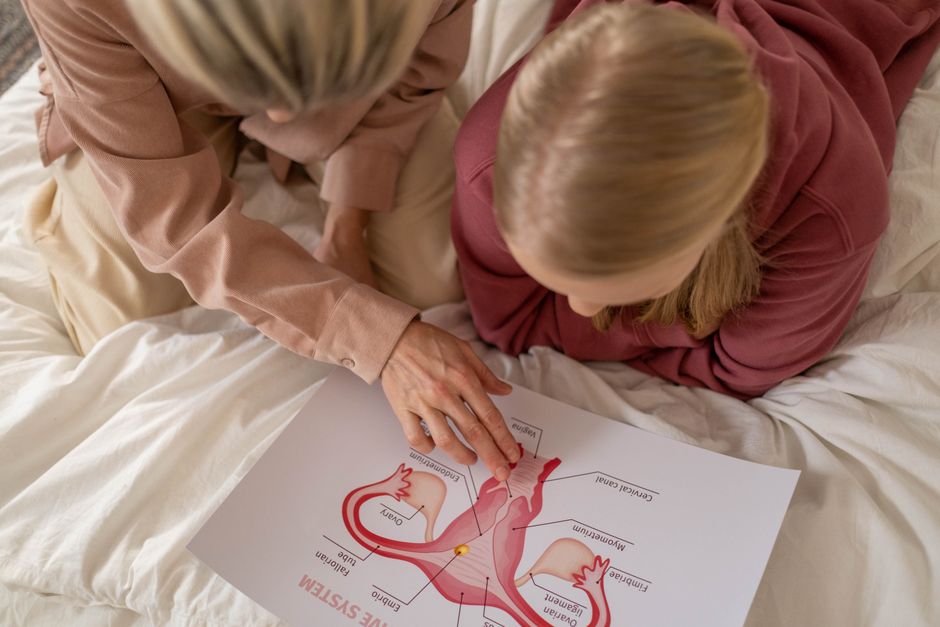
Then came the diagnosis: Polycystic Ovary Syndrome (PCOS). On the surface, the name tells a specific story. It suggests that the problem lives in the ovaries—that it’s a “reproductive issue.” But for millions of women PCOS was never just about the ovaries, and it’s time we started talking about it that way.
When we limit PCOS to a gynecological box, we do a massive disservice to the people living with it. It’s like looking at a house on fire and only focusing on the smoke coming out of one window. To truly understand PCOS, we have to look at the whole foundation: the hormones, the metabolism, the brain, and the immune system.
The Great Misnomer: Why the Name is Misleading
Let’s start with a surprising truth: You can have Polycystic Ovary Syndrome without actually having cysts on your ovaries. Conversely, you can have cysts on your ovaries and not have PCOS. Confusing, right?
The “cysts” seen on an ultrasound aren’t actually tumors or traditional cysts; they are small, underdeveloped follicles where eggs didn’t quite reach maturity because of a hormonal imbalance. But because the word “ovary” is right there in the title, many patients (and even some doctors) assume that if the ovaries look fine, the patient is fine. Or, if the patient doesn’t want to get pregnant right now, the condition isn’t “urgent.”
This is where the frustration begins. For millions of women PCOS was never just about the ovaries—it is a systemic, metabolic, and endocrine disorder that affects almost every organ in the body.
The Metabolic Engine: It’s All About Insulin
If you want to understand why PCOS feels like a full-body experience, you have to look at insulin. Insulin is the hormone that acts like a key, unlocking your cells to let sugar (glucose) in for energy. In many women with PCOS, that key doesn’t work very well. This is called insulin resistance.
When your body becomes resistant to insulin, it pumps out even more to compensate. High levels of insulin do something very specific to the ovaries: they signal them to produce more testosterone. This “overflow” of male hormones (androgens) is what triggers the classic symptoms like hair loss on the head, unwanted hair growth on the face, and persistent acne.
But the impact of insulin doesn’t stop at the skin. It leads to:
- Intense Sugar Cravings: Your cells are literally starving for energy even if you’ve just eaten.
- The “PCOS Belly”: Weight gain specifically around the midsection, which is metabolically active fat.
- Brain Fog: That feeling of being in a mental haze that makes focusing on work or school feel impossible.
The Invisible Symptoms: Mental Health and the Brain
We often talk about the physical traits of PCOS, but we rarely talk about what happens between the ears. Research shows that women with PCOS are at a significantly higher risk for anxiety and depression. Is this just because of the stress of the symptoms? Not necessarily.
There is a biological link. Hormonal fluctuations and chronic inflammation can affect neurotransmitters like serotonin and dopamine—the chemicals that regulate our mood. When your hormones are on a constant rollercoaster, your mental health often follows suit. For many, the “PCOS mood” isn’t just about feeling sad; it’s a deep, physiological exhaustion and a sense of being disconnected from one’s own body.
The Story of Sarah: A Real-World Example
Take Sarah, a 28-year-old marketing executive. Sarah was diagnosed with PCOS at 22. Her doctor told her to “take the pill and come back when you want to get pregnant.” For five years, Sarah struggled with debilitating fatigue and a “short fuse” that she didn’t recognize as herself. She wasn’t trying to have a baby, so she thought her PCOS was “under control.”
It wasn’t until she saw a functional medicine practitioner that she realized her chronic fatigue and irritability were directly tied to her blood sugar spikes and systemic inflammation. For Sarah, and for millions of women PCOS was never just about the ovaries; it was about her energy, her career, and her ability to show up for her life.
The Skin and Hair Connection: More Than Vanity
When society talks about acne or thinning hair, it’s often dismissed as “vanity.” But for a woman with PCOS, these symptoms are a constant, visible reminder that something is wrong on the inside.
Hirsutism (excess facial and body hair) and androgenetic alopecia (thinning hair on the scalp) are caused by those elevated androgen levels we mentioned earlier. This isn’t just a “beauty” issue; it’s an identity issue. It changes how women see themselves in the mirror and how they interact with the world. It’s a physical manifestation of an internal hormonal war.
Chronic Inflammation: The Silent Driver
Recent studies have pointed toward chronic, low-grade inflammation as a primary driver of PCOS. This means the body’s immune system is constantly on high alert. This inflammation can lead to:
- Joint pain and muscle aches
- Digestive issues and bloating
- Increased risk of cardiovascular disease later in life
This is why a “one-size-fits-all” diet often fails. If you are only focused on calories but ignoring the foods that trigger your specific inflammatory response, you’re only fighting half the battle.
Moving Toward a Holistic Approach
If we accept that for millions of women PCOS was never just about the ovaries, how do we treat it? The answer lies in a multi-pillar approach that looks at the whole person.
1. Nutrition as Medicine (Not Just Weight Loss)
Instead of “dieting,” focus on blood sugar stabilization. Pairing proteins with complex carbohydrates and healthy fats helps prevent the insulin spikes that drive testosterone production. It’s not about eating less; it’s about eating smarter for your hormones.
2. Stress Management
Cortisol, the stress hormone, is the enemy of hormonal balance. High cortisol levels can worsen insulin resistance. Whether it’s yoga, walking, or simply setting boundaries at work, managing stress is a clinical necessity for PCOS management, not a luxury.
3. Movement That Feels Good
Over-exercising (like doing high-intensity cardio every single day) can actually backfire for some women with PCOS by putting too much stress on the adrenals. Many find better results with strength training and slow, weighted movements that help build muscle and improve insulin sensitivity.
4. Advocacy and Education
The most important tool is your own voice. If a doctor dismisses your concerns because “your ovaries look fine on the scan,” it might be time to find a provider who understands the systemic nature of the condition.
Key Takeaways
- PCOS is a Systemic Issue: It is a metabolic and endocrine disorder, not just a reproductive one.
- The Name is a Misnomer: You don’t need ovarian cysts to have the syndrome.
- Insulin is Key: Managing insulin resistance is often the “secret sauce” to managing symptoms like weight gain and acne.
- Mental Health Matters: Anxiety and depression are biologically linked to the hormonal imbalances of PCOS.
- Holistic Care is Essential: Treatment should involve diet, stress management, sleep, and sometimes medication or supplements—not just “the pill.”
Frequently Asked Questions
Can I have PCOS if my periods are regular?
Yes. While irregular periods are a common symptom, some women have regular cycles but still struggle with other symptoms like hirsutism, cystic acne, or insulin resistance. Diagnosis usually requires meeting two out of the three “Rotterdam Criteria”: irregular periods, high androgen levels (clinical or biochemical), and polycystic ovaries on an ultrasound.
Why do doctors always suggest the birth control pill?
The pill is often prescribed because it regulates the menstrual cycle and can lower androgen levels, which helps with acne and hair growth. However, the pill is a “band-aid” fix—it masks the symptoms without addressing the underlying metabolic issues like insulin resistance. It can be a helpful tool, but it shouldn’t be the only solution offered.
Is PCOS a lifelong condition?
PCOS is a chronic condition, meaning there is currently no “cure.” However, it is highly manageable. Many women find that through lifestyle changes, supplements (like Inositol), and sometimes medication (like Metformin), they can live virtually symptom-free.
Does PCOS mean I can’t have children?
Absolutely not. While PCOS is a leading cause of infertility because it can interfere with ovulation, it is also one of the most treatable forms of infertility. Many women with PCOS go on to have healthy pregnancies through lifestyle changes or with the help of ovulation-inducing medications.
Conclusion
It is time to change the narrative. We need to stop telling women that their struggle is limited to their reproductive organs. For millions of women PCOS was never just about the ovaries; it is a complex, challenging, but ultimately manageable journey that involves the whole self. By understanding the systemic roots of the condition, we can move away from shame and “quick fixes” and toward true, lasting health.
Written with love and assistance and refined for quality.
🔗 Related: Genelia DSouza opens up about menopause…
🔗 Related: Hormonal mechanisms of womens risk in…