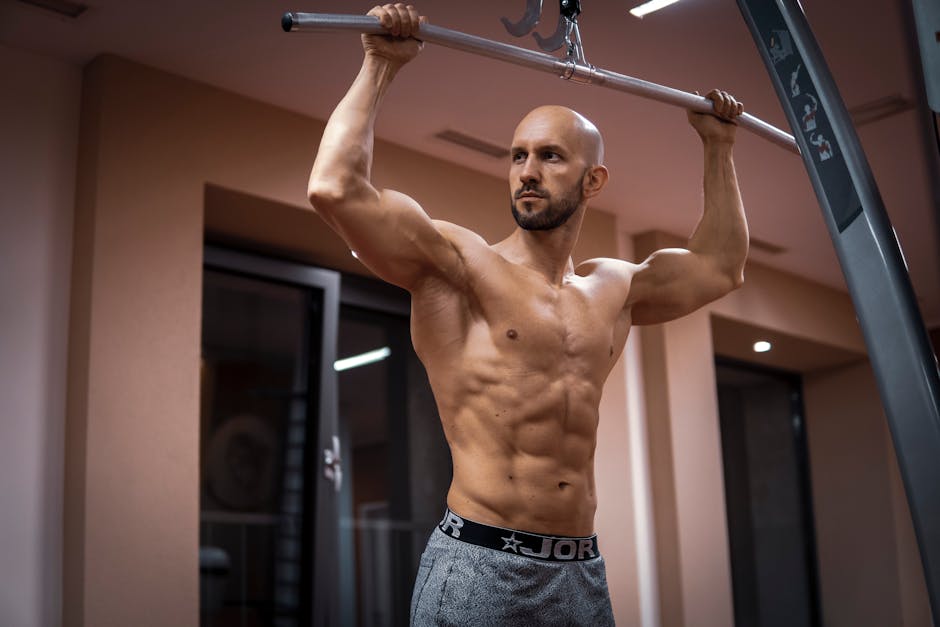
In this article, we’ll explore: Muscle Plays a Role in Weight LossBut Not How You Think and why it matters today.
Related:
👉 Why Getting Pregnant with PCOS Can Be Hard: The Hidden Role of Histone Lactylation and ER Stress
👉 8 Foods To Avoid With an Upset Stomach and What To Eat Instead
👉 Muscle Plays a Role in Weight Loss But Not How You Think
Learn more: Muscle Plays a Role in Weight LossBut Not How You Think on Google Search
If you’ve ever stepped foot in a gym or scrolled through a fitness blog, you’ve probably heard the golden rule of metabolism: “Muscle burns more calories than fat.” For years, we’ve been told that if we just pack on a few pounds of lean muscle, our bodies will turn into 24/7 fat-burning furnaces, melting away unwanted weight while we binge-watch our favorite Netflix series.
It sounds like a dream, right? Build a little bicep, lose a little belly. But here’s the cold, hard truth: the “furnace” analogy is a bit of an exaggeration. If you’re looking at the raw math of calories burned at rest, muscle isn’t the metabolic superhero we’ve been led to believe.
However, that doesn’t mean muscle isn’t important. In fact, it is the absolute “secret sauce” to long-term body transformation. It’s just that Muscle Plays a Role in Weight LossBut Not How You Think. It’s not about the passive calorie burn; it’s about metabolic health, hormonal balance, and how your body decides to use the food you eat.
Let’s pull back the curtain on what’s actually happening under your skin when you start lifting weights.
The Myth of the “Metabolic Furnace”
Let’s start with the math because that’s where most of the confusion begins. You might have heard that one pound of muscle burns 50 extra calories per day. If that were true, adding five pounds of muscle would mean you could eat an extra slice of pizza every single day without gaining an ounce.
Unfortunately, real-world studies show that a pound of muscle only burns about 6 to 7 calories per day at rest. Fat, on the other hand, burns about 2 calories per day. While muscle is technically three times more metabolically active than fat, the difference is negligible when you’re just sitting on the couch. Adding five pounds of muscle only grants you an extra 20 to 25 calories a day—roughly the amount of energy in a single celery stick.
So, if the calorie burn is so low, why does every trainer on the planet insist on strength training? Because the real magic happens when you move, when you eat, and when your hormones start talking to each other.
1. Muscle is Your Body’s “Glucose Sink”
This is perhaps the most underrated reason why muscle is vital for weight loss. Think of your muscles as a storage tank for the carbohydrates you eat. When you have more muscle mass—and more importantly, when that muscle is active—your body becomes much better at handling blood sugar.
When you eat a bowl of pasta, your body breaks it down into glucose (sugar). If you have low muscle mass and a sedentary lifestyle, that sugar has nowhere to go. Your pancreas pumps out insulin to clear the sugar from your blood, and since the “muscle tank” is full or inactive, the body sends that energy straight to your fat cells for storage.
However, when you have healthy, active muscle tissue, your body becomes “insulin sensitive.” Your muscles act like a giant sponge, soaking up that glucose to use for energy or to store as glycogen for your next workout. This prevents insulin spikes, which is the key to staying in a “fat-burning” state rather than a “fat-storage” state.
2. The “Afterburn” Effect (EPOC)
While muscle doesn’t burn much at rest, the process of building and maintaining it is incredibly expensive for your body. This is known as Excess Post-exercise Oxygen Consumption (EPOC).
When you do a heavy strength training session, you aren’t just burning calories during the 45 minutes you’re in the gym. You are creating microscopic tears in your muscle fibers and stressing your central nervous system. For the next 24 to 48 hours, your body has to work overtime to repair those tissues, move nutrients around, and return your system to homeostasis.
This “recovery tax” is where the real calorie burn happens. A cardio session might burn more calories during the activity, but a weightlifting session keeps the metabolic engine revving long after you’ve showered and gone to bed.
3. The Story of the “Skinny Fat” Trap
To understand why muscle matters, let’s look at a common scenario. Meet Sarah and Mike.
Sarah decides to lose weight by doing only cardio and eating a very low-calorie diet. She loses 15 pounds on the scale. However, because she wasn’t eating enough protein or lifting weights, about 5 of those pounds came from muscle tissue. Now, her body is smaller, but her metabolism has actually slowed down significantly. She feels “soft,” has low energy, and as soon as she starts eating normally again, the weight piles back on—mostly as fat.
Mike decides to lose weight by lifting weights three times a week and eating at a moderate deficit with high protein. He only loses 8 pounds on the scale. But Mike looks completely different. His clothes fit better, his shoulders are broader, and his waist is smaller. He has lost 12 pounds of fat and gained 4 pounds of muscle. Because he preserved his muscle, his metabolism is still firing on all cylinders, making it much easier for him to maintain his results.
This is the “Body Composition” secret. The scale is a liar. Muscle is much denser than fat, meaning it takes up less space. This is why Muscle Plays a Role in Weight LossBut Not How You Think—it might not make the number on the scale drop faster, but it makes you look leaner and feel tighter.
The Benefits of Prioritizing Muscle:
- Improved Bone Density: Lifting weights doesn’t just build muscle; it strengthens your skeleton.
- Better Hormonal Profile: Resistance training boosts growth hormone and testosterone (in both men and women), which aids in fat loss.
- Increased NEAT: When you have more muscle and feel stronger, you tend to move more throughout the day (Non-Exercise Activity Thermogenesis) without even realizing it.
- Joint Protection: Strong muscles take the pressure off your knees, hips, and back.
4. The Psychological Shift: From “Less” to “More”
Most weight loss journeys are built on a foundation of “less.” Eat less, weigh less, be less. This is a recipe for psychological burnout. It feels like a punishment.
When you shift your focus to building muscle, the mindset changes to “more.” You want to lift more weight. You want to eat more protein to fuel your recovery. You want to have more energy. This shift from a restrictive mindset to a performance mindset is often the difference between someone who quits after three weeks and someone who makes fitness a lifelong habit.
When you see your strength increasing, it provides a sense of accomplishment that the scale simply cannot provide. If the scale doesn’t move for a week, but you managed to do your first full push-up, you’re still winning. That’s the power of muscle.
How to Build Muscle for Weight Loss (The Right Way)
You don’t need to become a professional bodybuilder to reap these benefits. Here is a simple framework for using muscle to drive your weight loss:
Focus on Compound Movements
If you want the biggest metabolic bang for your buck, focus on exercises that use multiple joints and muscle groups. Squats, deadlifts, presses, and rows are the “big movers.” They challenge your body more than bicep curls or leg extensions ever will.
Prioritize Protein
You cannot build or even maintain muscle if you aren’t giving your body the building blocks it needs. Aim for a high-protein diet (around 0.7 to 1 gram of protein per pound of body weight). Protein also has a high “thermic effect,” meaning your body burns more calories digesting protein than it does fats or carbs.
Don’t Fear the Heavy Weights
Many people, especially women, fear that lifting heavy will make them “bulky.” In reality, building significant bulk requires years of dedicated training and a massive caloric surplus. Lifting heavy weights while in a calorie deficit will simply help you keep the muscle you have, ensuring that the weight you lose comes from fat stores.
Key Takeaways
- Muscle doesn’t burn massive amounts of calories at rest, but it changes how your body processes food.
- Muscle acts as a “glucose sink,” improving insulin sensitivity and preventing fat storage.
- The recovery process from weightlifting (EPOC) is a significant driver of calorie burning.
- Focusing on body composition (fat vs. muscle) is more important than focusing on scale weight.
- Building muscle fosters a positive, performance-based mindset rather than a restrictive one.
Frequently Asked Questions
Does muscle turn into fat if I stop working out?
No. Muscle and fat are two completely different types of tissue. It’s like saying a piece of gold can turn into a piece of wood. If you stop working out, your muscles may atrophy (shrink), and if you continue eating the same amount of food, you may gain fat, but one does not “turn into” the other.
Can I build muscle and lose fat at the same time?
Yes, especially if you are a beginner or have a significant amount of body fat to lose. This is often called “body recomposition.” It requires a modest calorie deficit, high protein intake, and consistent strength training.
How many days a week should I lift to see results?
For most people, 3 to 4 days of full-body or split-routine strength training is the “sweet spot.” This allows for enough stimulus to grow muscle while providing ample time for recovery.
Will lifting weights make me weigh more?
In the short term, you might see the scale stay the same or even go up slightly due to water retention in the muscles as they repair. However, your body measurements (waist circumference) will likely decrease as you become leaner and tighter.
The Bottom Line
Weight loss is a complex journey, and while “calories in vs. calories out” is the fundamental law, muscle is the variable that makes the math work in your favor. Muscle Plays a Role in Weight LossBut Not How You Think—it’s not a magic wand that lets you eat whatever you want, but it is the foundation of a healthy, high-performing metabolism.
Stop trying to shrink yourself and start trying to build yourself. Your metabolism (and your future self) will thank you.
Written with love and assistance and refined for quality.
{“@context”:”https://schema.org”,”@type”:”Article”,”headline”:”Muscle Plays a Role in Weight Loss… But Not How You Think”,”description”:”In this article, weu2019ll explore: Muscle Plays a Role in Weight LossBut Not How You Think and why it matters…”,”author”:{“@type”:”Person”,”name”:”Dr. Cuterus”},”datePublished”:”2026-05-24T08:27:53+00:00″,”dateModified”:”2026-05-24T08:27:53+00:00″,”mainEntityOfPage”:”https://healthyworldz.com/muscle-plays-a-role-in-weight-loss-but-not-how-you-think-8/”,”image”:[“https://healthyworldz.com/wp-content/uploads/2026/05/muscle-plays-a-role-in-weight-lossbut-not-how-you-think-12.jpg”]}
🔗 Related: Hormonal mechanisms of womens risk in…
🔗 Related: 8 Foods To Avoid With an…