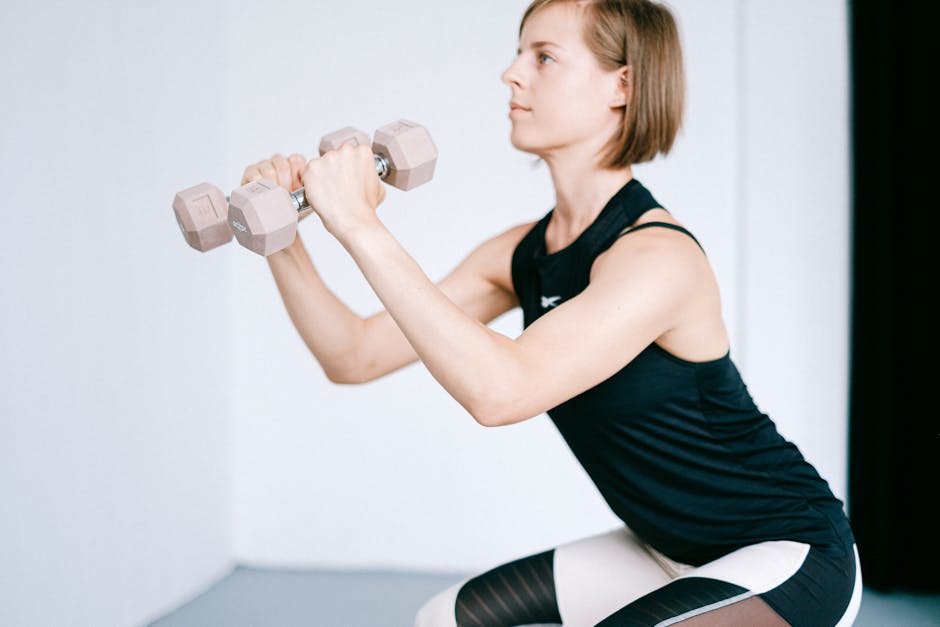
In this article, we’ll explore: Muscle Plays a Role in Weight LossBut Not How You Think and why it matters today.
Related:
👉 BcozSheMatters: Why the WHO Health Ministry’s New Campaign is a Game-Changer for Women and Girls Everywhere
👉 Why Women Experience Trauma Differently: Understanding the Hormonal Mechanisms of Women’s Risk in the Face of Traumatic Stress
👉 Muscle Plays a Role in Weight Loss—But Not How You Think
Learn more: Muscle Plays a Role in Weight LossBut Not How You Think on Wikipedia
Have you ever spent weeks on a treadmill, eating nothing but steamed broccoli and grilled chicken, only to find that the scale hasn’t budged? Or worse, you lose ten pounds, but you feel “soft,” tired, and you end up gaining it all back the moment you look at a slice of pizza?
We’ve been told for decades that weight loss is a simple math equation: calories in versus calories out. If you want to lose weight, you just need to eat less and move more. While that is technically true at a basic level, it misses the most important factor in the entire equation: your muscle.
You’ve likely heard the fitness gurus say that muscle burns more fat. You’ve heard that it speeds up your metabolism. But the truth is a bit more nuanced than the slogans on a gym wall. Muscle Plays a Role in Weight Loss But Not How You Think. It’s not just about turning your body into a “fat-burning furnace” while you sleep. It’s about hormones, blood sugar, and how your body decides what to do with the food you eat.
Let’s dive into the real science of why muscle is your best friend for long-term weight loss, and why you might want to put down the light pink dumbbells and pick up something a little heavier.
The Metabolism Myth: Is Muscle Really a “Furnace”?
If you’ve ever read a fitness magazine, you’ve probably seen a claim like this: “One pound of muscle burns 50 extra calories a day!”
If that were true, adding just five pounds of muscle would allow you to eat an extra donut every single day without gaining weight. Unfortunately, the real numbers are a bit more modest. In reality, a pound of muscle burns about 6 to 10 calories per day at rest, while a pound of fat burns about 2 to 3 calories.
Is muscle more metabolically active than fat? Yes, absolutely. It’s about three times as active. But if you gain five pounds of muscle, you’re only burning an extra 30 to 50 calories a day. That’s about the equivalent of a single celery stick with a tiny bit of peanut butter.
So, if the “metabolic furnace” isn’t the whole story, why does everyone keep saying muscle is the key to weight loss? Because the real magic happens when you aren’t sitting still.
The “Sponge” Effect: How Muscle Manages Your Blood Sugar
This is where things get interesting. Think of your muscles as a giant sponge for the sugar (glucose) in your blood.
When you eat carbohydrates, your body breaks them down into sugar. Your pancreas then releases insulin, a hormone that tells your cells to open up and let that sugar in to be used for energy. If your “sponges” (your muscles) are small or already full because you don’t move much, that sugar has nowhere to go. When sugar stays in the blood, your body does the only thing it can: it stores it as fat.
However, when you have more muscle mass—and specifically when you use those muscles through resistance training—your “sponges” become much more efficient. Muscle is incredibly sensitive to insulin. By building more muscle, you are essentially increasing the size of your body’s “sugar gas tank.”
Example: Imagine two people, Sarah and Jane. They both weigh 150 pounds. Sarah has a high percentage of muscle, while Jane has very little muscle and a higher body fat percentage. They both eat a bowl of pasta. Sarah’s muscles quickly soak up that glucose to repair tissue and store energy for her next workout. Jane’s body, having nowhere to put the excess energy, triggers an insulin spike that sends those calories straight to her hip and belly fat storage.
The Role of Myokines
Recent research has shown that muscles are actually endocrine organs. This means that when they contract, they release tiny chemical messengers called myokines. These messengers travel through your bloodstream and tell your fat cells to start burning energy. They also help reduce inflammation in the body. This is a huge reason why Muscle Plays a Role in Weight Loss But Not How You Think—it’s actually communicating with your fat cells to help them shrink.
Weight Loss vs. Fat Loss: The Tale of Two Bodies
One of the biggest mistakes people make is focusing entirely on the number on the scale. The scale is a blunt instrument. It measures the weight of your bones, water, organs, fat, and muscle.
When you go on a “crash diet” and do nothing but cardio, you will lose weight. But a significant portion of that weight—sometimes up to 25% or more—comes from muscle tissue. When you lose muscle, your BMR (Basal Metabolic Rate) drops. This is why people often hit a plateau. Their body is literally becoming “smaller” and less “expensive” to run, so they have to eat less and less just to maintain their new weight.
This leads to the “Skinny Fat” phenomenon. You might fit into a smaller pair of jeans, but your body composition hasn’t improved. You feel soft, you have low energy, and your metabolism is now slower than it was when you started.
- Weight Loss: Decreasing your overall body mass (often including muscle).
- Fat Loss: Decreasing adipose tissue while maintaining or increasing muscle mass.
By focusing on muscle, you are choosing fat loss over weight loss. You might stay the same weight on the scale, but you’ll look leaner, your clothes will fit better, and your metabolism will remain healthy.
The Afterburn Effect: EPOC
While a slow stroll on the treadmill burns calories while you are doing it, it doesn’t do much for you once you step off. Strength training is different. It creates something called Excess Post-exercise Oxygen Consumption (EPOC), also known as the “afterburn effect.”
When you lift weights or do high-intensity resistance training, you create microscopic tears in your muscle fibers. Your body has to work incredibly hard over the next 24 to 48 hours to repair those tears, shuttle nutrients to the cells, and restore your oxygen levels. This process requires energy.
So, while the muscle itself doesn’t burn a massive amount of calories at rest, the process of building and maintaining that muscle keeps your metabolic rate elevated long after you’ve left the gym. This is a primary way that Muscle Plays a Role in Weight Loss But Not How You Think.
Practical Steps: How to Use Muscle for Weight Loss
Now that we know why muscle is important, how do we actually use this information? You don’t need to become a professional bodybuilder to reap these rewards. Even a modest increase in muscle mass can change your life.
1. Prioritize Resistance Training
Stop thinking of exercise only as a way to “burn calories.” Start thinking of it as a way to “build a better engine.” Aim for at least 2-3 days a week of lifting weights, using resistance bands, or doing bodyweight exercises like push-ups and squats.
2. Eat Enough Protein
You cannot build or even maintain muscle if you aren’t eating enough protein. Protein has a high “Thermic Effect of Food” (TEF), meaning your body burns more calories just trying to digest it compared to fats or carbs. Aim for about 0.7 to 1 gram of protein per pound of your goal body weight.
3. Don’t Be Afraid of the Scale Staying Still
If you start lifting weights, the scale might not move for a month. Don’t panic! Take progress photos and measure your waist. If your waist is getting smaller but your weight is the same, you are losing fat and gaining muscle. This is the “Holy Grail” of fitness.
Key Takeaways
- Muscle isn’t just a “calorie burner”; it’s a metabolic regulator that manages blood sugar.
- Muscle mass improves insulin sensitivity, making it harder for your body to store fat.
- Losing muscle during a diet is the primary reason people regain weight.
- The “afterburn effect” of building muscle is more significant than the calories burned during the workout itself.
- Focus on body composition (fat vs. muscle) rather than just the number on the scale.
Frequently Asked Questions
Will lifting weights make me look “bulky”?
This is the most common fear, especially among women. The short answer is: No. Building significant “bulk” requires a massive surplus of calories and years of very specific, heavy training. For most people, lifting weights will simply make you look “toned” and firm because you are replacing soft fat with dense muscle.
Can I turn fat into muscle?
Scientifically, no. Fat and muscle are two entirely different types of tissue. It’s like trying to turn a gold bar into a piece of wood. However, you can lose fat and build muscle at the same time (recomposition), which gives the appearance of “turning” fat into muscle.
Do I have to lift heavy weights?
“Heavy” is relative. To build muscle, you need to challenge your muscles. If you can do 20 repetitions of an exercise easily, it’s time to increase the weight. You should feel tired by the 8th to 12th repetition.
Is cardio useless for weight loss?
Not at all! Cardio is great for heart health and can help create a calorie deficit. However, if you do cardio at the expense of strength training, you may end up losing muscle and slowing down your metabolism in the long run. A balance of both is ideal.
Final Thoughts
Weight loss is a journey that is often paved with frustration because we focus on the wrong metrics. When you understand that Muscle Plays a Role in Weight Loss But Not How You Think, you can stop fighting against your body and start working with it.
Instead of trying to shrink yourself by doing hours of cardio on a tiny amount of food, try to build yourself up. Build your strength, build your muscle, and build a metabolism that supports your life rather than restricting it. Your future self—leaner, stronger, and healthier—will thank you.
Written with love and assistance and refined for quality.
{“@context”:”https://schema.org”,”@type”:”Article”,”headline”:”The Surprising Truth: Muscle Plays a Role in Weight Loss But Not How You Think”,”description”:”In this article, weu2019ll explore: Muscle Plays a Role in Weight LossBut Not How You Think and why it matters…”,”author”:{“@type”:”Person”,”name”:”Dr. Cuterus”},”datePublished”:”2026-06-01T08:05:16+00:00″,”dateModified”:”2026-06-01T08:05:16+00:00″,”mainEntityOfPage”:”https://healthyworldz.com/the-surprising-truth-muscle-plays-a-role-in-weight-loss-but-not-how-you-think/”,”image”:[“https://healthyworldz.com/wp-content/uploads/2026/06/muscle-plays-a-role-in-weight-lossbut-not-how-you-think-1.jpg”]}
🔗 Related: HealthFab Secures Series A Funding to…
🔗 Related: Hormonal mechanisms of womens risk in…
🔗 Related: Why womens health needs a system…