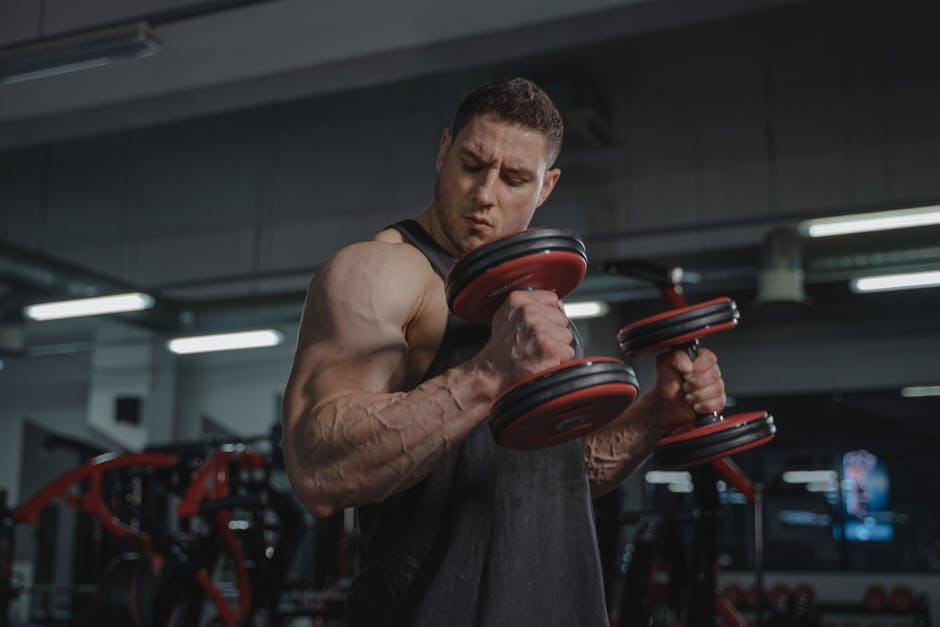
In this article, we’ll explore: Muscle Plays a Role in Weight LossBut Not How You Think and why it matters today.
Related:
👉 Tummy Troubles? 8 Foods To Avoid With an Upset Stomach and What To Eat Instead
👉 The Hidden Science: Understanding the Hormonal Mechanisms of Women’s Risk in the Face of Traumatic Stress
👉 Why Women React Differently to Trauma: A Deep Dive into Hormonal Mechanisms
Learn more: Muscle Plays a Role in Weight LossBut Not How You Think on Wikipedia
We’ve all heard the classic gym-bro advice: “Muscle burns more fat than fat does!” or “Just build muscle, and the weight will melt off while you sleep!” It sounds like a dream, right? You lift a few heavy things, grow some biceps, and suddenly your body becomes a 24/7 calorie-burning furnace.
I remember my friend Sarah fell into this trap a few years ago. She was frustrated because she’d been doing an hour of cardio every single day and eating nothing but salads, yet the scale wouldn’t budge. She read an article online that said muscle was the “secret key” to weight loss. So, she ditched the treadmill and started lifting heavy weights, expecting to see the pounds disappear instantly.
Three months later, she called me, sounding defeated. “I’ve actually gained two pounds,” she said. “The muscle isn’t burning the fat. Is my metabolism broken?”
The truth is, Muscle Plays a Role in Weight Loss But Not How You Think. It isn’t a magical torch that incinerates fat the moment it appears. The relationship between muscle and weight loss is much more subtle, scientific, and—honestly—much cooler than the myths suggest. If you’ve been frustrated by the scale, it’s time to look at what muscle actually does for your body.
The Myth of the “Metabolic Furnace”
Let’s start by debunking the biggest myth in the fitness world: the idea that muscle burns massive amounts of calories at rest. You might have heard that one pound of muscle burns 50 calories a day, while a pound of fat burns almost nothing. If that were true, adding 10 pounds of muscle would allow you to eat an extra Big Mac every day without gaining weight.
Unfortunately, the real numbers are much smaller. According to most metabolic research, a pound of muscle burns about 6 calories per day at rest. A pound of fat burns about 2 calories. So, if Sarah adds five pounds of solid muscle to her frame, she’s only burning an extra 20 to 30 calories a day. That’s about the equivalent of half a plain rice cake.
So, if the “furnace” isn’t that hot, why do we bother? Because while the resting calorie burn is low, the functional role of muscle changes everything about how your body processes food and movement.
The “Glucose Sink”: How Muscle Manages Your Blood Sugar
This is the part most people miss. Think of your muscles as a giant sponge or a “glucose sink.” When you eat carbohydrates, they are broken down into sugar (glucose) and sent into your bloodstream. Your body has two choices: use that sugar for energy or store it as fat.
Muscle is the primary place where that sugar goes to be used. The more muscle you have—and more importantly, the more active that muscle is—the more “storage space” you have for those carbs.
Improving Insulin Sensitivity
When you have healthy muscle mass, your body becomes much better at handling insulin. This is “how you think” muscle helps, but it’s actually about hormonal efficiency. Instead of your body pumping out massive amounts of insulin to clear blood sugar (which tells your body to store fat), your muscles efficiently soak up the sugar. This makes it significantly easier to lose weight because you aren’t constantly in “fat-storage mode.”
Muscle Protects You from the “Rebound”
Have you ever noticed that people who lose weight through “crash dieting” or extreme cardio almost always gain it back? This is because they aren’t just losing fat; they are losing muscle.
When you are in a massive calorie deficit without doing any strength training, your body looks for energy wherever it can find it. It often decides that muscle is “expensive” to keep and starts breaking it down. As you lose muscle, your basal metabolic rate (BMR) drops. You end up as a smaller version of yourself, but with a metabolism that is now much slower than it used to be. The moment you go back to eating normally, the weight piles back on because you no longer have the muscle to support a higher calorie intake.
The “Skinny Fat” Phenomenon
This is exactly what happened to Sarah. By focusing only on the scale and ignoring muscle, she was becoming “skinny fat.” She was losing weight, but her body composition was getting softer. By shifting her focus to building muscle, she was actually “armoring” her metabolism against future weight gain.
Muscle Changes How You Move (NEAT)
There is a concept in science called NEAT: Non-Exercise Activity Thermogenesis. This refers to the calories you burn doing everything that isn’t sleeping, eating, or sports-like exercise. It’s things like walking to the car, fidgeting, or cleaning the house.
When you have more muscle and better strength, you tend to move more throughout the day without even realizing it. You feel more energetic. Carrying the groceries feels lighter. Taking the stairs doesn’t feel like a chore. People with more muscle mass often have higher NEAT levels because their bodies are physically more capable and less “lazy” when it comes to movement. Over a year, this can account for thousands of calories—far more than the 6 calories per pound we talked about earlier.
The Scale vs. The Mirror: A Story of Composition
We need to talk about the psychological role muscle plays. Muscle is much denser than fat. One pound of muscle takes up about 15-20% less space than one pound of fat.
This is why Muscle Plays a Role in Weight Loss But Not How You Think. You might stay the exact same weight on the scale, but look completely different in the mirror.
- Scenario A: You lose 10 pounds of fat and 5 pounds of muscle. You look smaller but perhaps a bit “soft.” Your clothes fit better, but you feel weak.
- Scenario B: You lose 10 pounds of fat and gain 5 pounds of muscle. The scale says you only lost 5 pounds. However, your waist is smaller, your shoulders are defined, and your jeans are loose. You look “toned” and fit.
Sarah eventually realized this. She stopped weighing herself every morning and started taking progress photos and measuring her waist. Even though the scale said she had “gained” two pounds, her waist was two inches smaller, and she was wearing a dress size she hadn’t touched in years.
How to Make Muscle Work for Your Weight Loss
If you want to use muscle as a tool for weight loss, you can’t just “hope” it happens. You have to be intentional. Here is how you actually do it:
1. Prioritize Protein
You cannot build or maintain muscle if you aren’t eating enough protein. Aim for about 0.7 to 1 gram of protein per pound of your target body weight. Protein also has a high “thermic effect,” meaning your body burns more calories just trying to digest it compared to fats or carbs.
2. Lift Things That Are Actually Heavy
Those tiny pink 2-pound dumbbells aren’t going to cut it. To signal to your body that it needs to keep its muscle (especially during a diet), you need to challenge it. Resistance training—whether it’s bodyweight, bands, or iron—is the only way to send that signal.
3. Don’t Overdo the Cardio
Cardio is great for your heart, but too much of it can actually work against your muscle-building goals. If you are doing hours of steady-state cardio every day, your body may start to prioritize endurance over strength, making it harder to keep that metabolically active muscle.
Key Takeaways
- It’s not about the burn: Muscle doesn’t burn hundreds of extra calories at rest, but it does make your body more efficient.
- Hormonal Health: Muscle acts as a “glucose sink,” helping you manage blood sugar and insulin levels.
- Metabolic Protection: Keeping muscle prevents your metabolism from crashing while you diet.
- Body Composition: Muscle takes up less space than fat, meaning you can look leaner even if the scale doesn’t move.
- Functional Movement: More muscle leads to more daily movement (NEAT), which adds up to significant weight loss over time.
Frequently Asked Questions
Does muscle weigh more than fat?
No, a pound is a pound! However, muscle is much denser than fat. A pound of muscle is like a small, heavy brick, while a pound of fat is like a large, fluffy pillow. This is why you can look thinner while weighing the same.
Will lifting weights make me look “bulky”?
This is a common fear, especially for women. Building “bulky” muscle is incredibly difficult and requires years of specific training and a massive surplus of calories. For most people, lifting weights simply results in a “toned” or “firm” appearance.
Can I build muscle and lose fat at the same time?
Yes, this is called “body recomposition.” It is most common in beginners or people returning to the gym after a long break. It requires a high-protein diet and consistent strength training.
How many days a week should I train for muscle growth?
For most people, 3 to 4 days of resistance training per week is the “sweet spot” for maintaining and building muscle while allowing for recovery.
Final Thoughts
Weight loss is a journey that often feels like a battle against your own biology. But when you understand that Muscle Plays a Role in Weight Loss But Not How You Think, you stop fighting your body and start working with it. Muscle isn’t just for bodybuilders; it is the ultimate insurance policy for your metabolism. It allows you to eat more, move better, and look the way you want to look.
So, the next time you feel discouraged because the scale isn’t moving, put the scale away. Pick up some weights, eat your protein, and trust that the muscle you are building is doing the hard work behind the scenes.
Written with love and assistance and refined for quality.
{“@context”:”https://schema.org”,”@type”:”Article”,”headline”:”Muscle Plays a Role in Weight Loss But Not How You Think”,”description”:”In this article, weu2019ll explore: Muscle Plays a Role in Weight LossBut Not How You Think and why it matters…”,”author”:{“@type”:”Person”,”name”:”Dr. Cuterus”},”datePublished”:”2026-05-22T03:24:38+00:00″,”dateModified”:”2026-05-22T03:24:38+00:00″,”mainEntityOfPage”:”https://healthyworldz.com/muscle-plays-a-role-in-weight-loss-but-not-how-you-think-3/”,”image”:[“https://healthyworldz.com/wp-content/uploads/2026/05/muscle-plays-a-role-in-weight-lossbut-not-how-you-think-4.jpg”]}
🔗 Related: Women with polycystic ovary syndrome exhibit…
🔗 Related: Muscle Plays a Role in Weight…
🔗 Related: I'm a gynaecologist will changing PCOS…